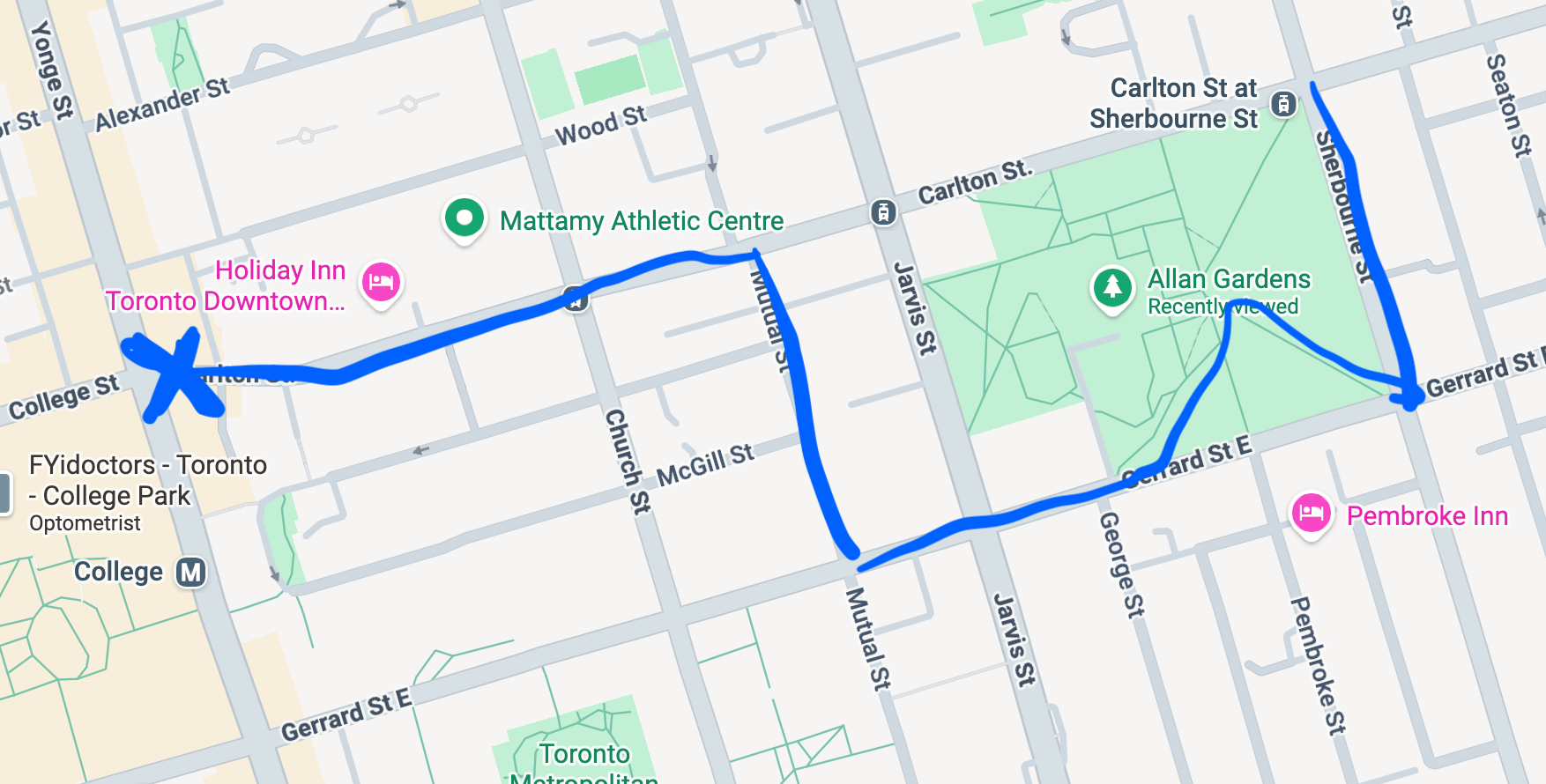
Downtown Toronto Photo Walk, Yonge to Sherbourne.
A photo journal of downtown Toronto on February 12th, moving block by block through older streets, everyday buildings, and quiet corners.
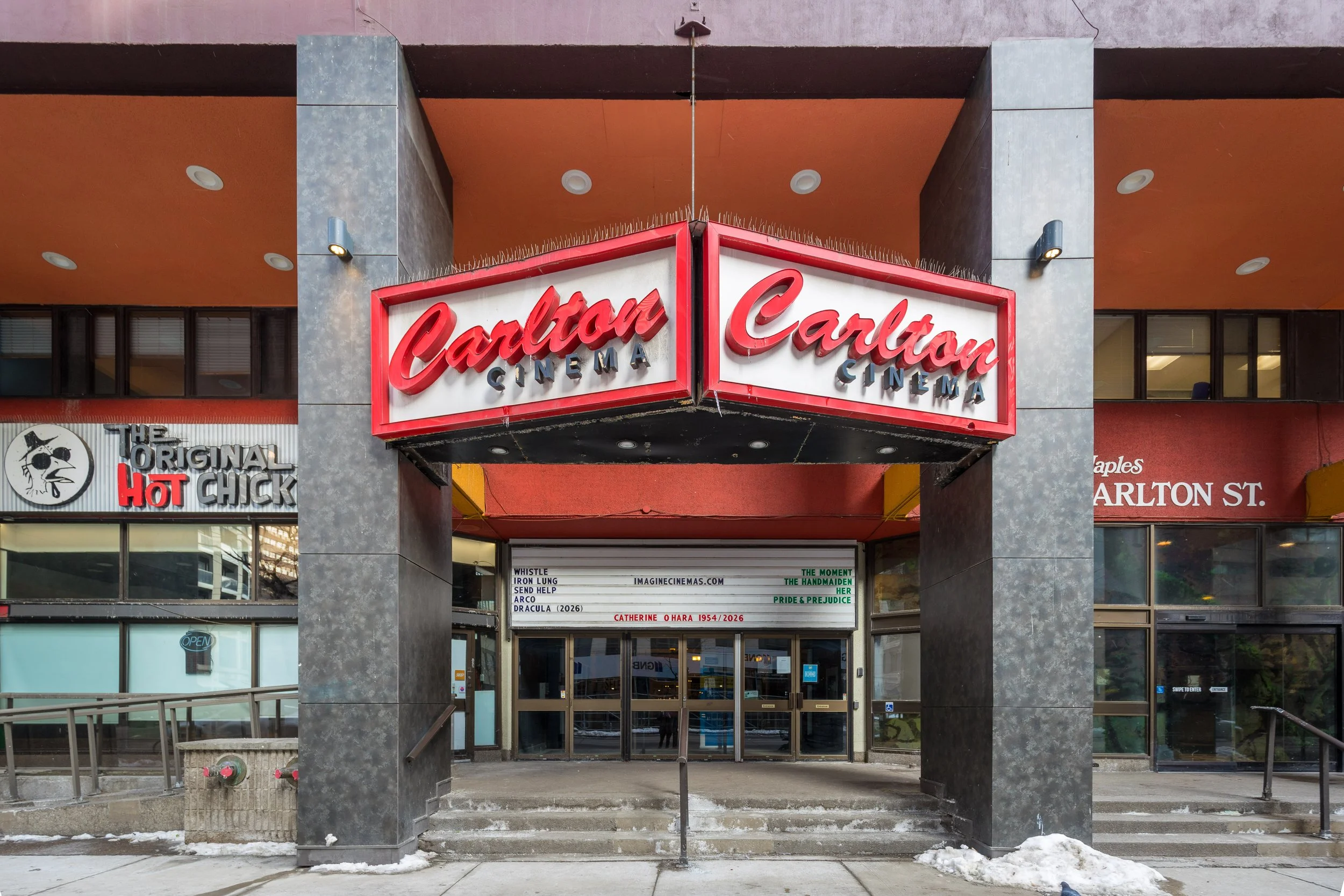
Carlton Cinema @ 20 Carlton Street
The Carlton Cinema opened in 1981 under Cineplex Odeon, becoming Toronto’s first multiplex dedicated to first-run arthouse and niche films. In the early 2000s, its role expanded beyond cinema: during the 2003–2004 academic year, nearby universities even used its theatres as lecture spaces.
Note the Catherine O’Hara 1954/2026 tribute.
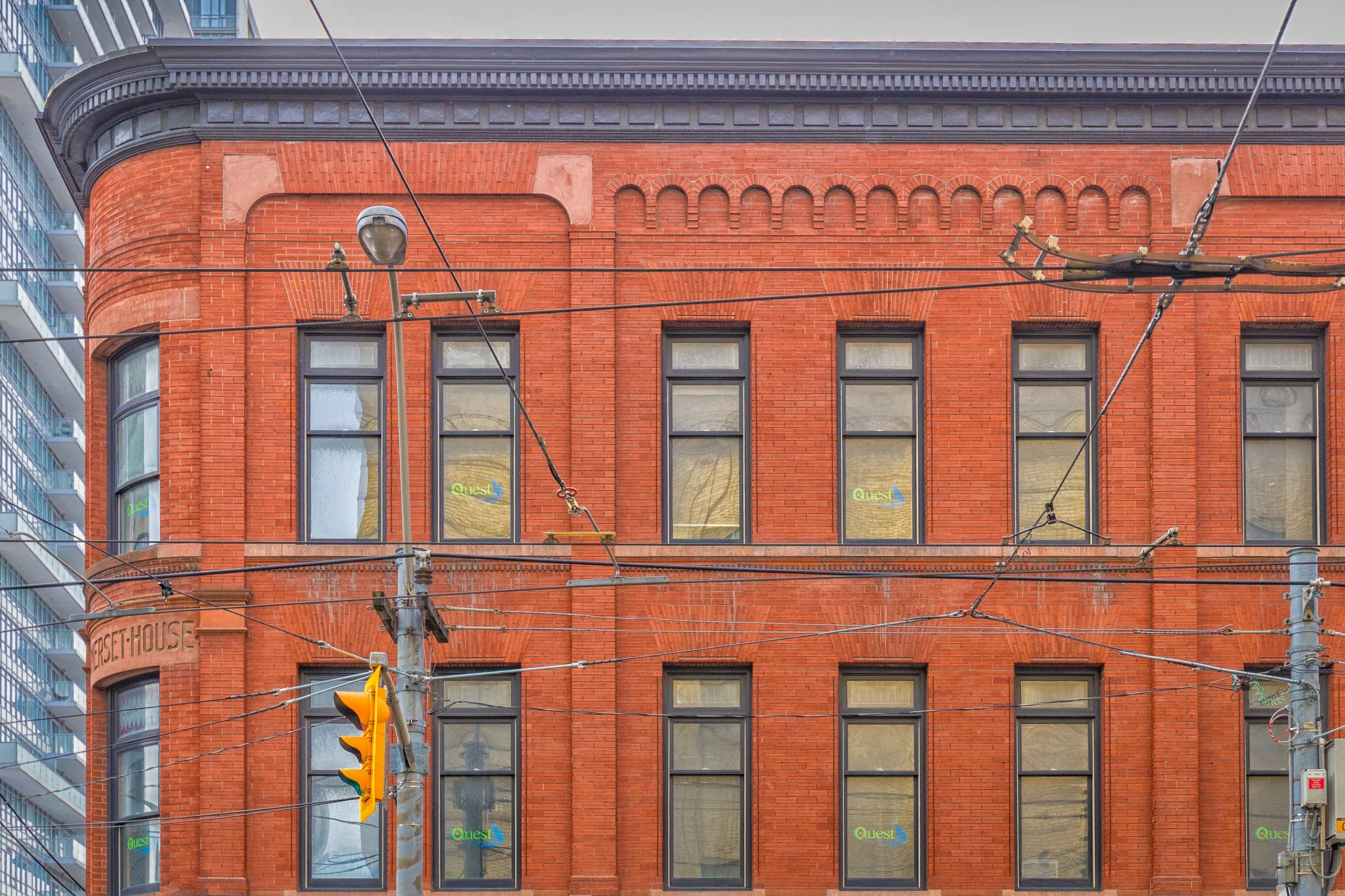
Somerset House Hotel, 432 Church Street at Carlton
The Somerset House Hotel at 432 Church Street anchors the southwest corner of Church and Carlton with a curved red-brick façade and restrained Romanesque detailing. Built in the late 19th century, the former hotel reflects a period when Toronto’s downtown was densifying through durable, mixed-use commercial buildings. Today, offices sit behind the preserved exterior, while streetcar wires trace the city’s ongoing layers of movement and continuity.
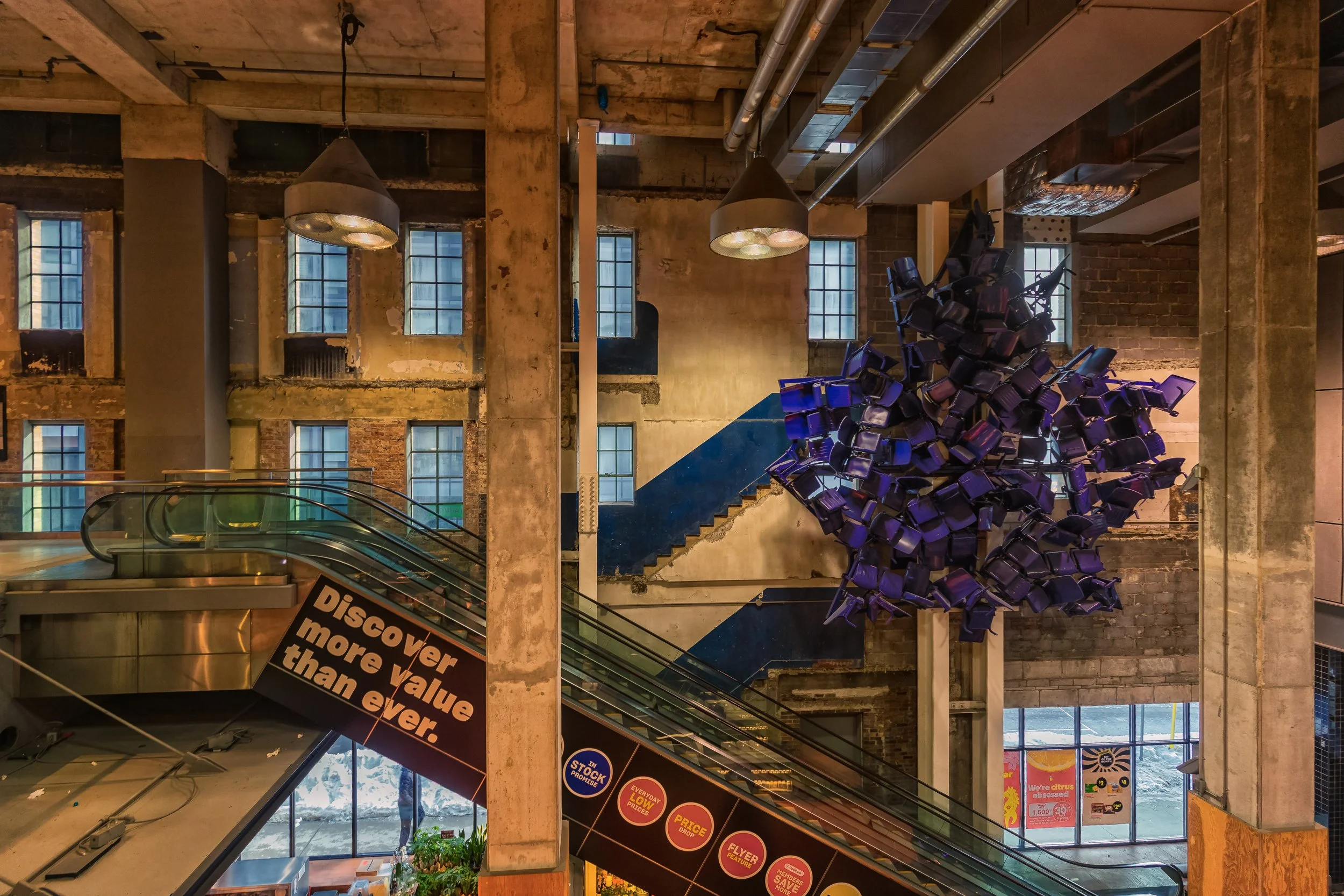
Maple Leaf Sculpture, Maple Leaf Gardens Redevelopment (2011)
Suspended above the escalators of what is now Loblaws, this maple leaf sculpture is constructed from original arena seating salvaged from Maple Leaf Gardens. Once filled with spectators witnessing hockey, concerts, rallies, and civic moments, the seats have been reassembled into a national symbol—hovering between past and present.
Set against the building’s preserved concrete columns and brick walls, the sculpture functions as a quiet memorial within an everyday space. It anchors memory in material form, ensuring the Gardens’ legacy remains visible—not frozen in time, but woven into daily life.
Heritage note: The sculpture forms part of the building’s integrated heritage design program created during the 2011 redevelopment and is not attributed to a single artist, reflecting its role as a collective memorial rather than a standalone artwork.
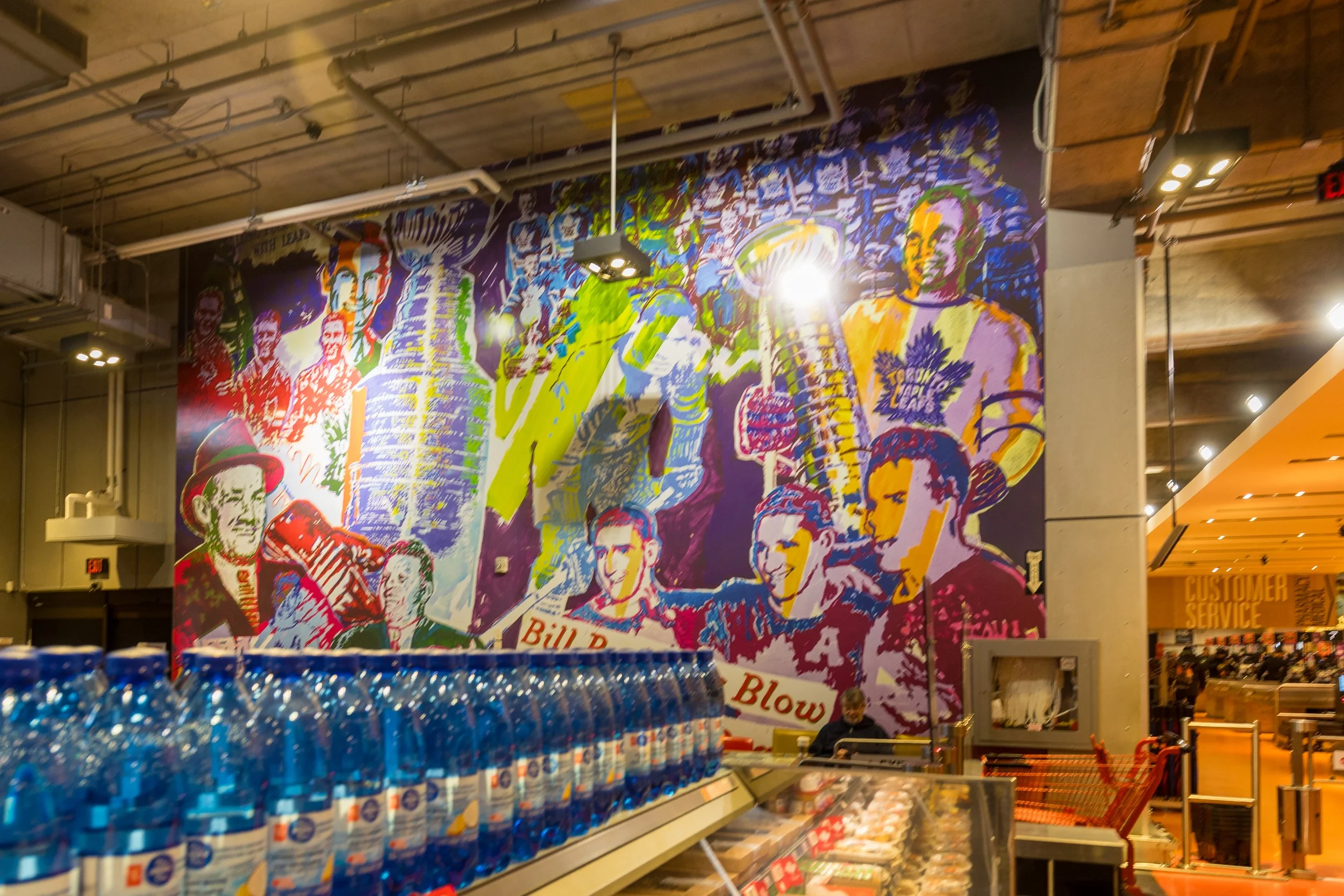
Toronto Maple Leafs Mural — Maple Leaf Gardens (Loblaws), Toronto
Painted across an interior wall of Maple Leaf Gardens, this large-scale mural brings together historic moments from the Toronto Maple Leafs franchise. The composition features legendary players alongside Conn Smythe, the team’s longtime owner and the driving force behind the construction of Maple Leaf Gardens itself.
Executed in a bold, layered style, the mural blends portraiture, text, and graphic elements to evoke the cultural weight of hockey in Toronto. It stands as a visual reminder of the building’s past life as a sporting cathedral, now embedded within its contemporary use.
The mural was created by John Richmond (1926–2013), whose work often explored Canadian identity and collective memory through public art.
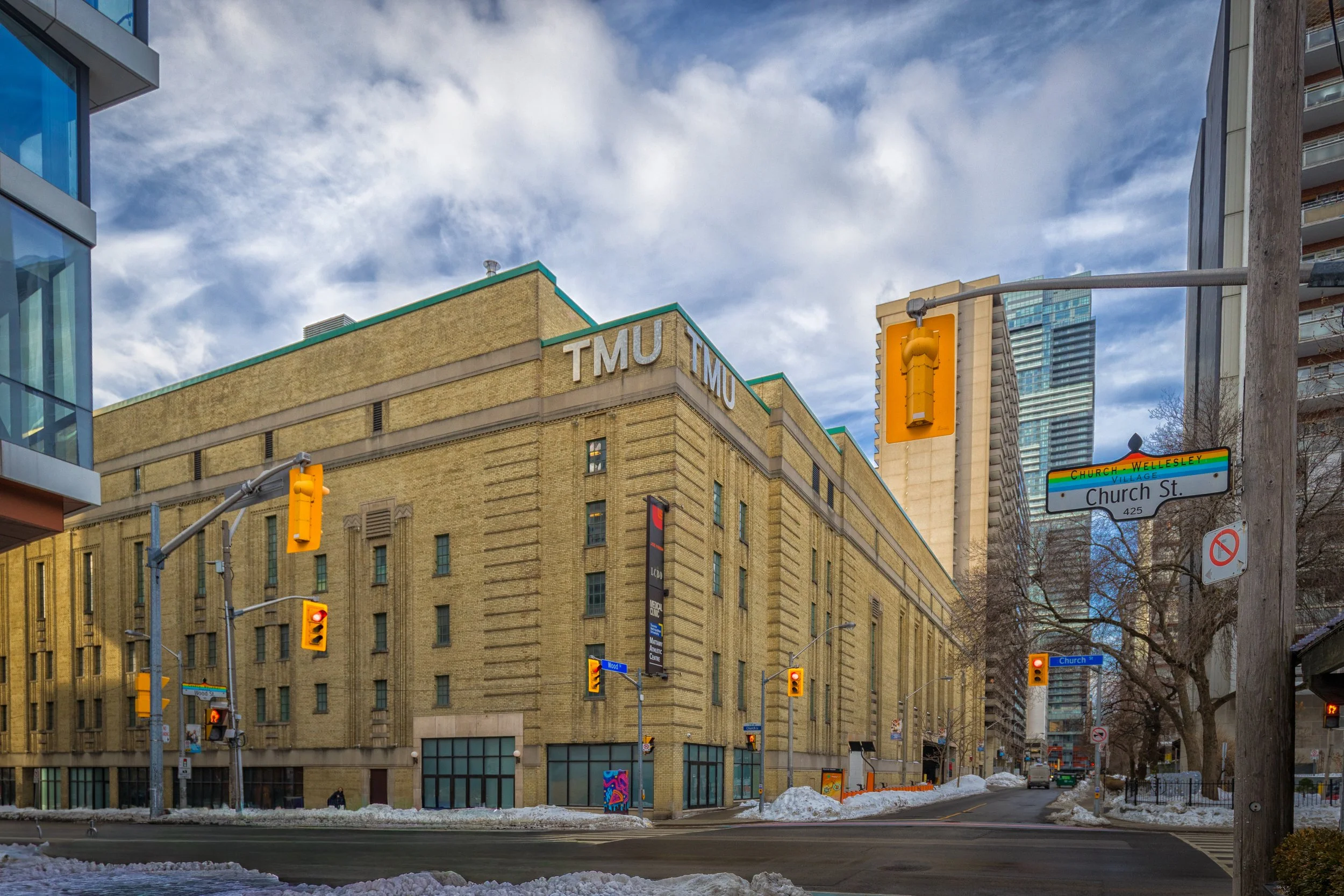
Maple Leaf Gardens, Wood & Church Streets
Seen from Wood and Church, Maple Leaf Gardens carries the name of Toronto Metropolitan University across its roofline—an overlay on a building long associated with national sport, spectacle, and collective memory. Originally opened in 1931 as one of Canada’s most iconic arenas, the Gardens now operate as a layered civic space, housing university athletics above and everyday commerce below.
The TMU lettering marks a contemporary chapter in the building’s life, while the fortress-like brick mass remains unchanged, anchoring the intersection in continuity rather than nostalgia. It is a view that captures Toronto’s evolving relationship with reuse: not erasure, but accumulation.
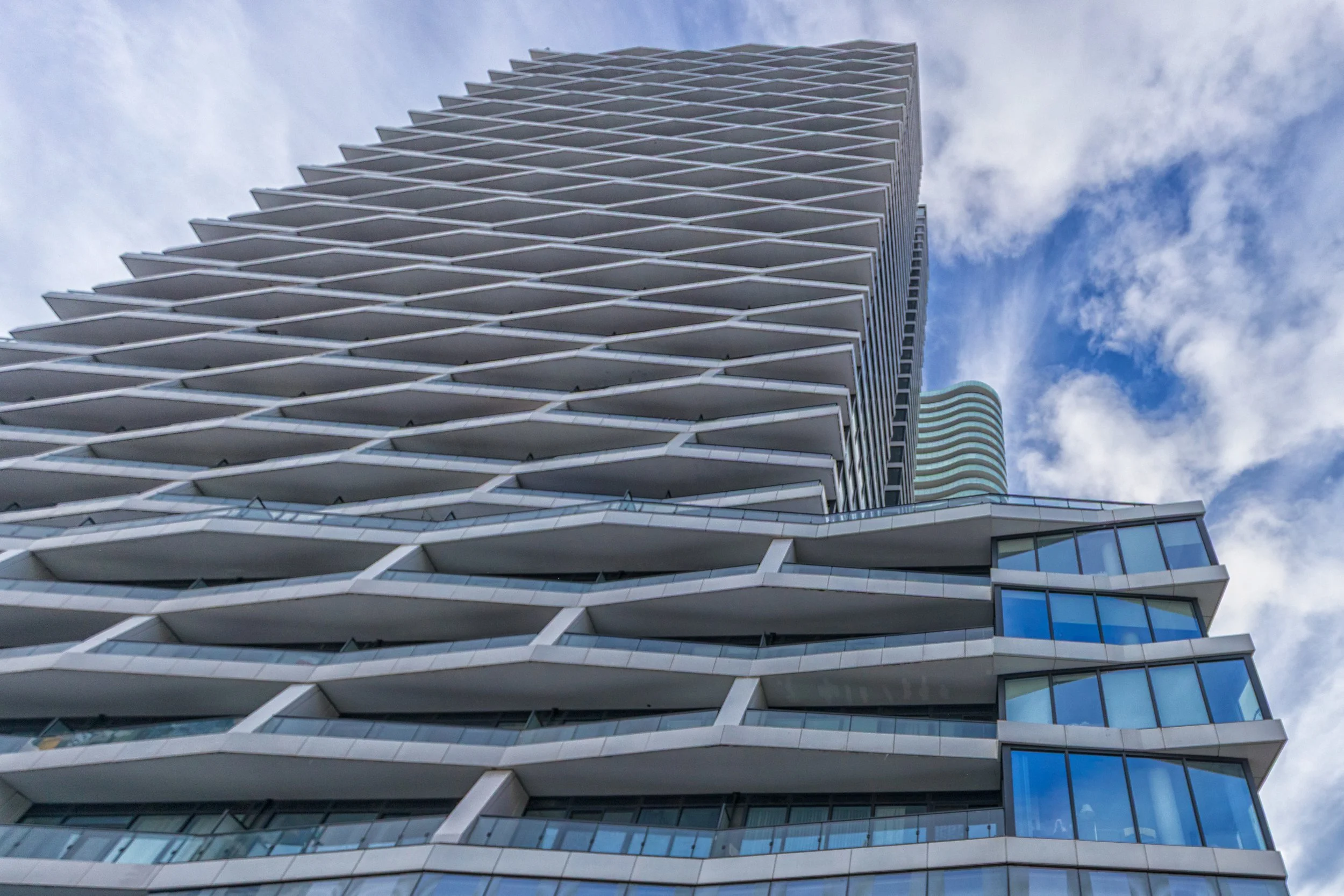
Axis Condos — 85 Wood St, Toronto
Completed in 2019, Axis Condos is a 45-storey, design-forward tower at Yonge & College in Toronto’s Church-Yonge Corridor. Developed by CentreCourt Developments and designed by Page + Steele / IBI Group, the building features 583 suites and a distinctive vertical grid façade that has become a recognizable downtown landmark. Designed with professionals, students, and investors in mind, Axis emphasizes efficient layouts, modern interiors, and shared amenities—including coworking space and Tesla vehicles shared by residents.
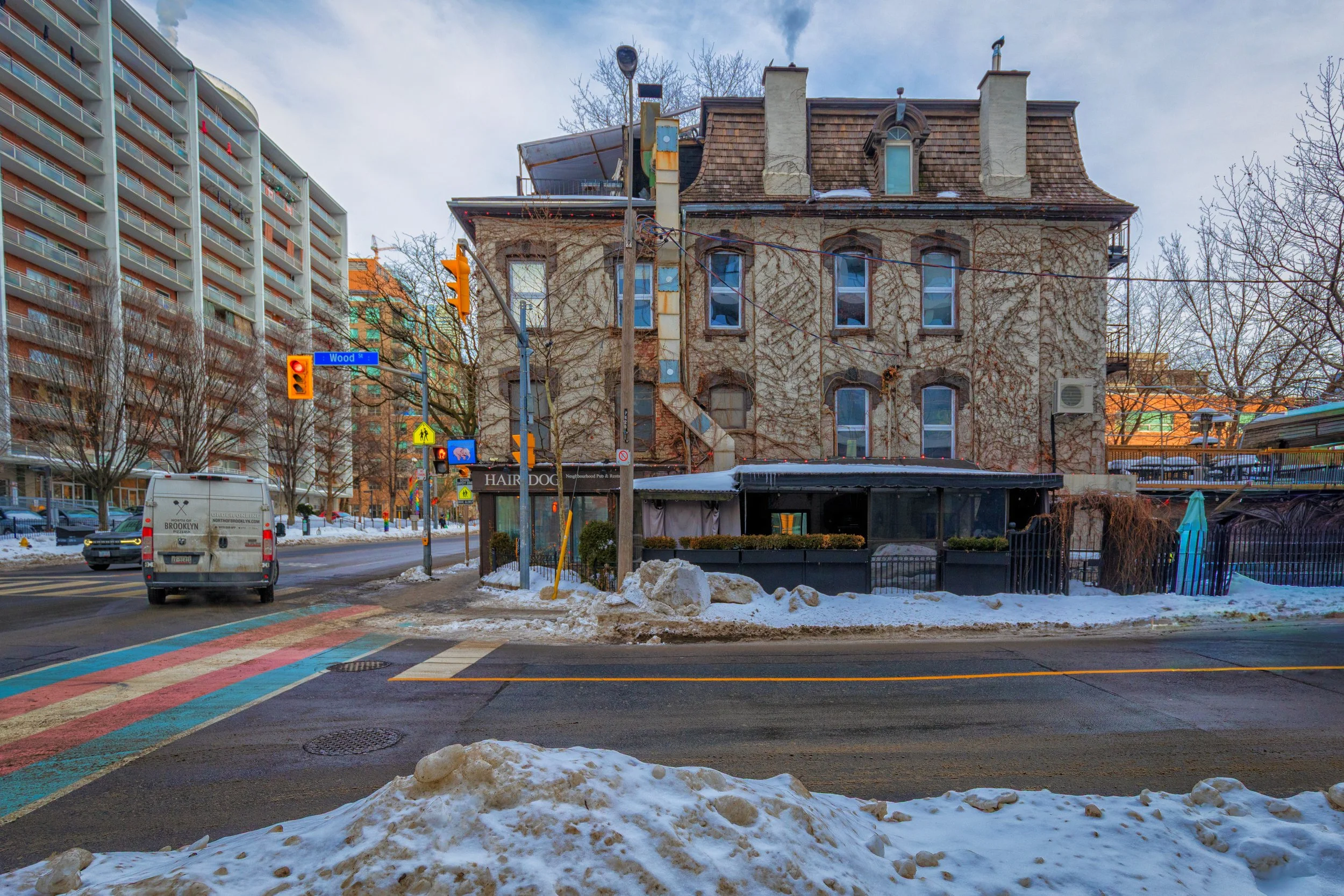
Hair of the Dog — Church Street
Hair of the Dog is a long-standing neighbourhood pub on Church Street, across from the former Maple Leaf Gardens. Housed in a mid-century building layered with history, it’s known for its welcoming patio, generous plates, and a clientele that reflects the mix and character of the surrounding streets. Part local institution, part downtown meeting place, it’s been anchoring this corner since the mid-20th century—quietly adapting as the city changes around it. 425 Church Street in Toronto.
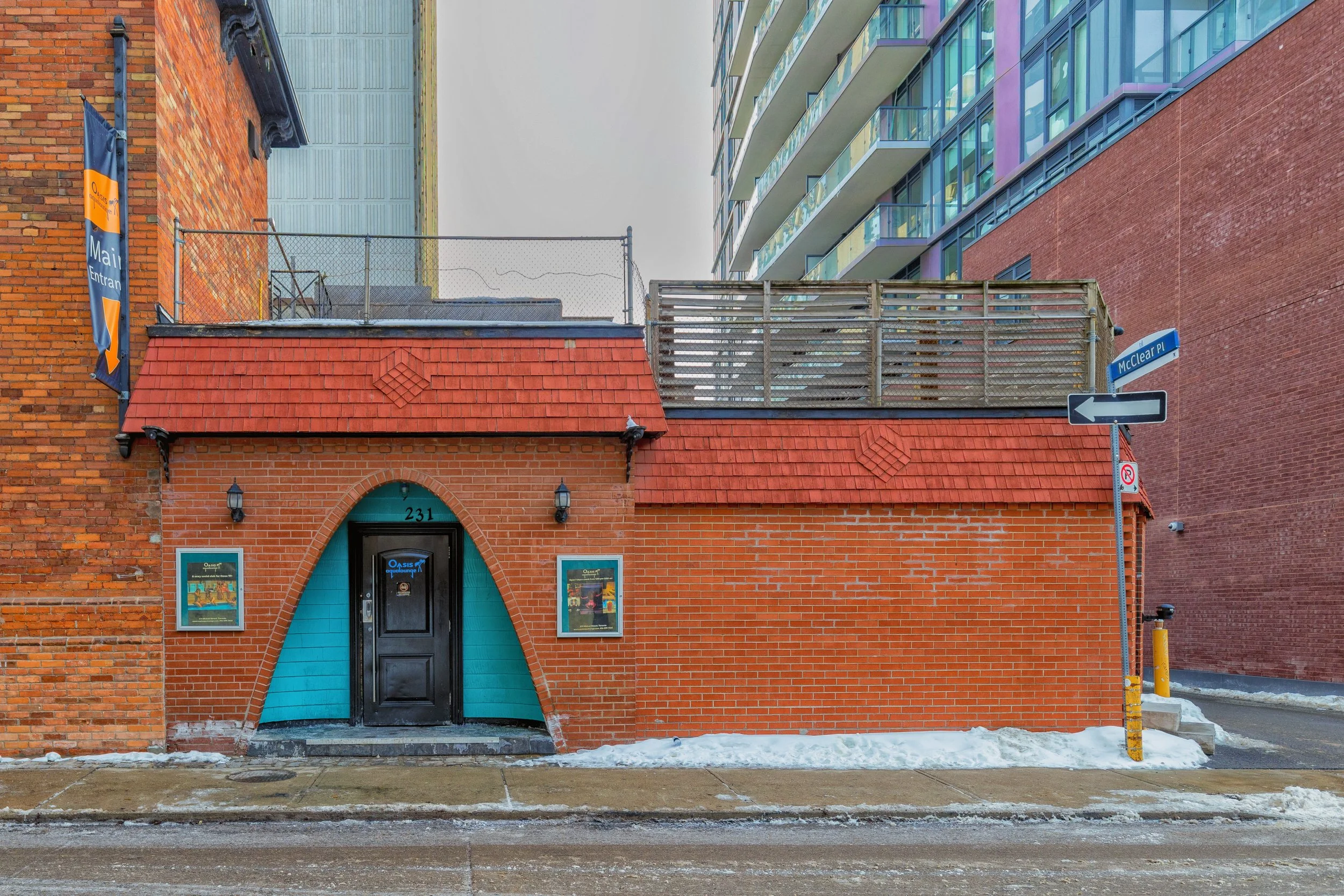
231 Mutual Street — With a History
Once the site of the iconic Pussy Palace bathhouse parties for queer women and trans community members, today’s Oasis Aqualounge carries layers of Toronto history. In September 2000, Toronto police raided a Pussy Palace event at this address, entering with male officers despite the women-only nature of the space — an action that many in the community saw as a violation of privacy and rights.
In the aftermath, organizers and supporters fought back: charges against volunteers were dismissed in court, and a class-action lawsuit and human rights complaint against the Toronto Police Services Board were settled in 2005 for about $350,000, including requirements for bias-sensitivity training and support for community causes.
That fight remains a notable part of Toronto’s queer history — a moment of resistance that helped shape how community spaces and policing are discussed to this day.
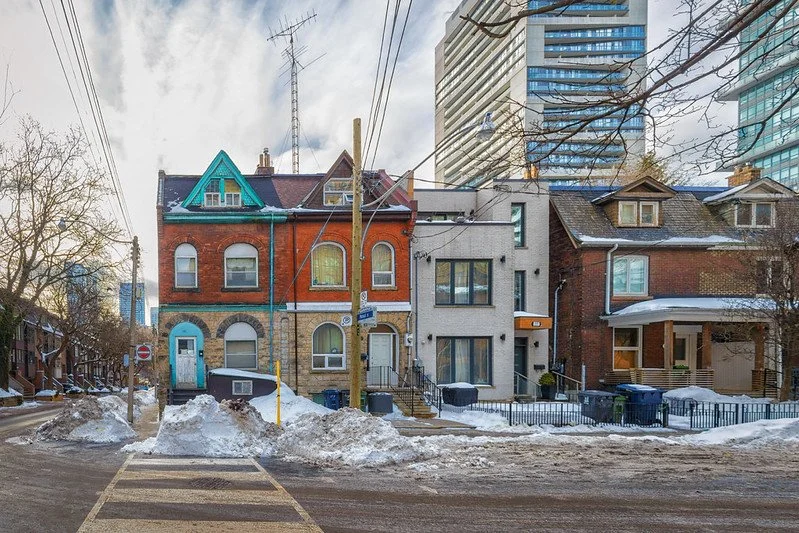
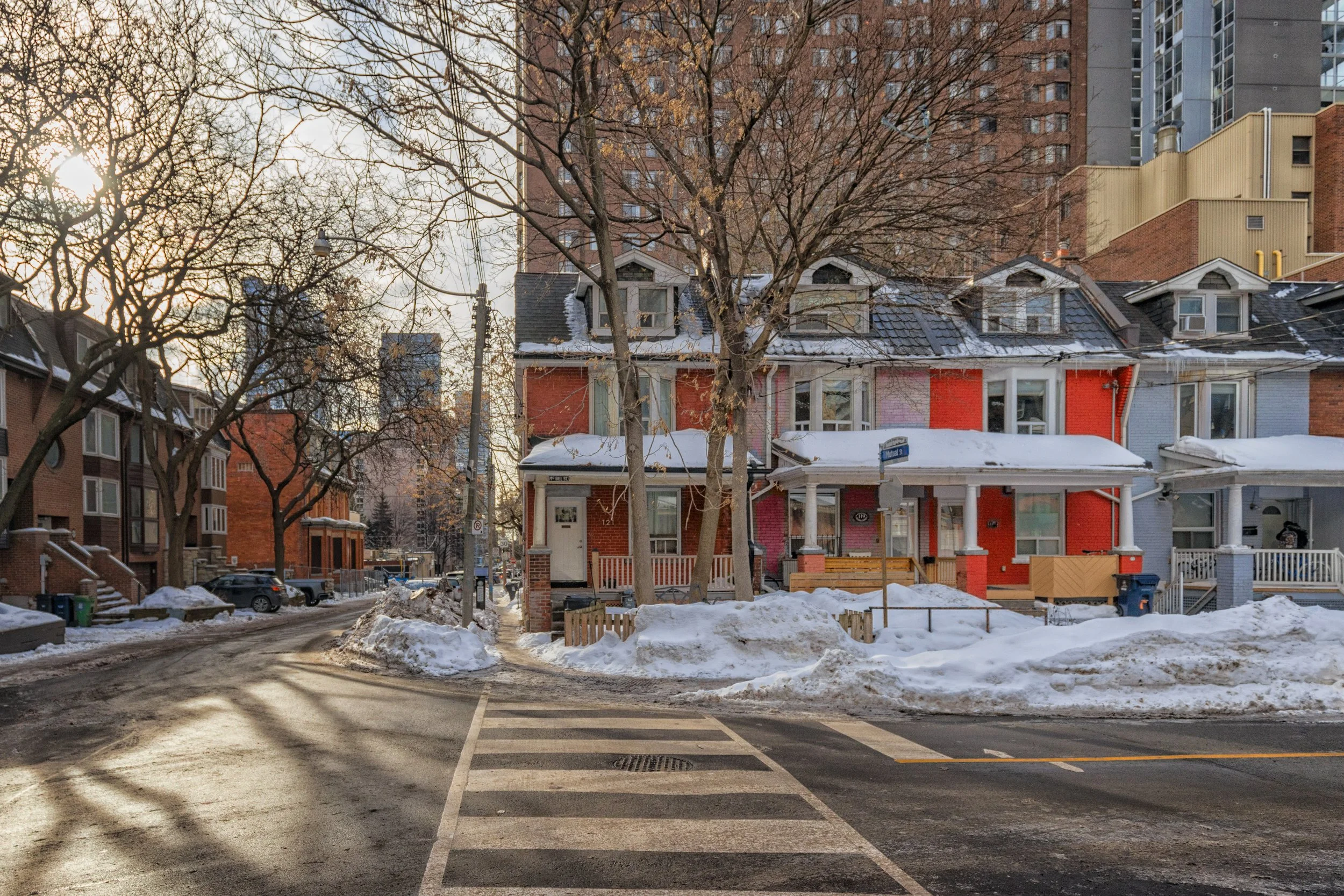
Mutual & Granby: A Downtown Block in Transition
Mutual Street is one of downtown Toronto’s older residential streets, shaped by late-19th-century brick houses that once served working- and middle-class families close to the city’s core. At Granby Street, those early homes now stand alongside modern infill and high-rise development, a reminder of how this neighbourhood has continually adapted to growth, density, and changing needs. It’s a quiet corner that tells a much bigger story about Toronto’s evolution.
McGill & Granby: A Residential Pocket of Old Downtown
Tucked just east of Yonge Street, the corner of McGill Street and Granby Street reflects an earlier chapter of downtown Toronto, when narrow streets were lined with modest brick houses built close to work, schools, and streetcar routes. Many of these homes date to the late 19th and early 20th centuries, surviving waves of redevelopment that reshaped the surrounding area. Today, they sit in the shadow of apartment towers and institutional buildings—a reminder that pockets of residential life have quietly endured even as the city around them has grown taller and denser. McGill Street & Granby Street
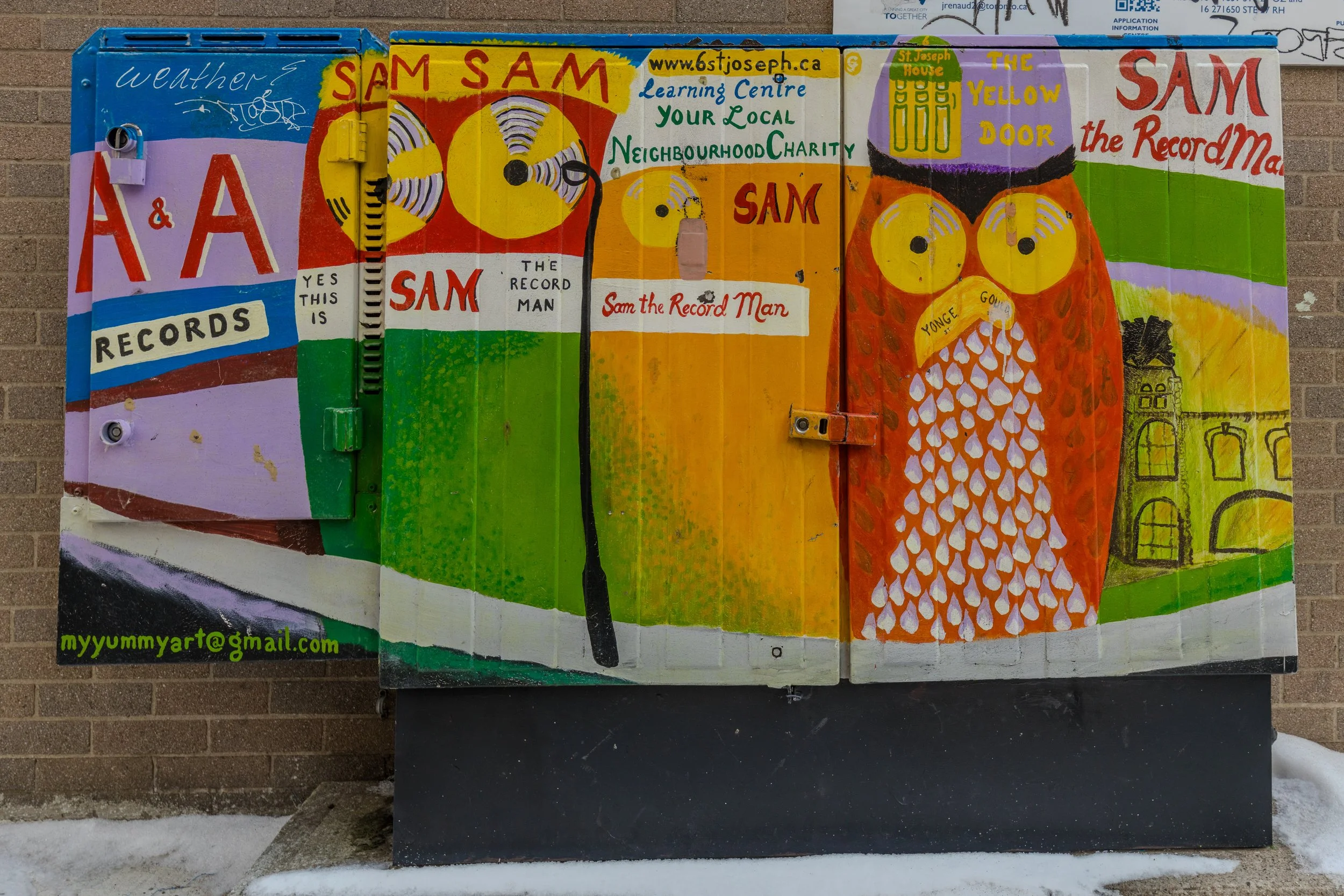
Sam the Record Man, Remembered
Painted onto a utility box at the northeast corner of Mutual Street and Gerrard Street East, this mural layers Toronto music history with neighbourhood care.
References to Sam the Record Man and A&A Records — once anchors of Toronto’s record-store culture, most famously along Yonge Street — sit alongside community names like The Yellow Door and St. Joseph House, grounding the image firmly in place and purpose.
The owl bears “Yonge St & Gould St” on its beak—the original home of Sam the Record Man—relocating that memory to the present-day neighbourhood. 189 Mutual Street, Toronto.
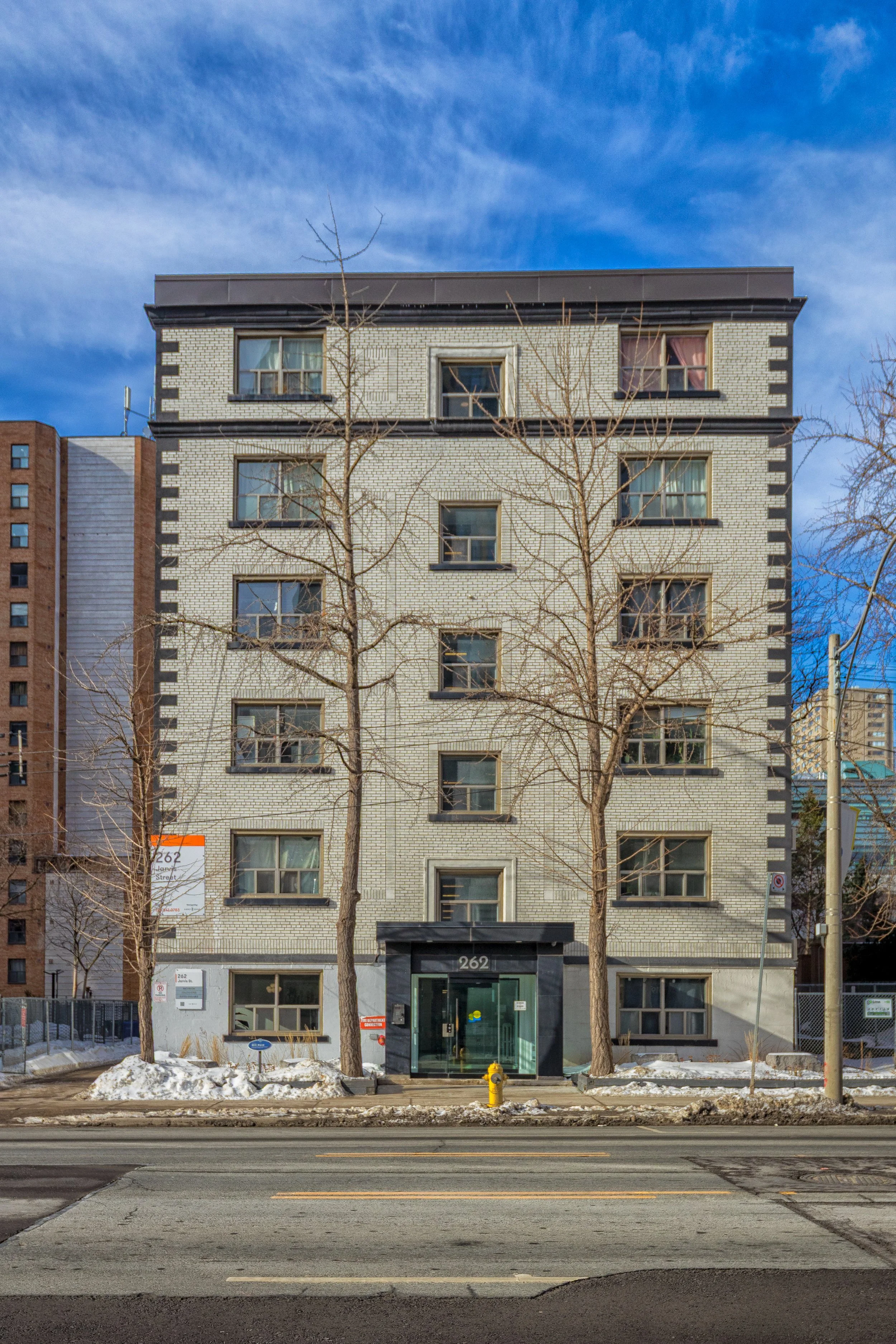
262 Jarvis Street: Art, Memory, and a Downtown Address
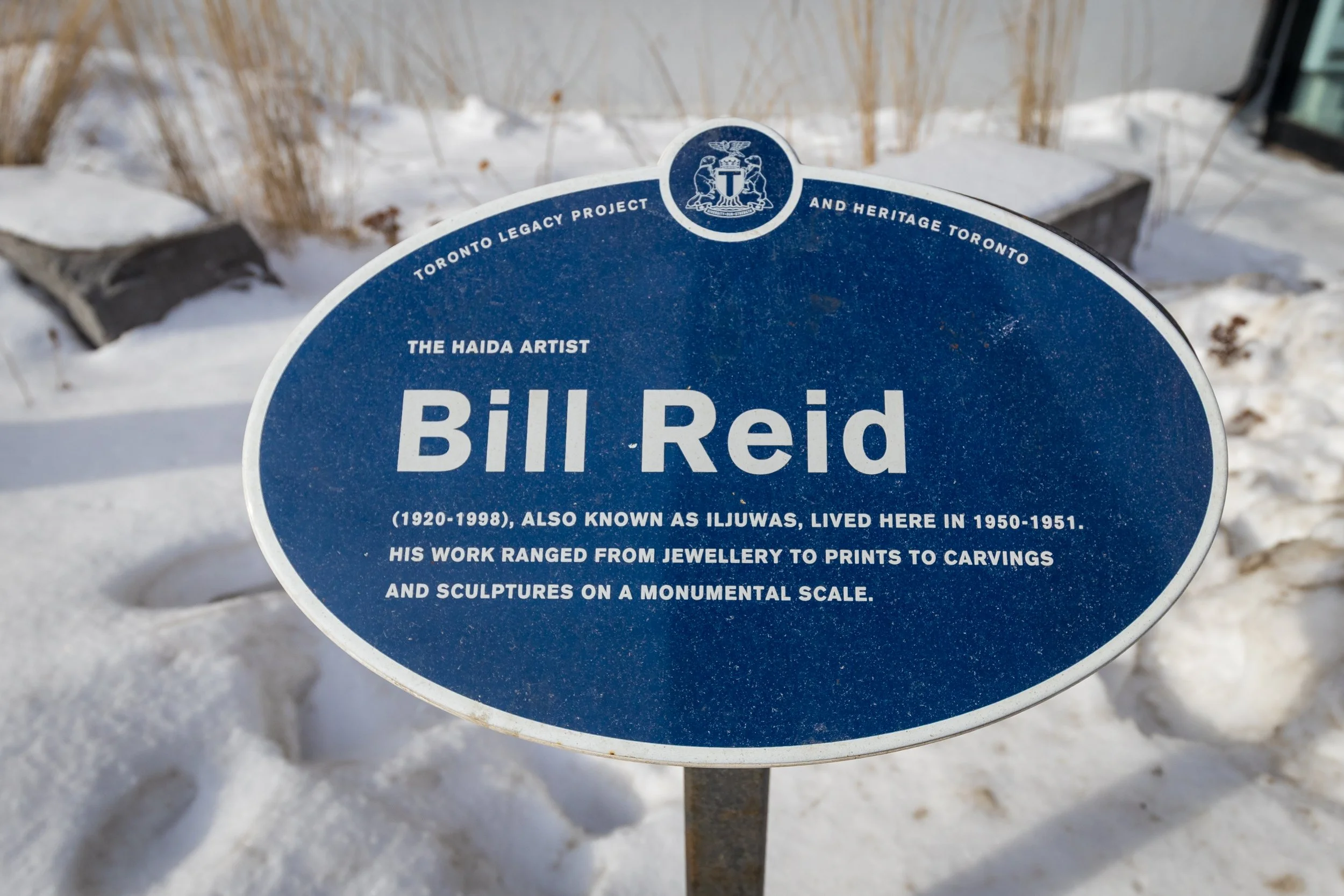
Just south of Carlton Street, 262 Jarvis Street sits within one of downtown Toronto’s most historically layered corridors. Jarvis Street was once lined with grand Victorian homes and later became a centre for mid-century apartment living, cultural institutions, and social change. This address is also marked by remembrance: a nearby plaque honours Bill Reid, the renowned Haida artist who lived in the area during a formative period of his life, linking the street not only to architectural history but to Canada’s broader cultural story.
Today, 262 Jarvis stands quietly amid towers, traffic, and transformation—an ordinary-looking building anchored in an extraordinary neighbourhood shaped by artists, residents, and generations of change. 262 Jarvis Street, Toronto.
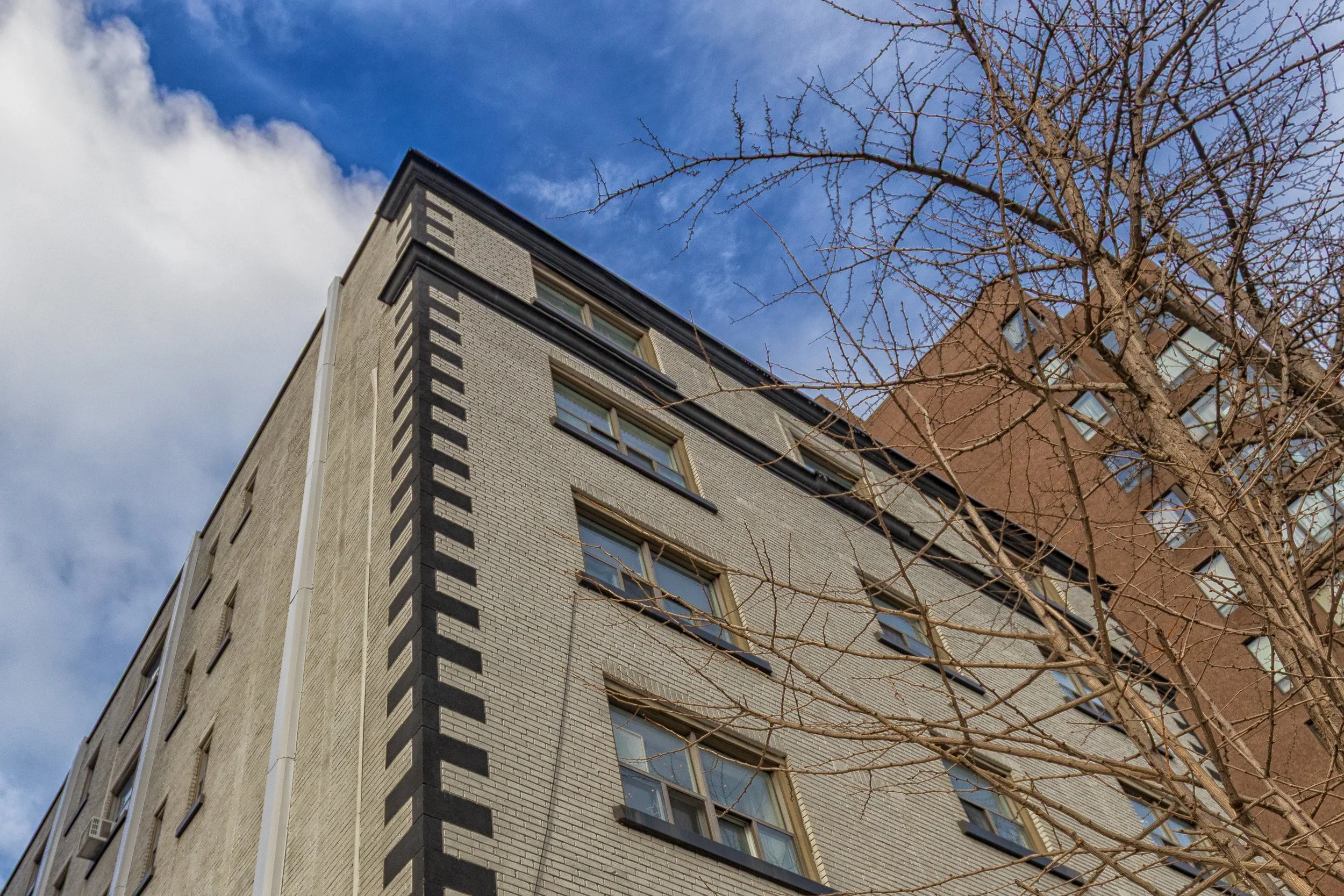
Masonry quoin pattern defining the corner
Bill Reid (1920–1998) - Haida artist and sculptor
Carlton & Sherbourne: Faith, Art, and Continuity
At the corner of Carlton Street and Sherbourne Street, layers of Toronto’s social and architectural history meet. On one side, Paroisse du Sacré-Cœur anchors the block with its long-standing presence. Nearby, St. Peter’s Anglican Church, designed by Gundry & Langley and built in 1865–1866, is defined by its distinctive bellcote rather than a traditional steeple. Deconsecrated in 2016, the building now serves the community through Dixon Hall Neighbourhood Services.
Set between them, a contemporary mural by Jasnine Designs brings present-day expression into a streetscape shaped by faith, adaptation, and everyday life—an intersection where Toronto’s past and present quietly coexist. Carlton Street & Sherbourne Street.
Carlton Street at Allan Gardens: A Downtown Crossroads
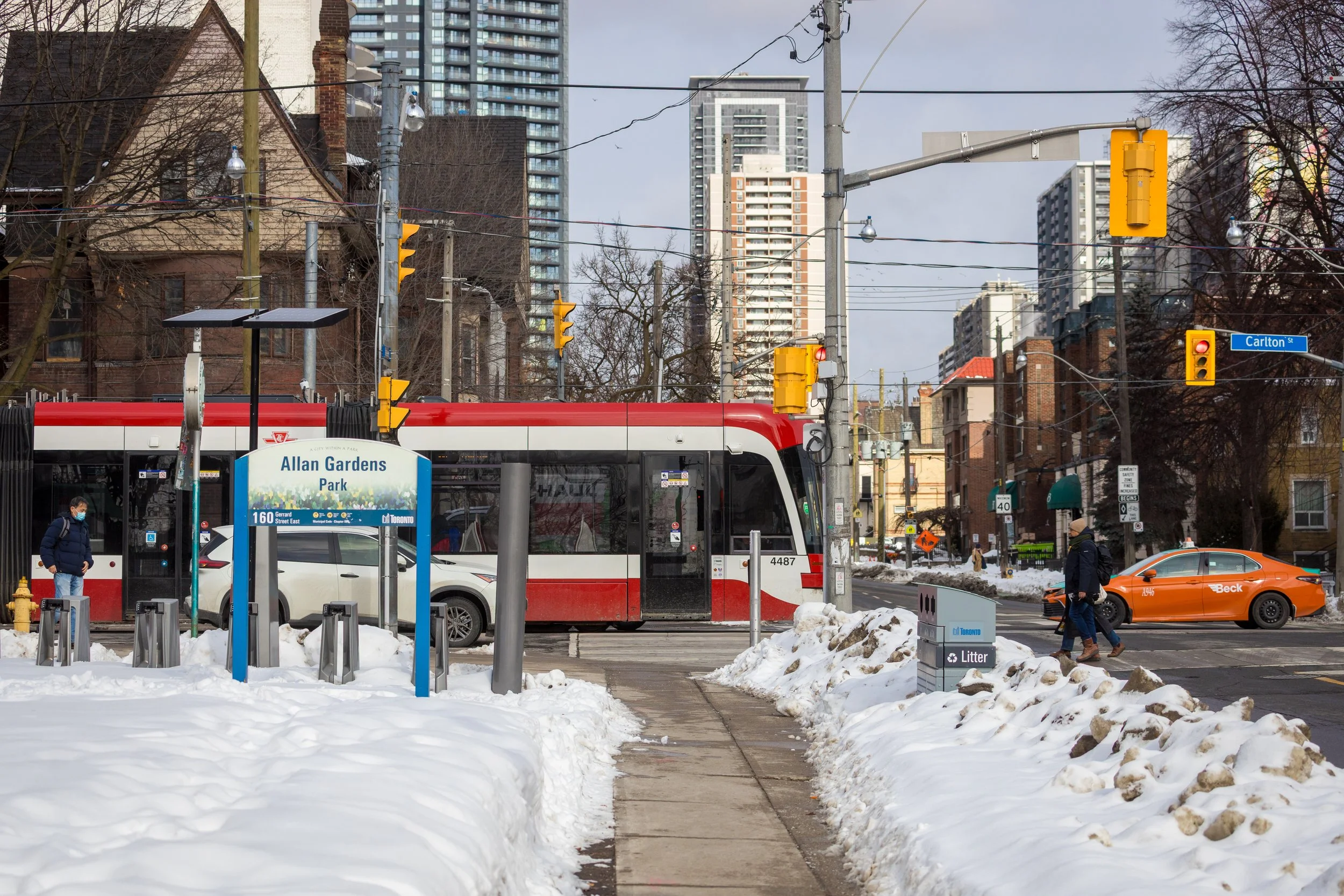
Along Carlton Street, beside Allan Gardens Park, this stretch of downtown has long connected green space, transit, and surrounding residential blocks. Since the late 19th century, Carlton Street has served as a practical east–west route shaped by streetcars, pedestrians, and nearby institutions. Today, winter snowbanks, passing streetcars, and rising towers frame a scene that reflects everyday movement through one of Toronto’s oldest public landscapes. Carlton Street & Allan Gardens, Toronto.
145 Gerrard Street East: A House That Endures
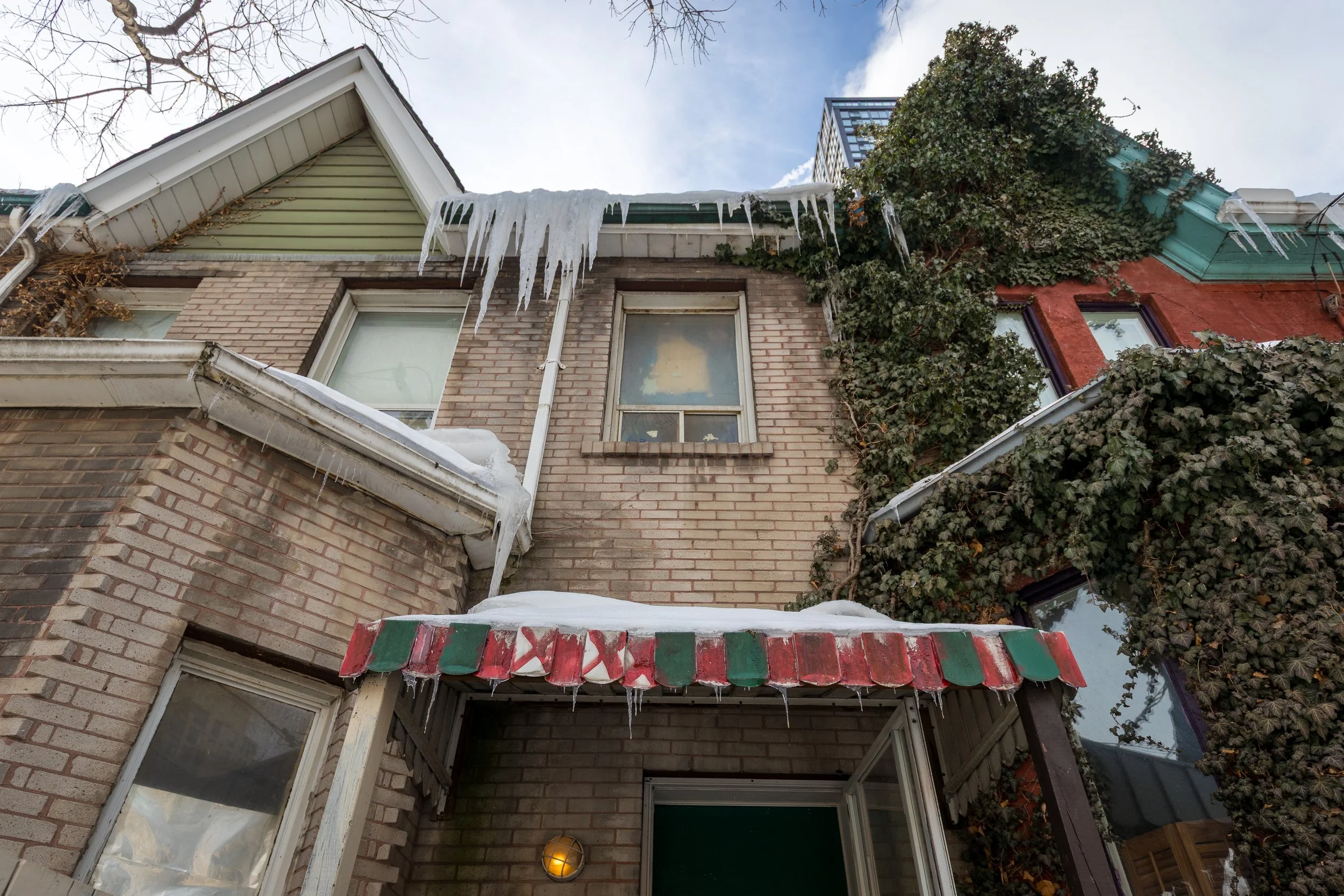
Built as part of Gerrard Street’s late-19th-century residential fabric, 145 Gerrard Street East reflects the everyday adaptations of downtown living. Layered brick, enclosed porches, and creeping ivy tell a quieter story of continuity as the city grows denser around it. Gerrard Street East, Toronto
George & Gerrard Street East
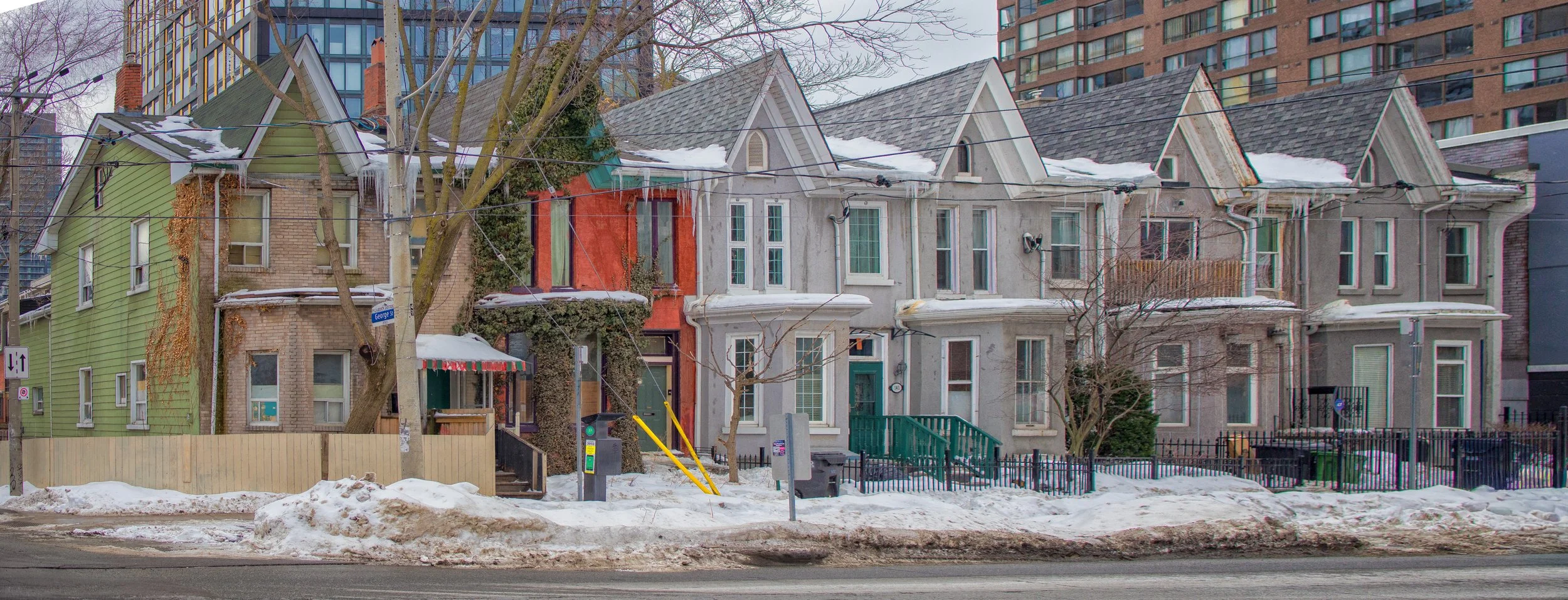
At the corner of George Street and Gerrard Street East, a row of late-19th-century houses holds its place against a backdrop of newer towers. Built close together for working families near streetcar routes, these homes reflect an earlier residential scale that still defines pockets of downtown Toronto today. George Street & Gerrard Street East.
More from this walk can be seen here: https://www.agreatcapture.com/blog/2026/2/12/allan-gardens-conservatory-toronto