Winter Walk Along Toronto’s Waterfront: Jack Layton Ferry Terminal to Ireland Park
Jack Layton Ferry Terminal
February 25, 2026
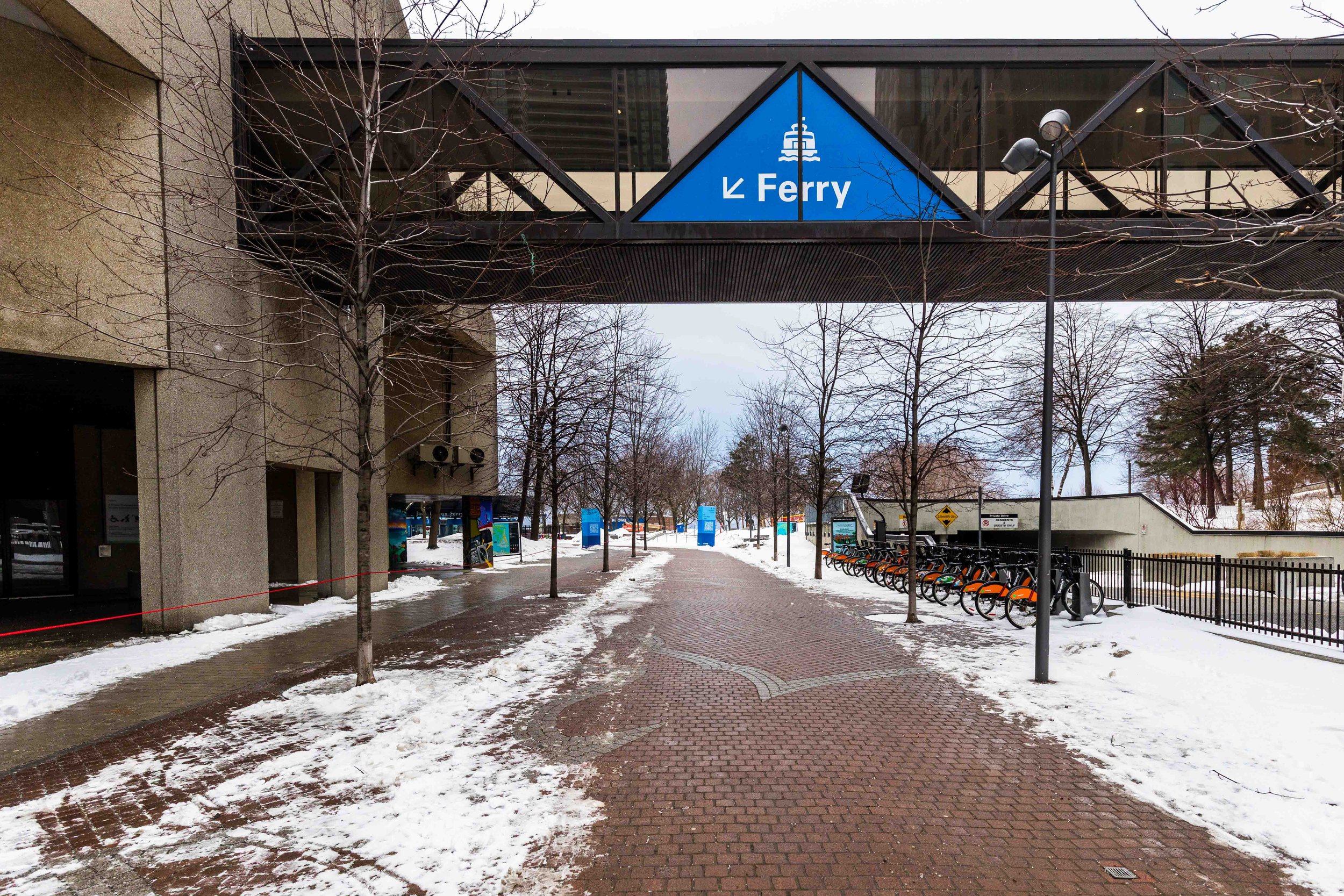
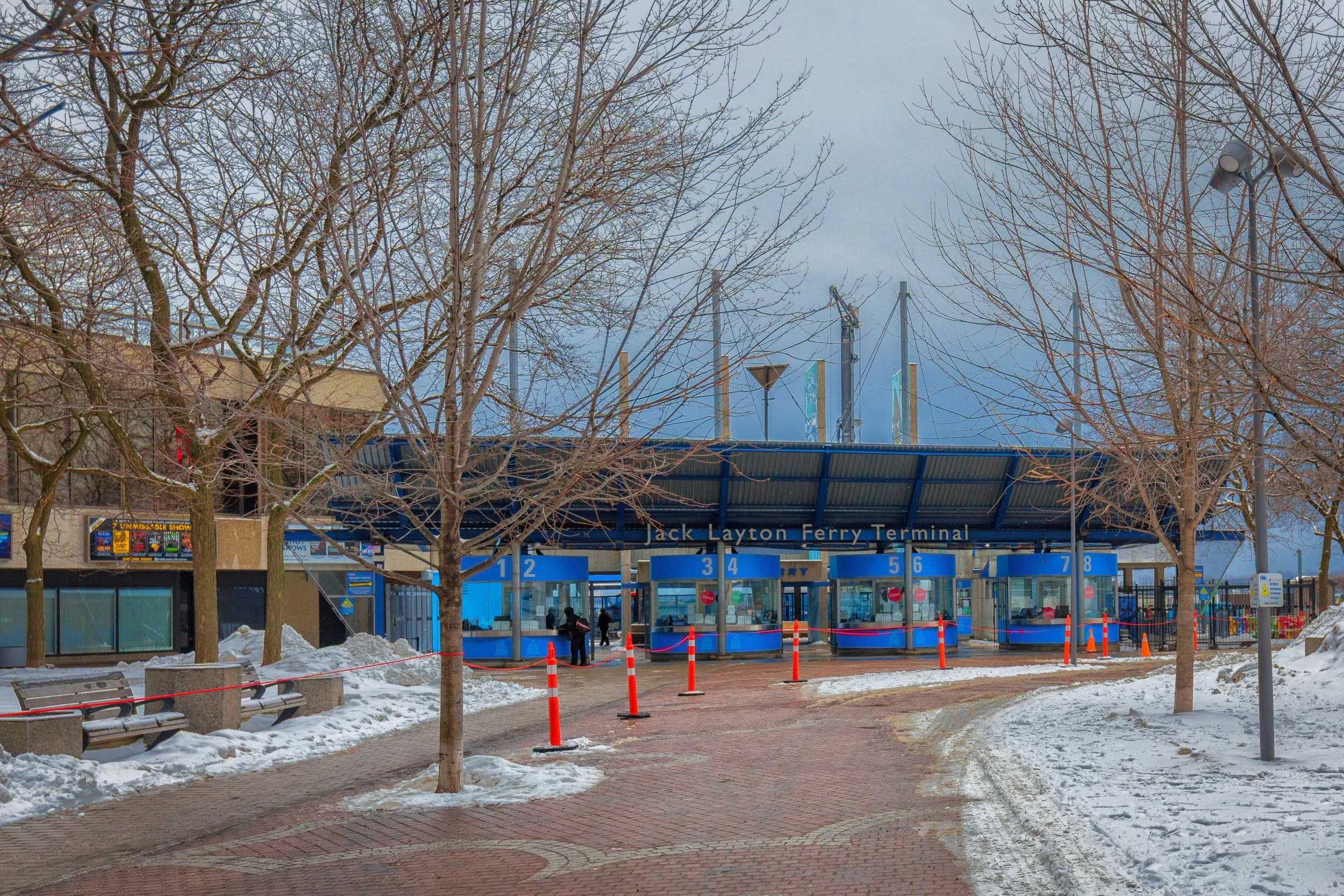
The Jack Layton Ferry Terminal was quiet and empty on this winter morning. I walked past the terminal where long lineups form in the spring and summer — often early in the day — and it felt almost strange to have the space to myself. From there, it’s only a short distance to the water at Harbour Square Park, and I could already see the ice on the lake from a distance.
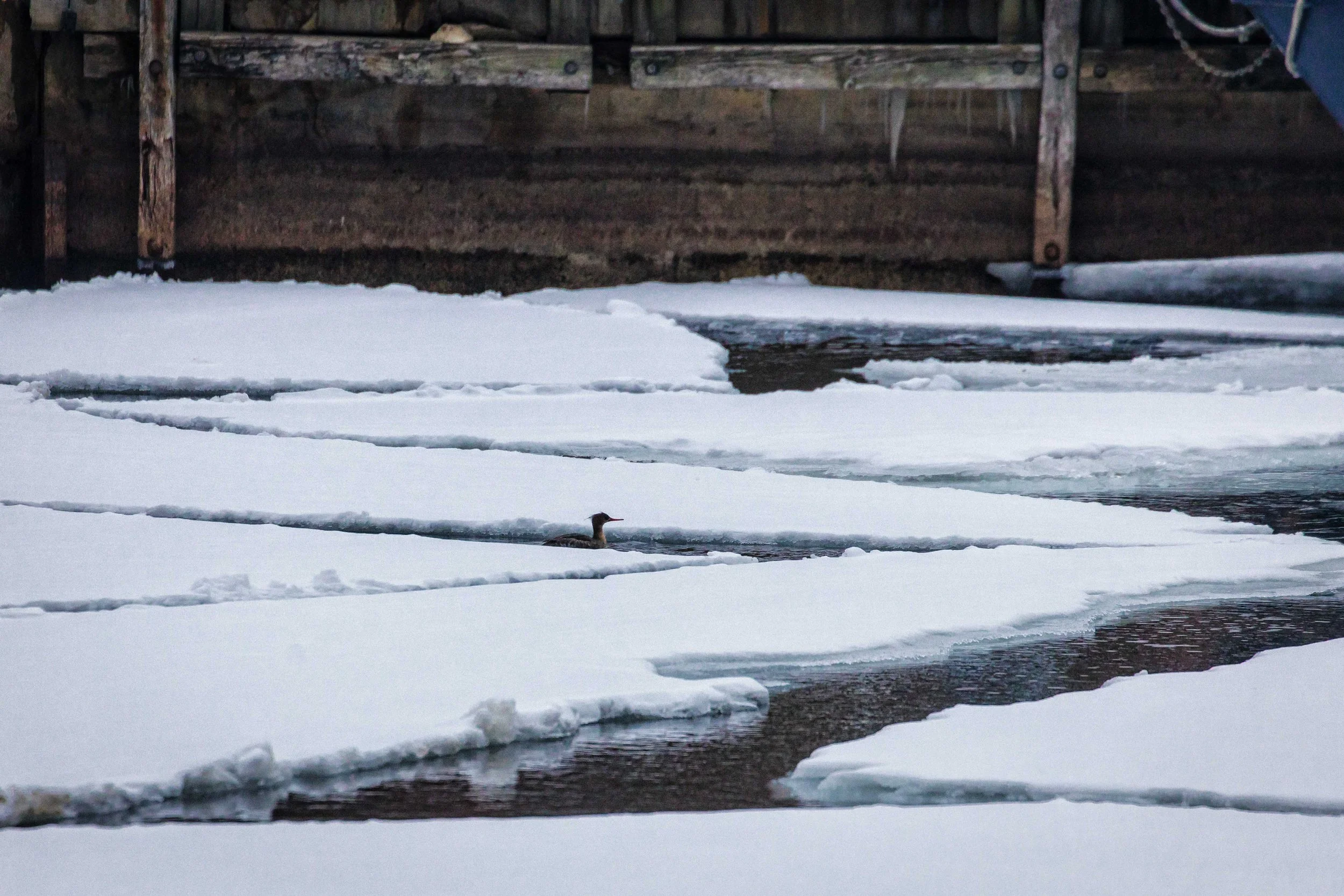
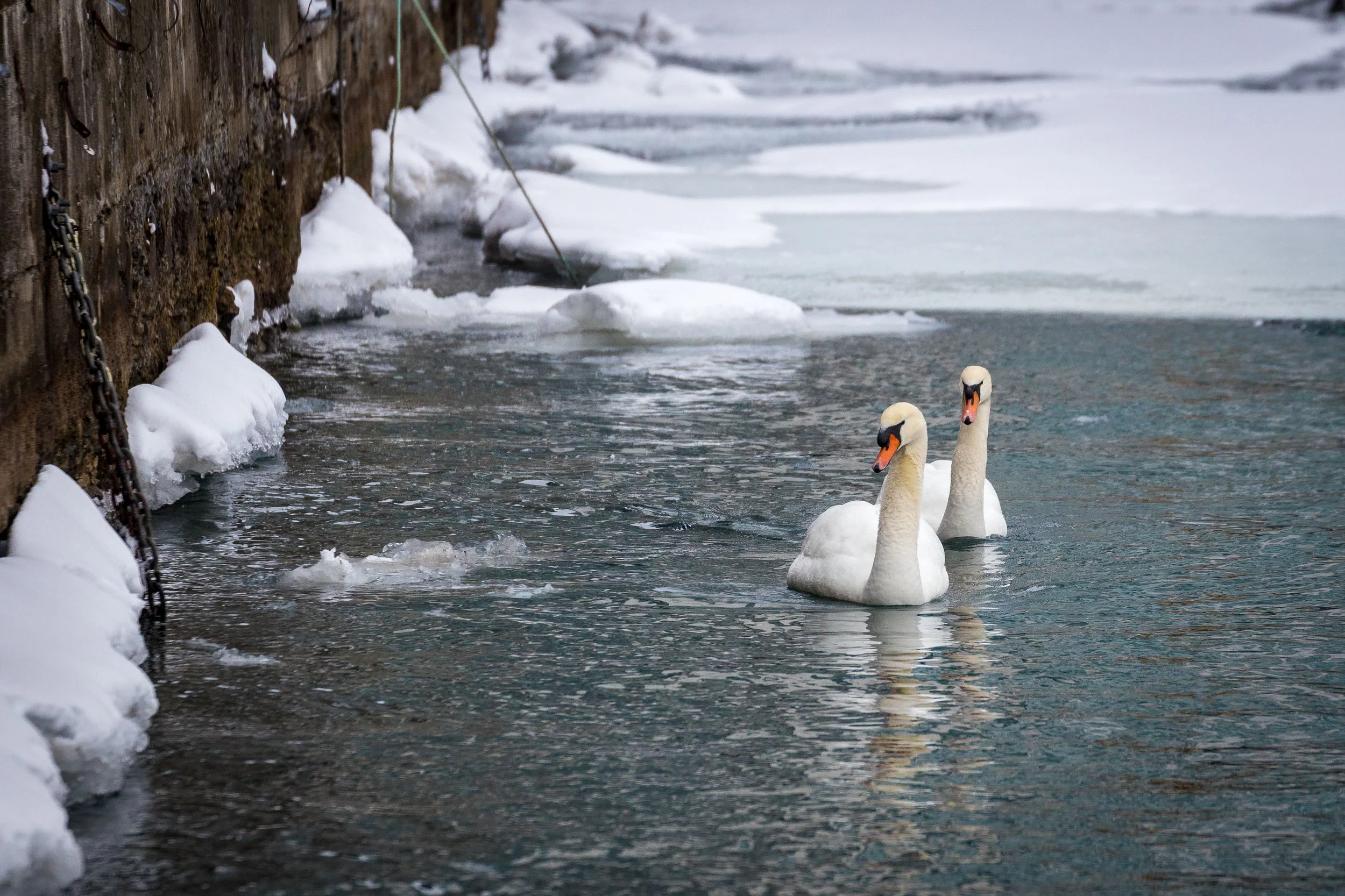
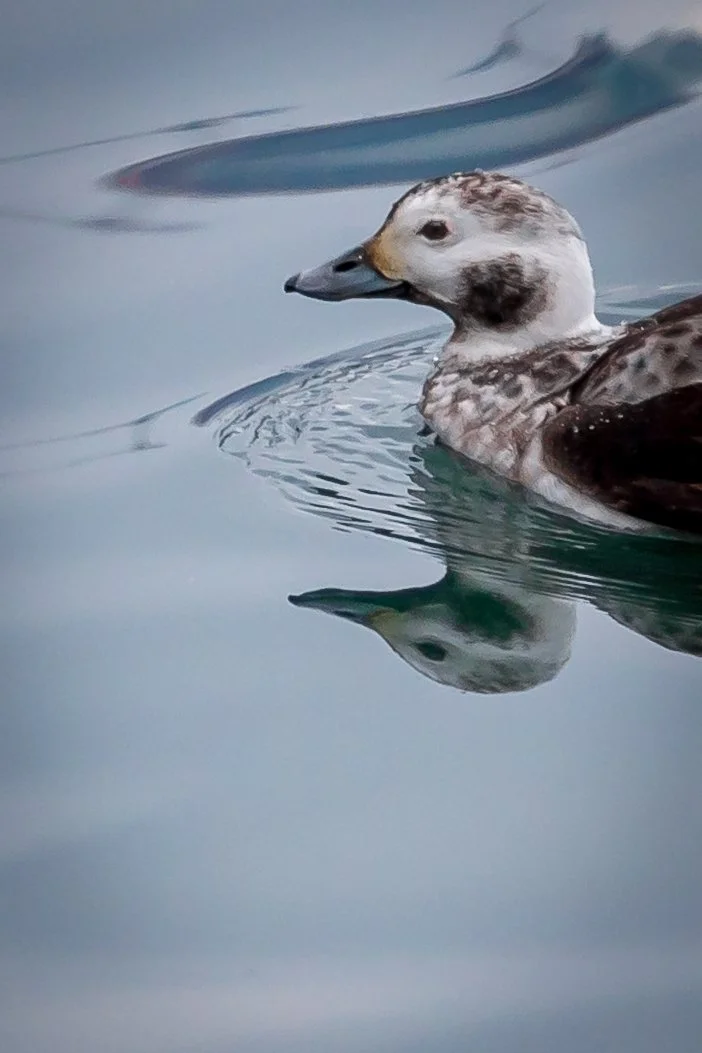
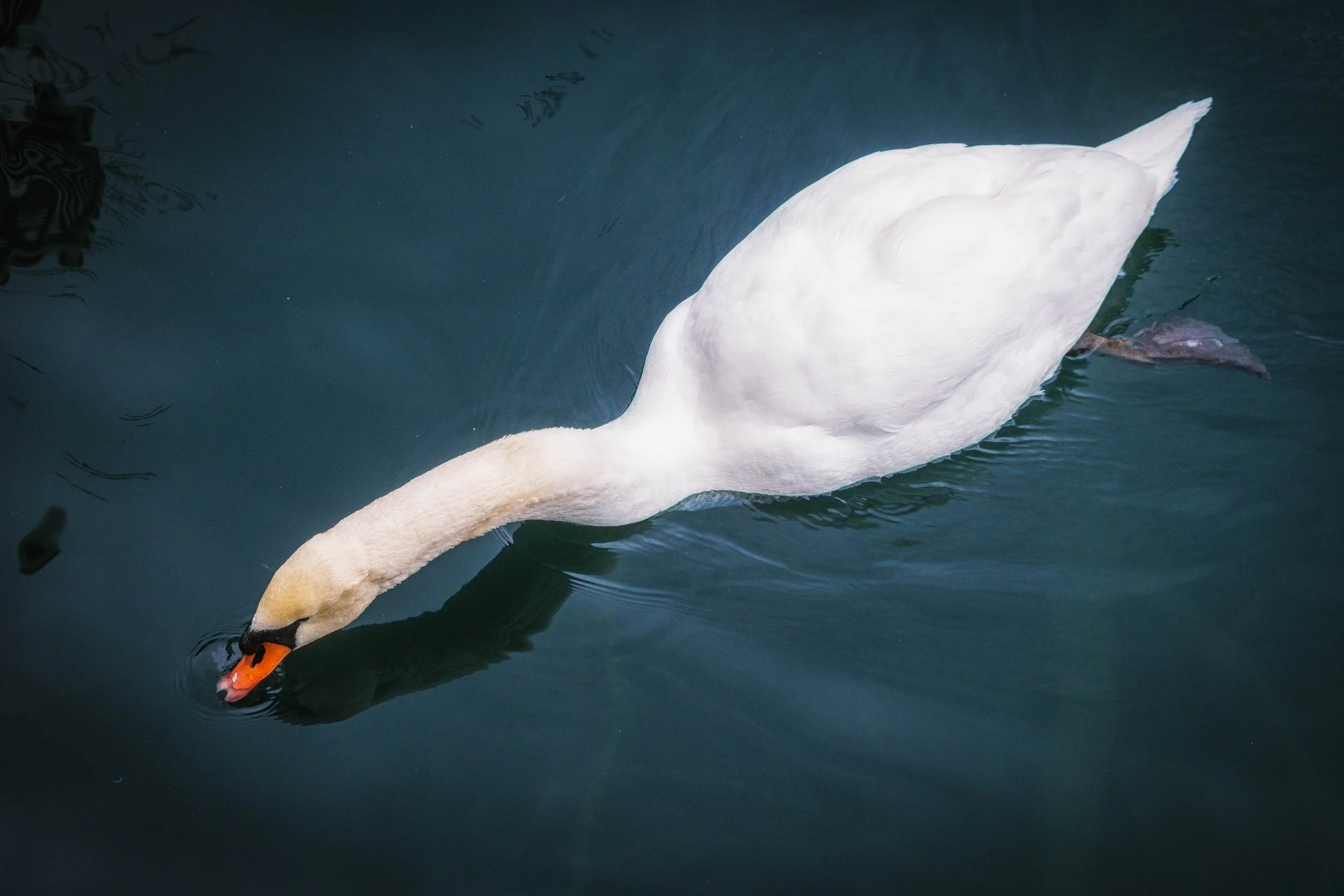
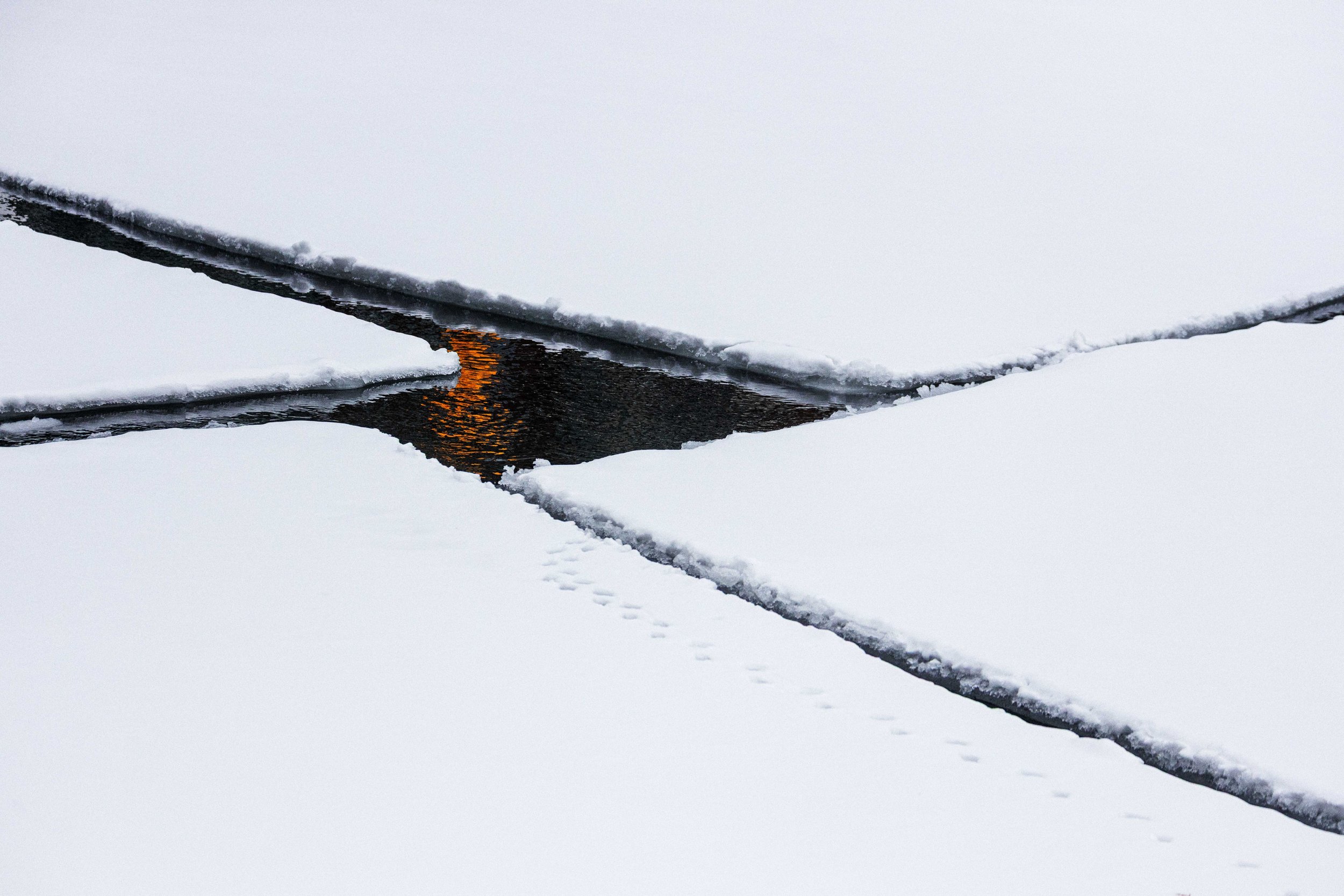
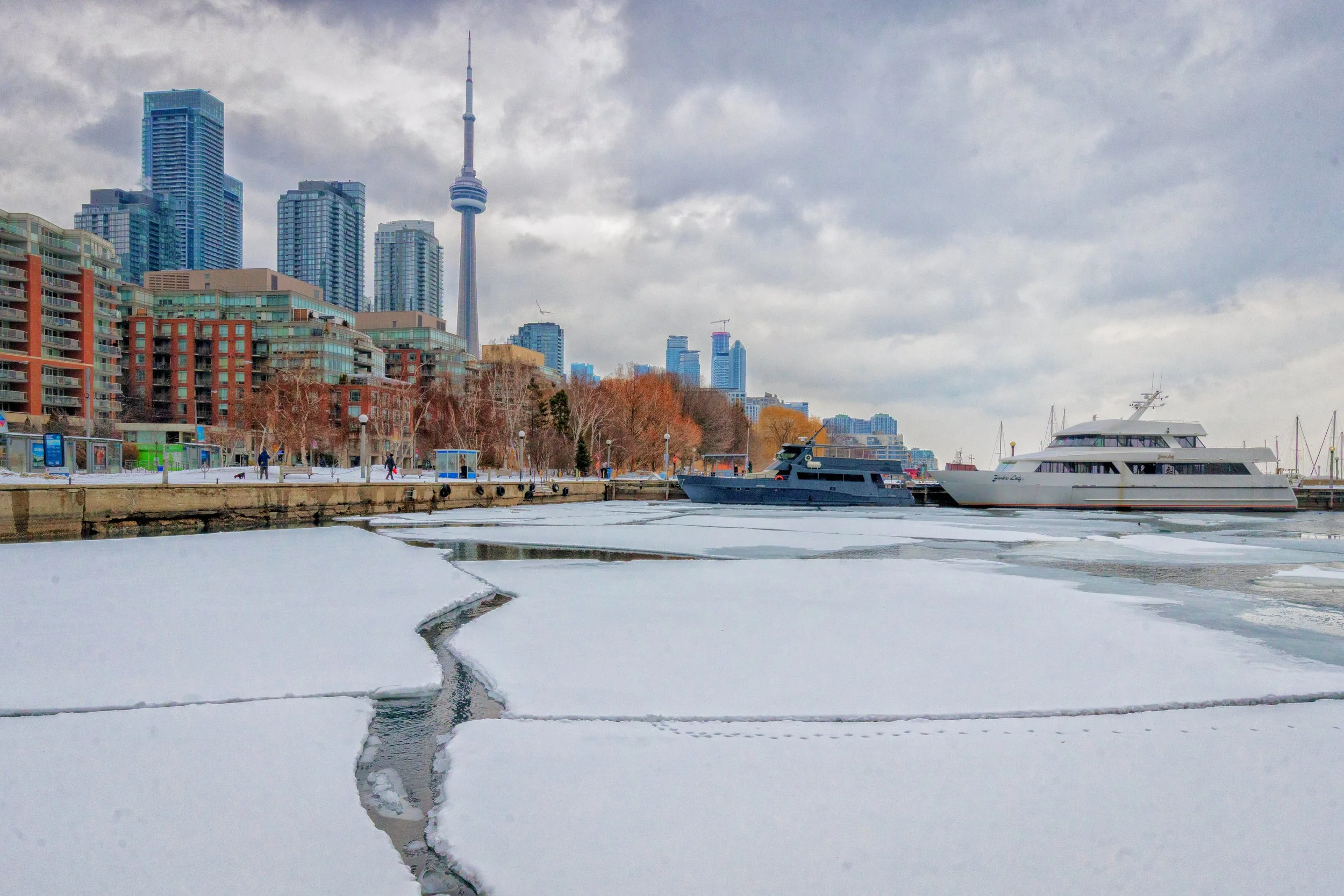
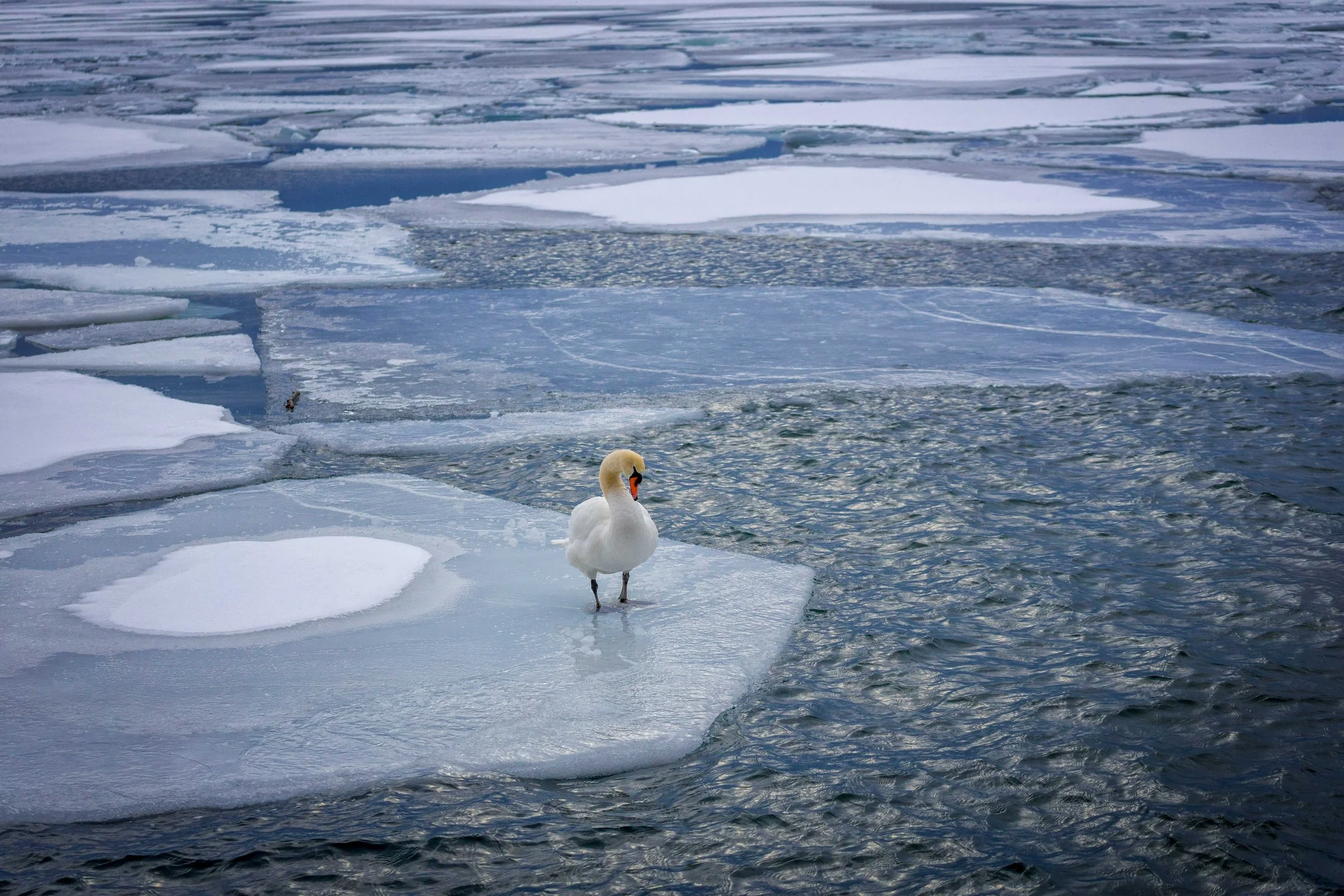
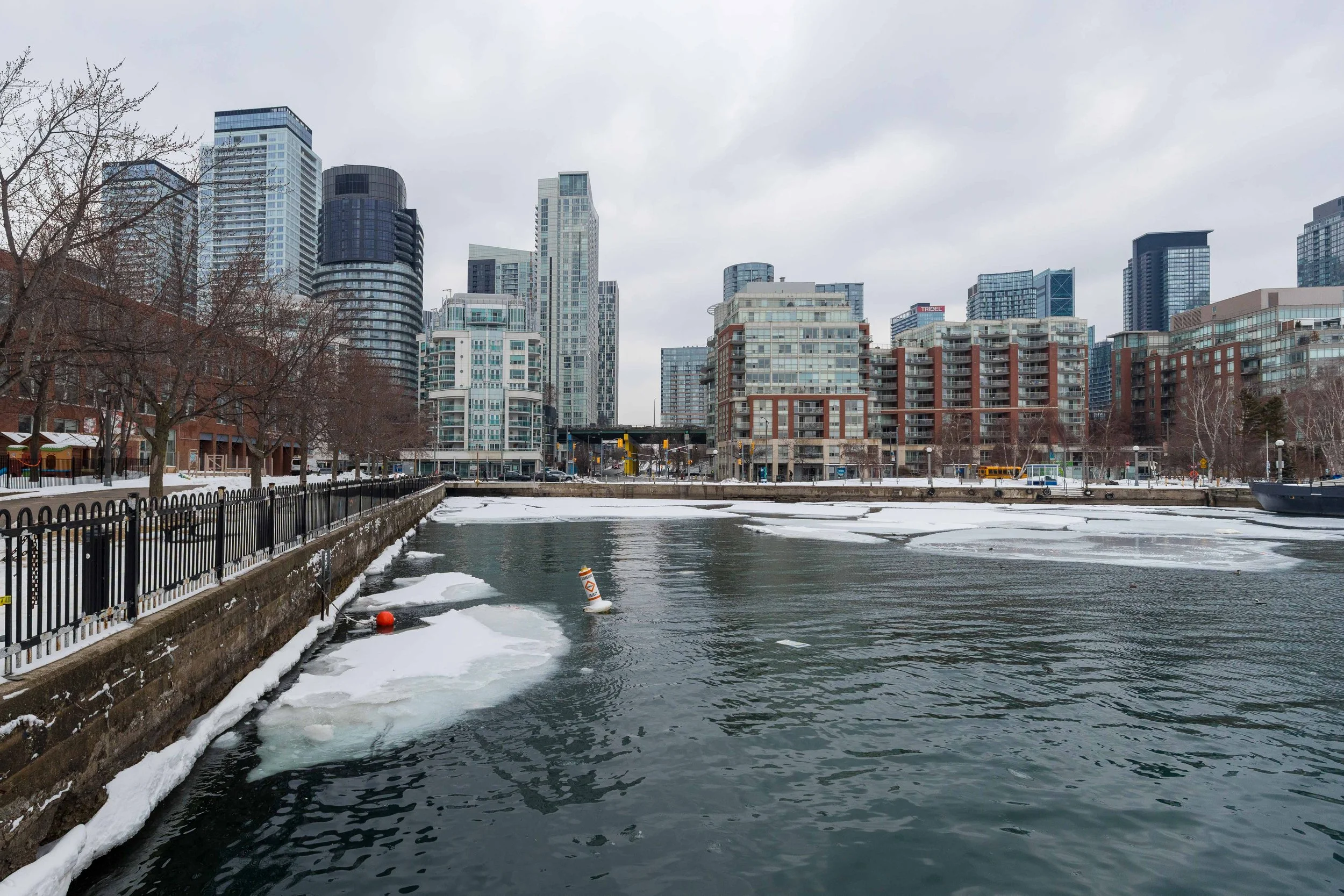
As I got closer, the patterns began to come into focus: large ice floes broken into shifting plates, separated by dark stretches of open water. Two swans were resting on the ice, with Long-tailed Ducks moving through the water nearby, along with a Red-breasted Merganser riding the choppy waves between the floes. The lake felt active, even in the cold — not frozen in place, but constantly rearranging itself.
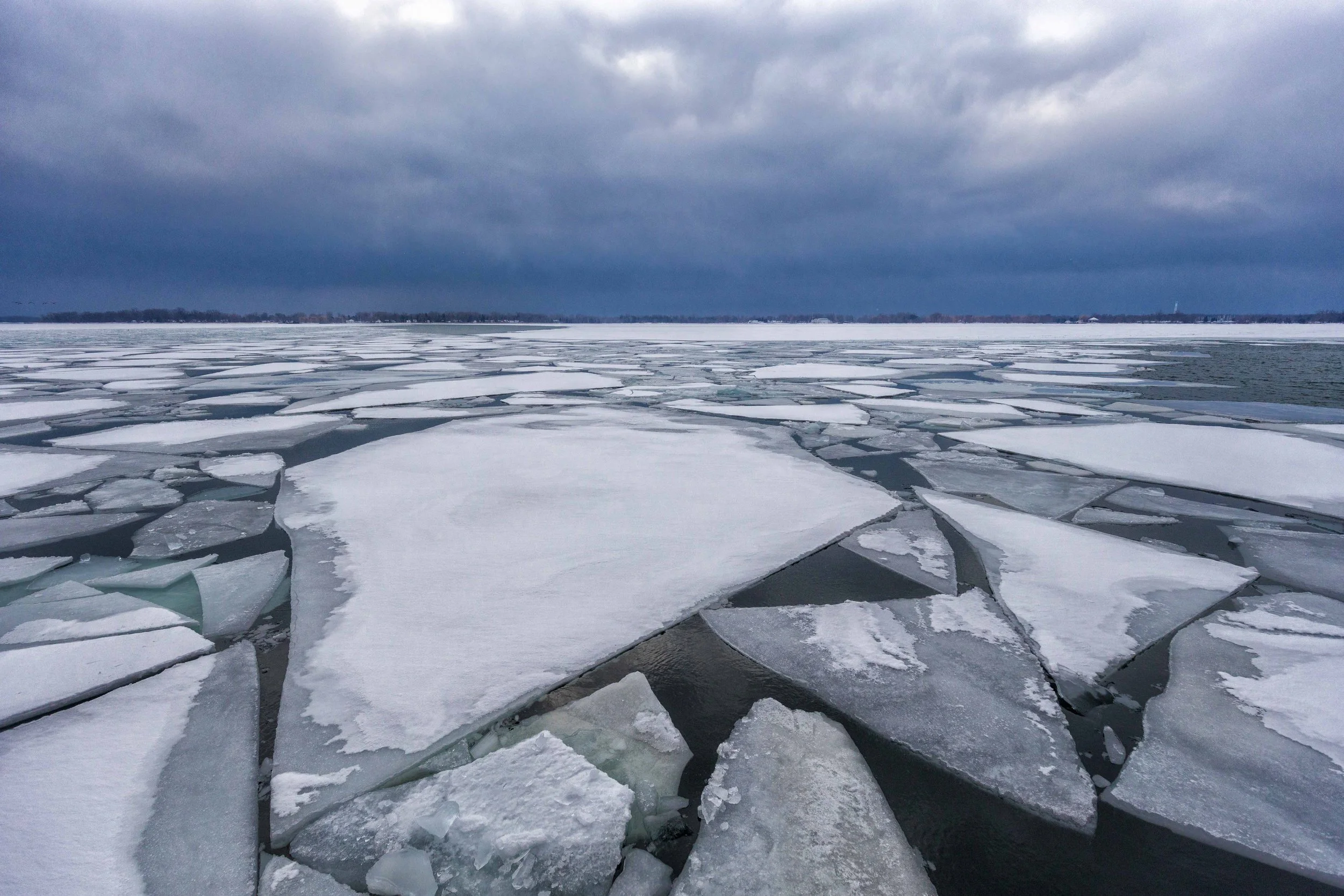
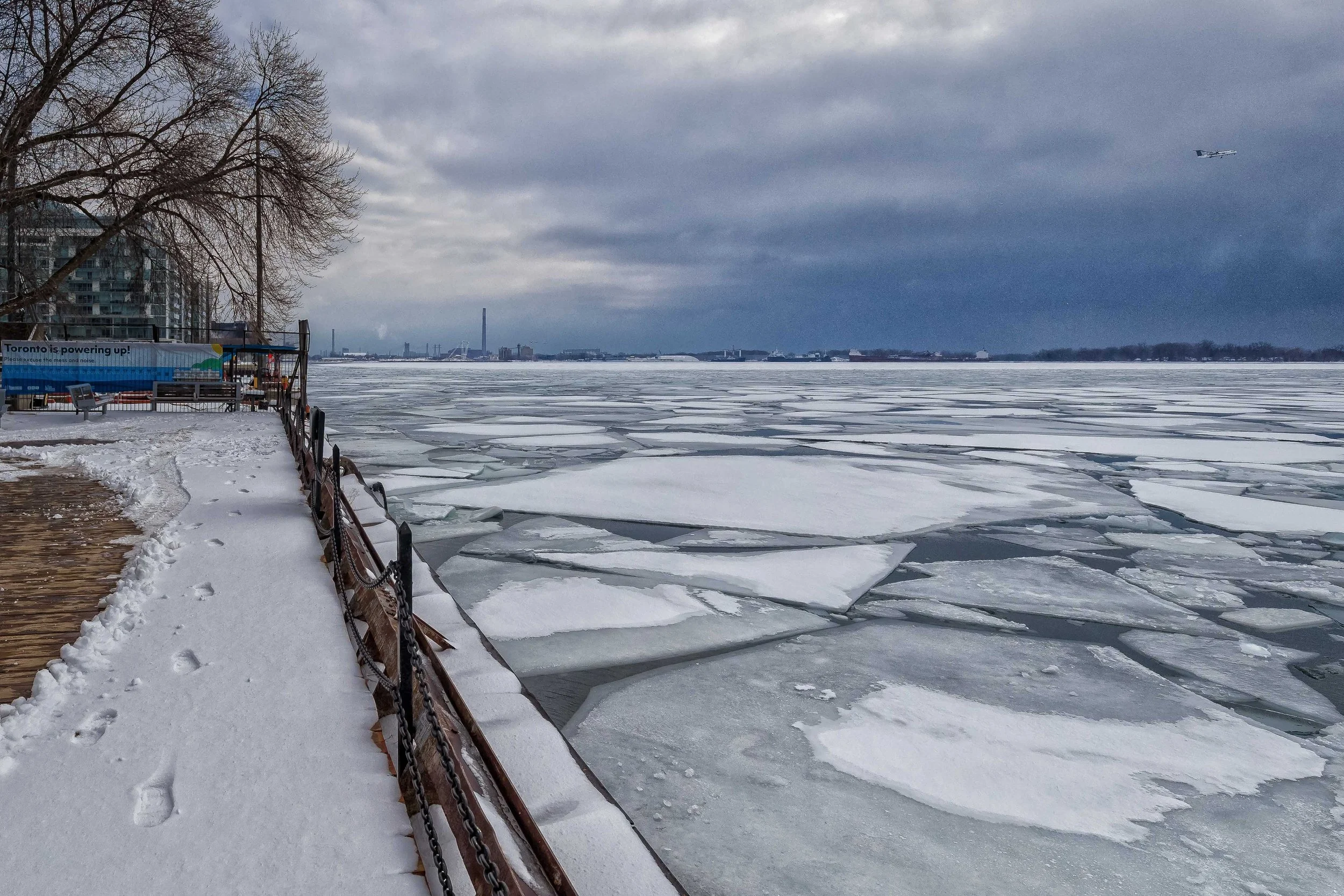
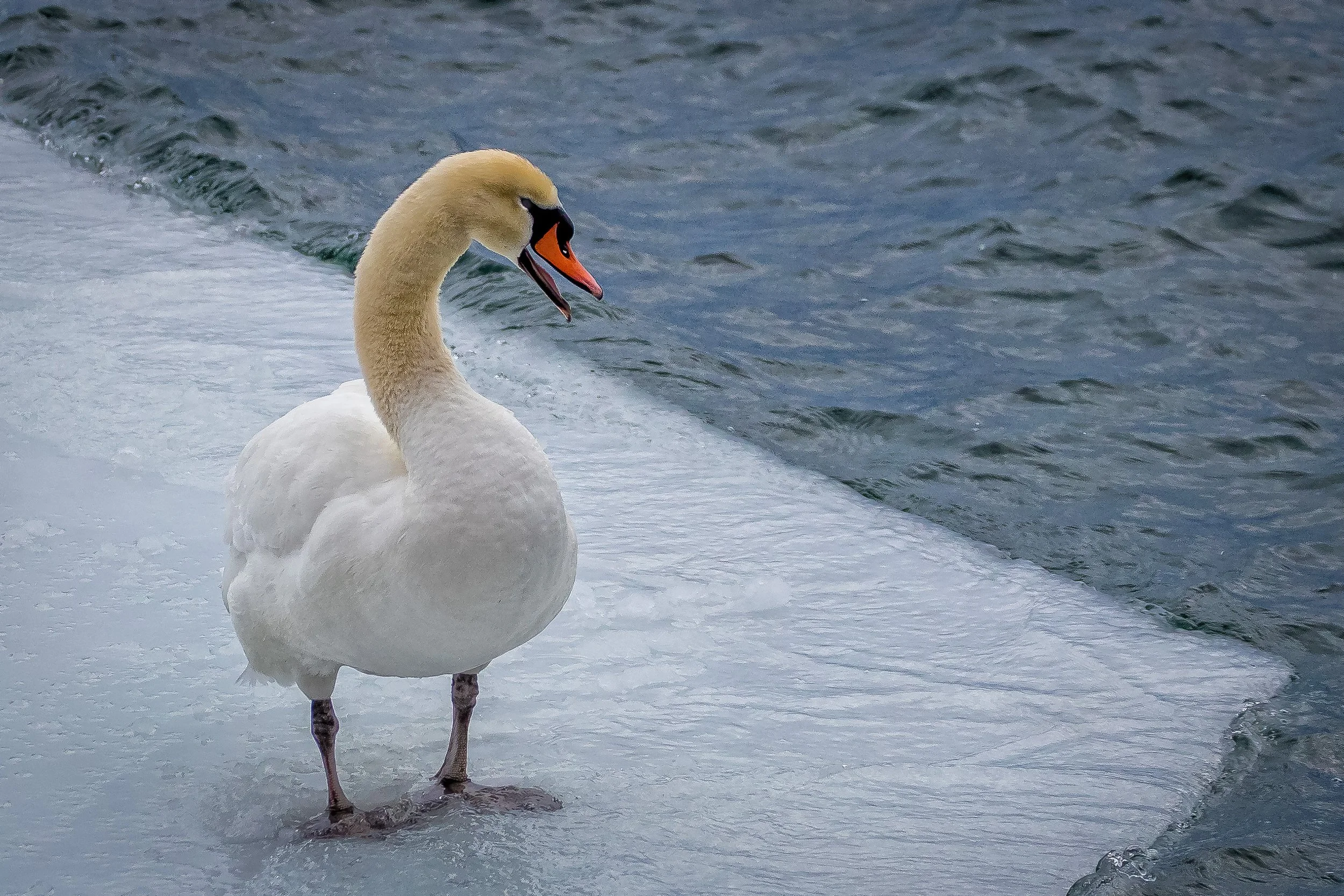
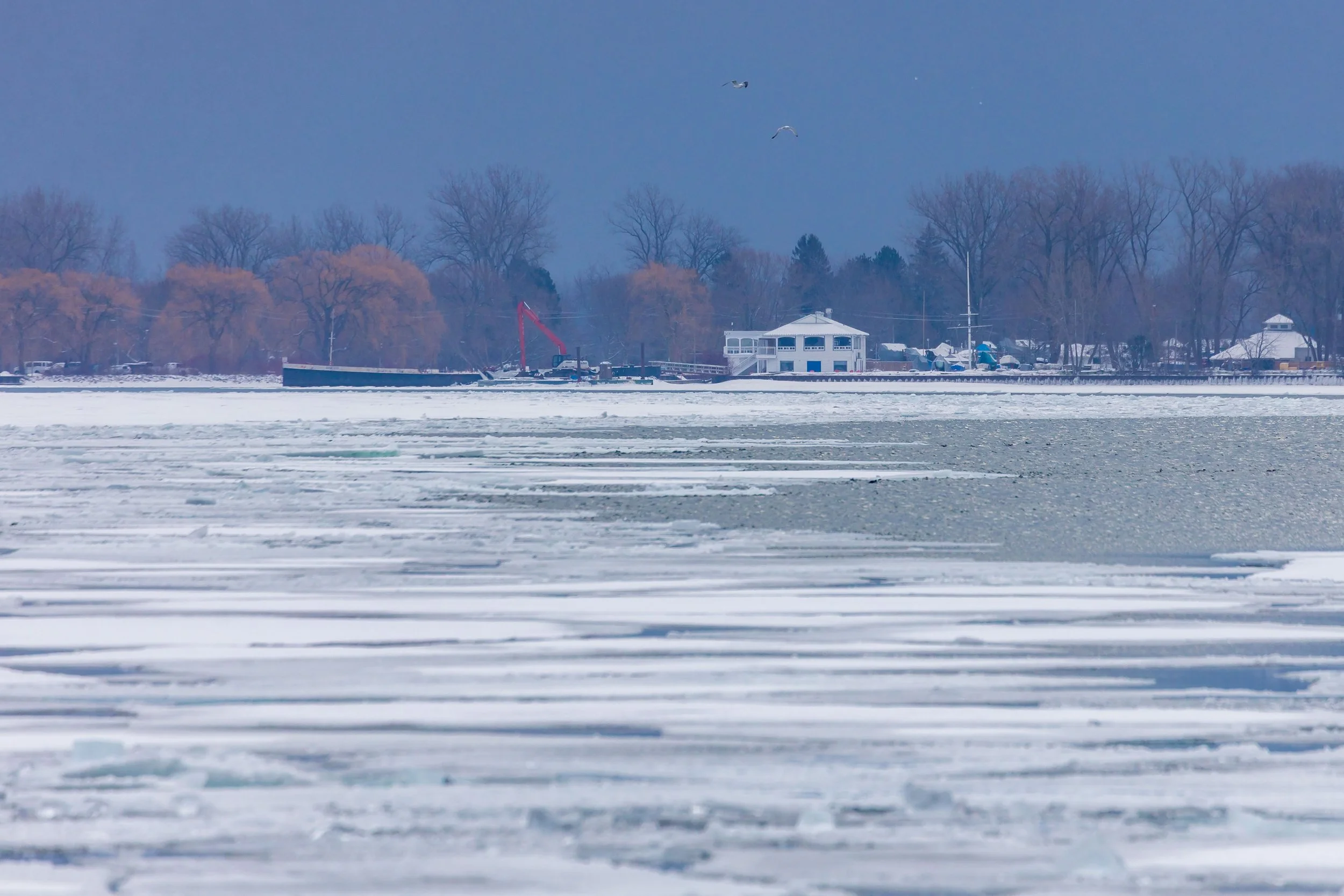
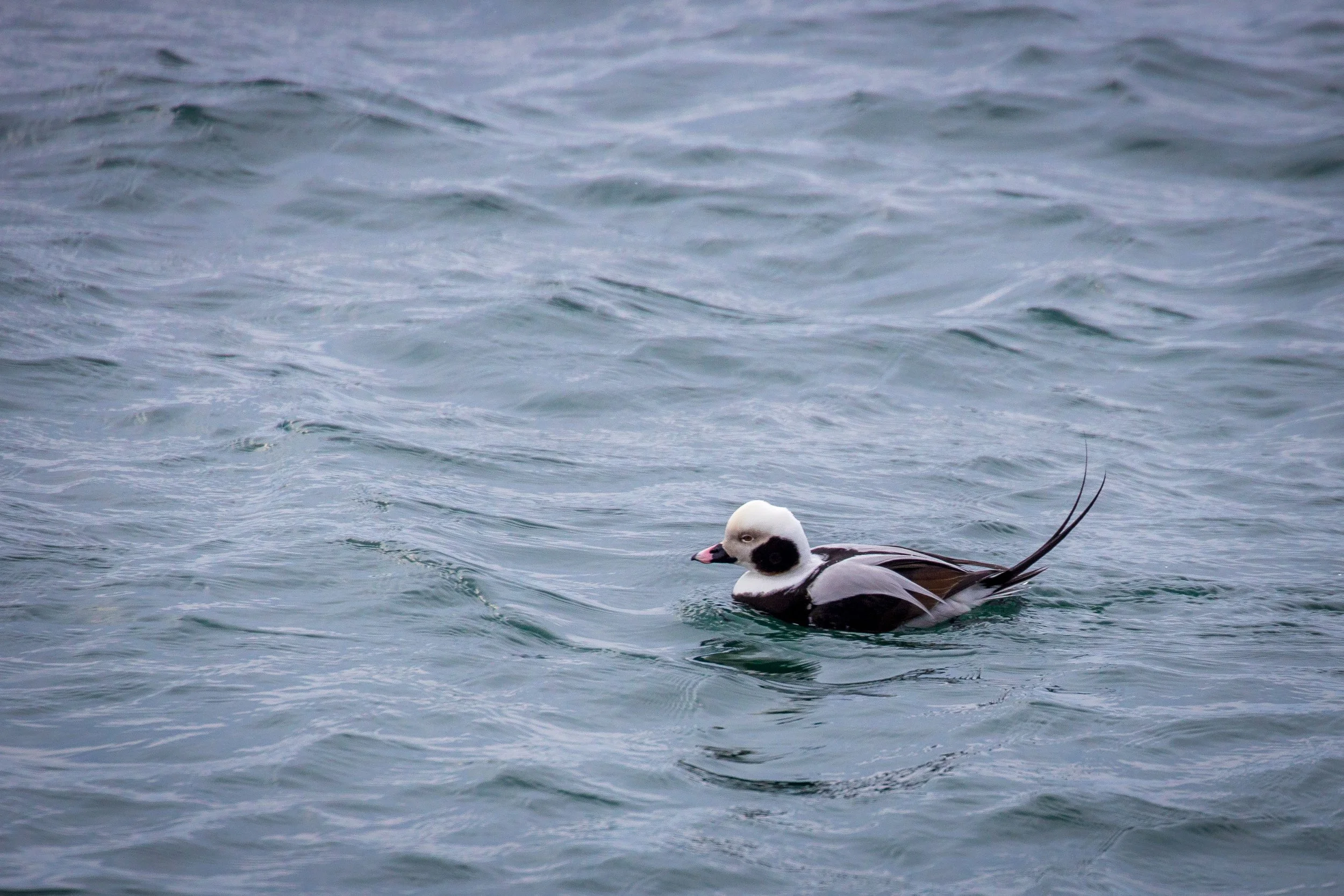
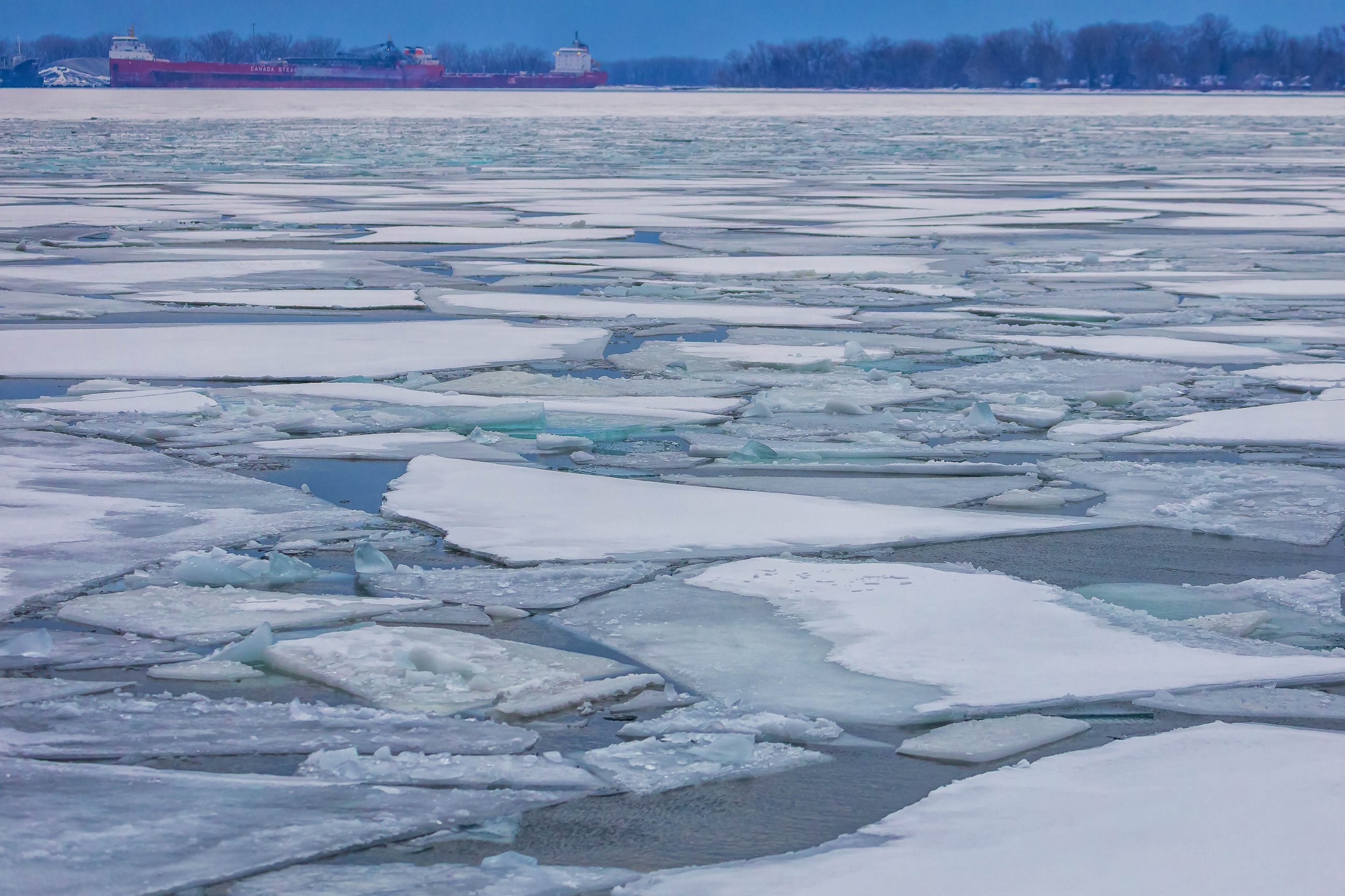
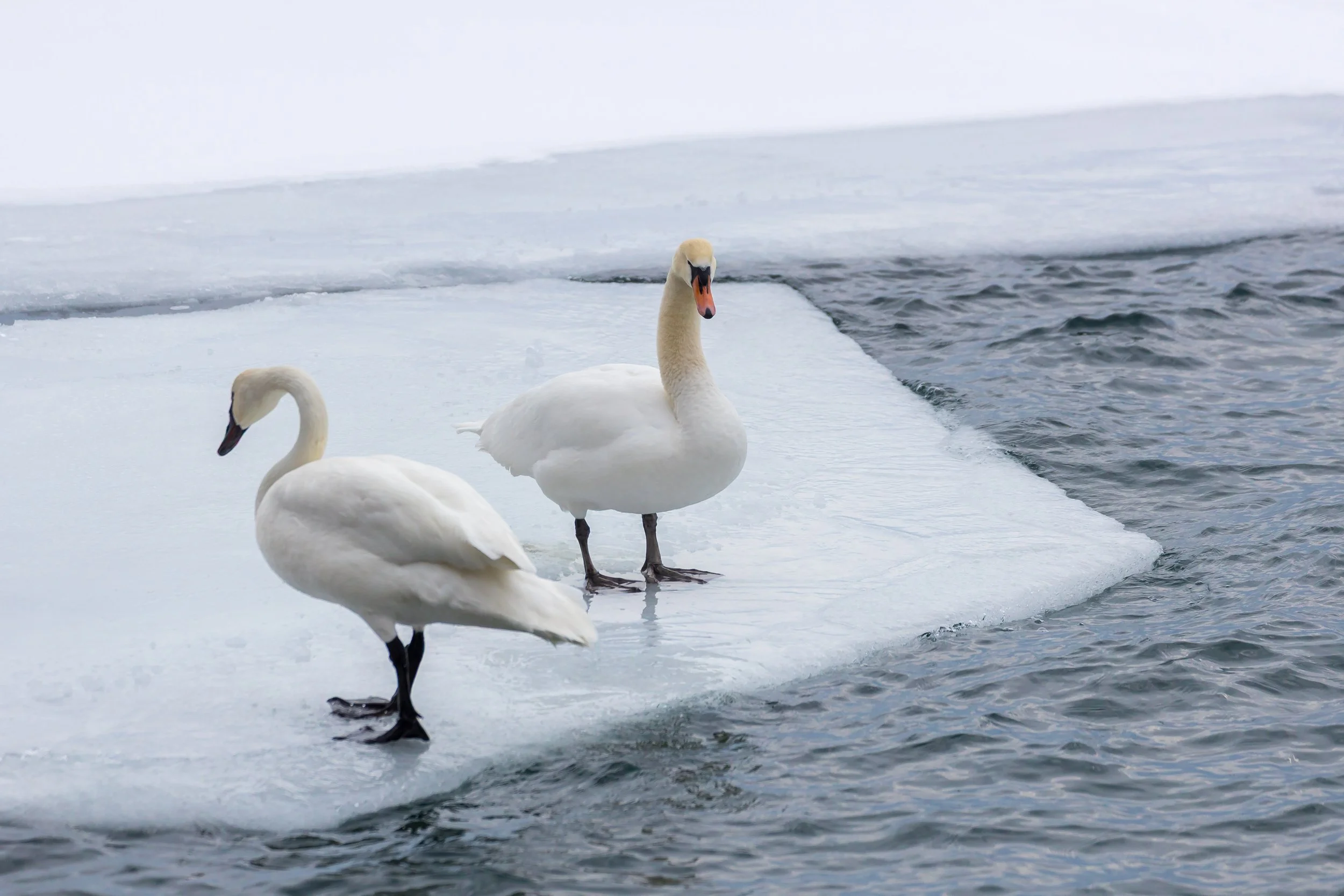
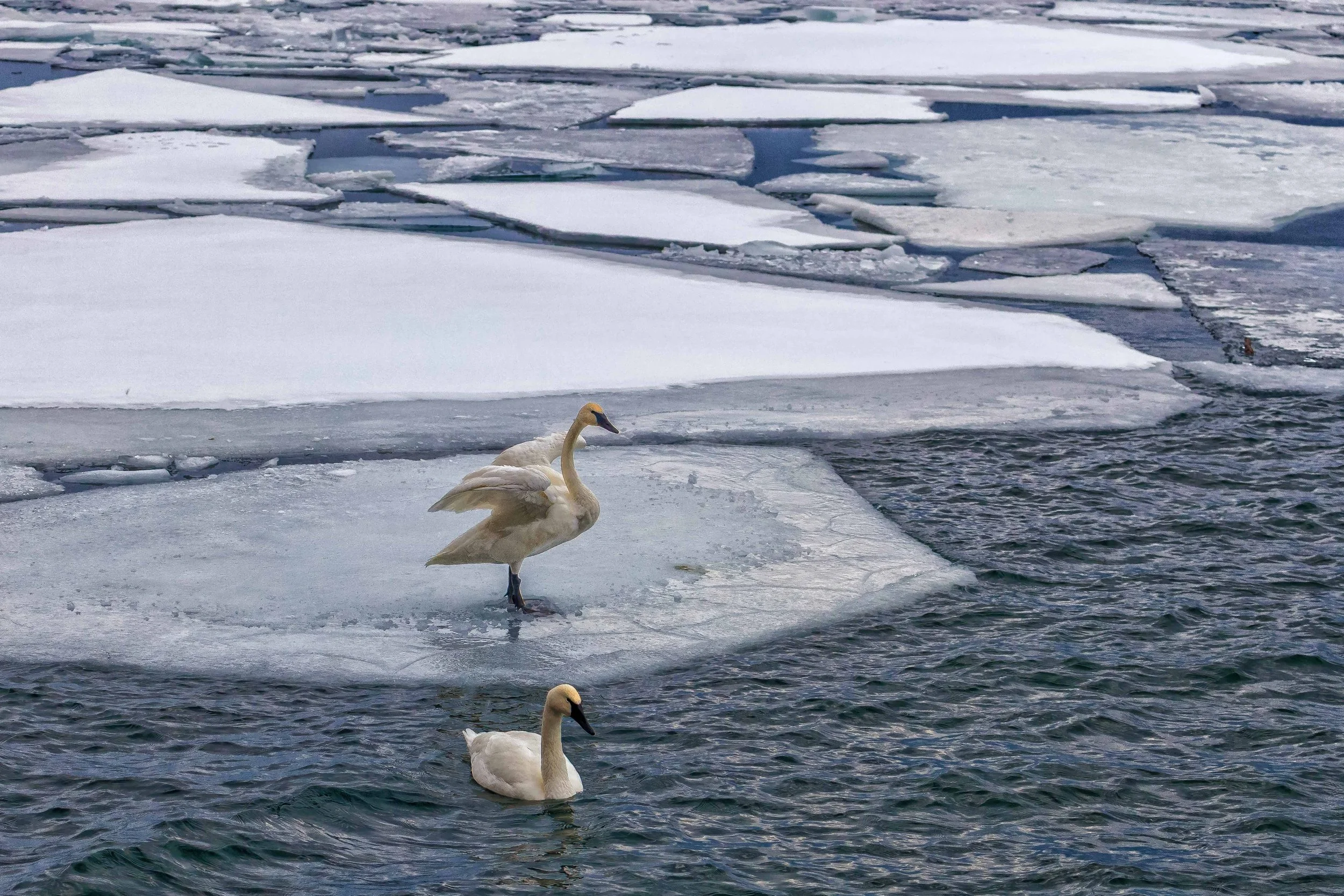
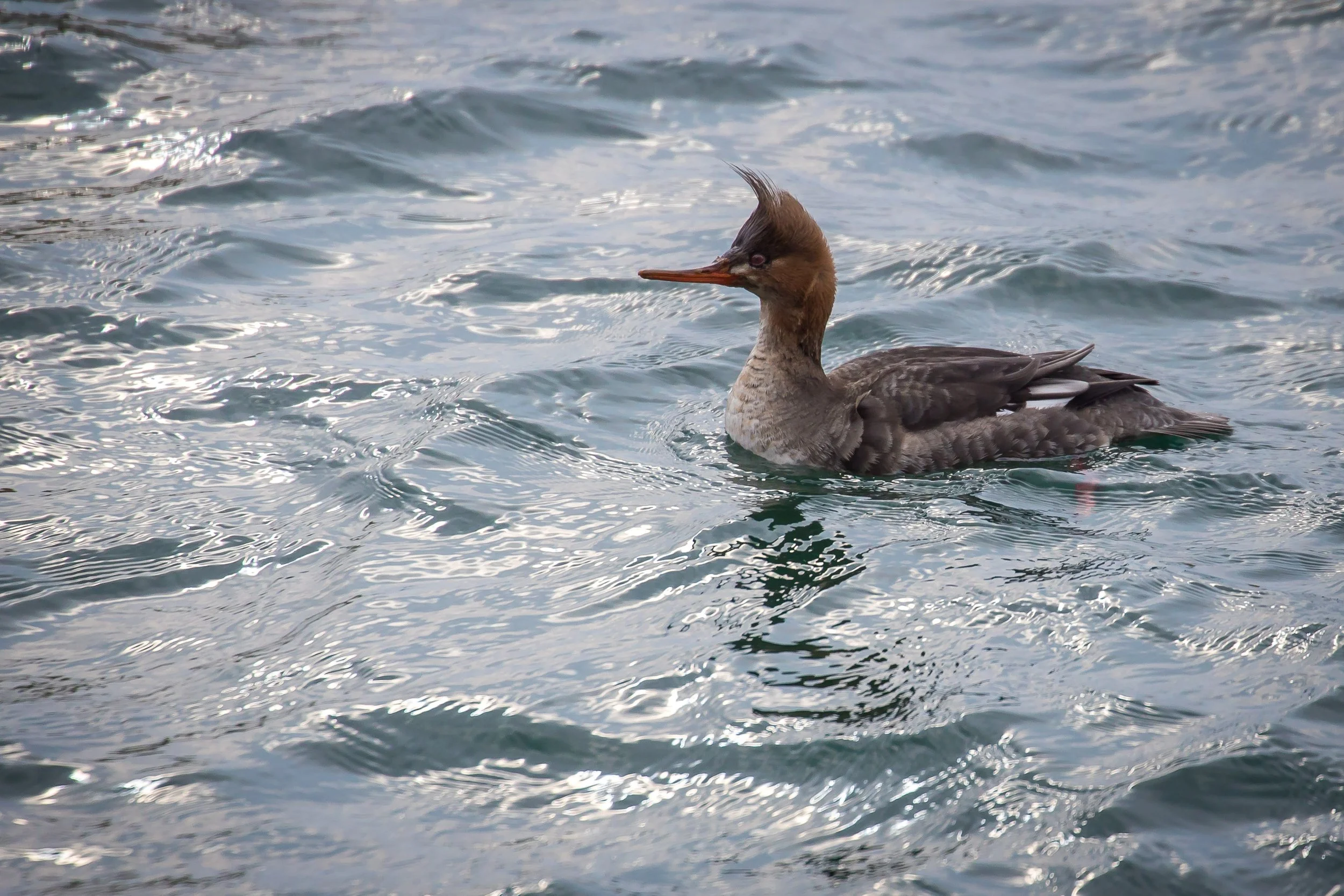
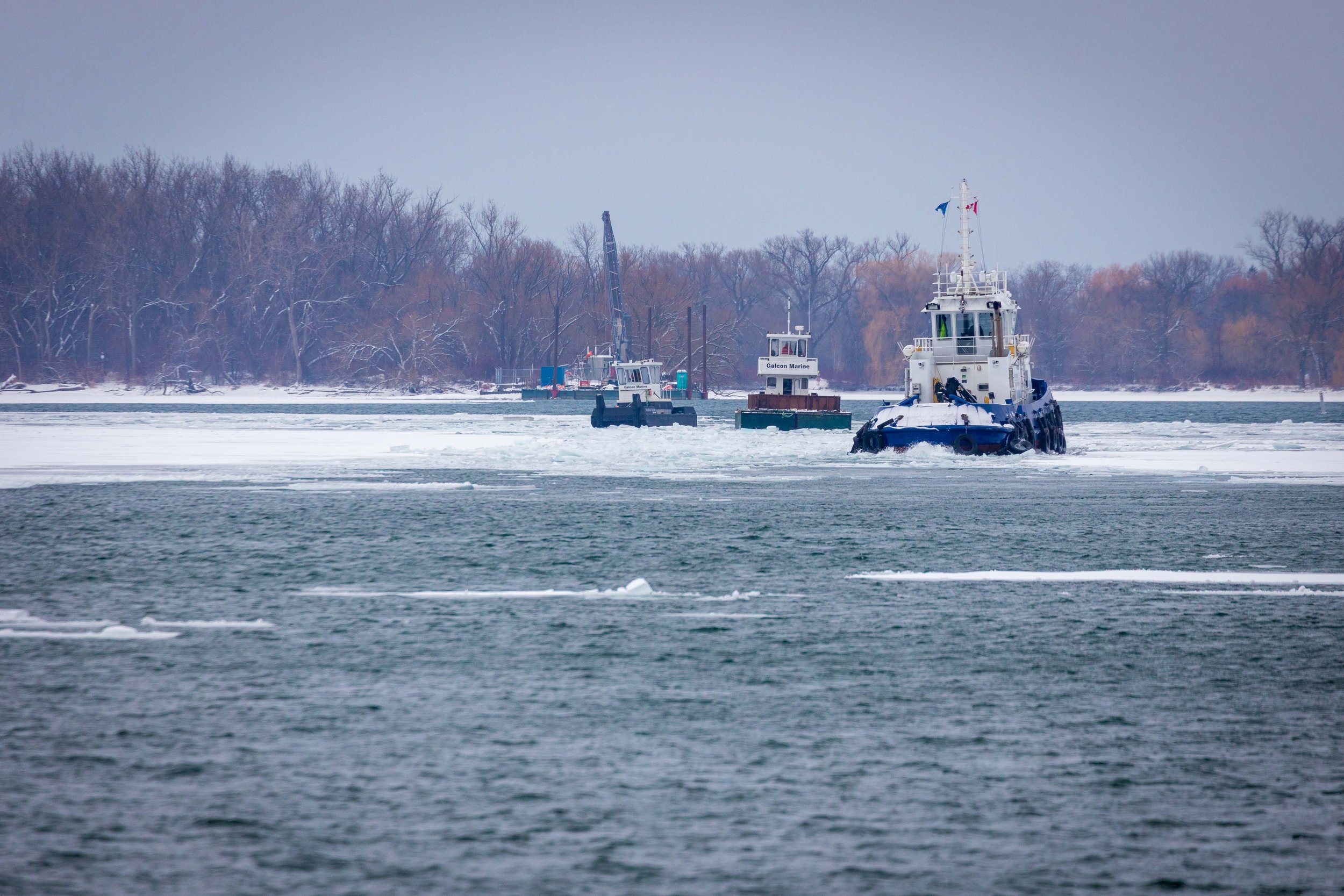
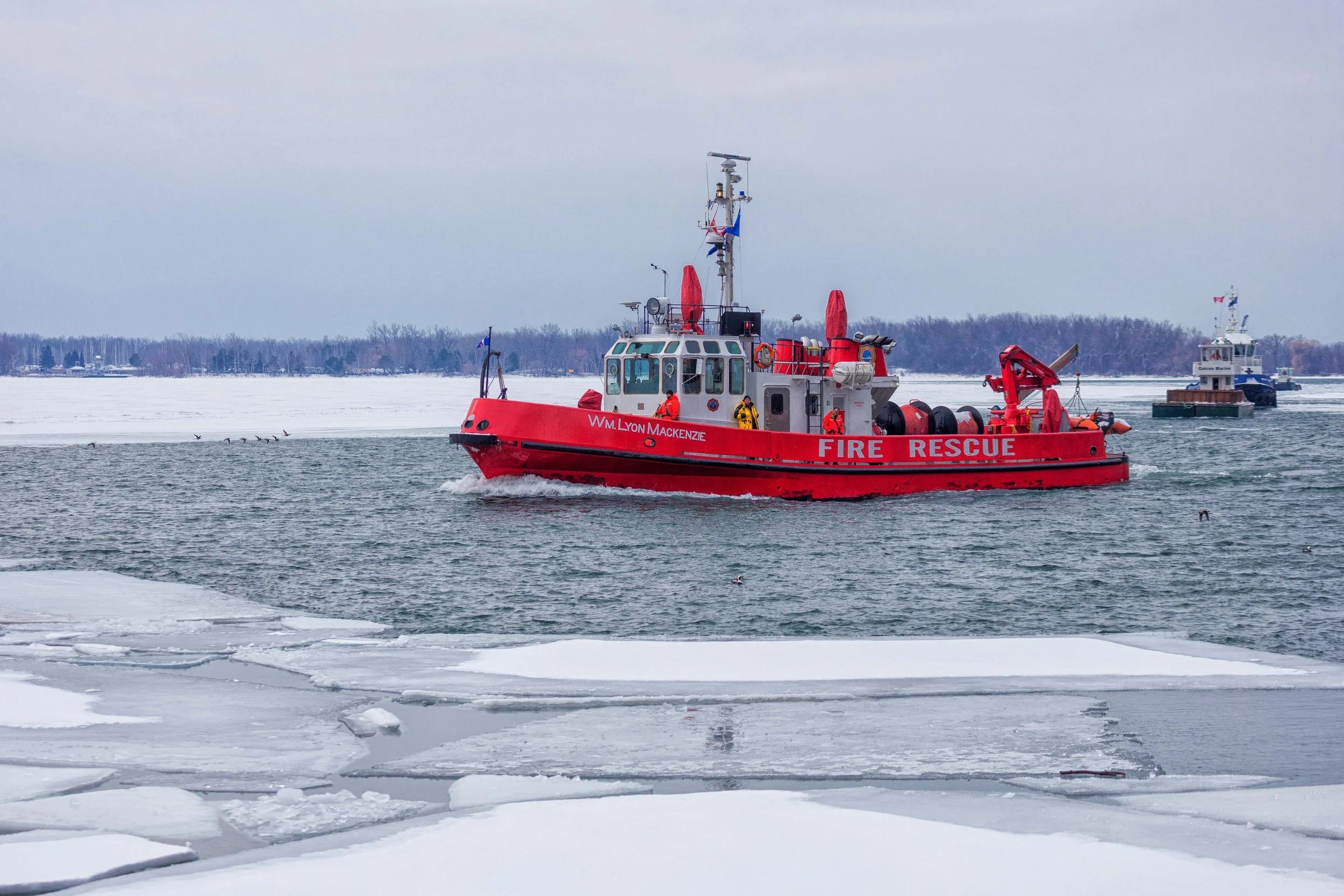
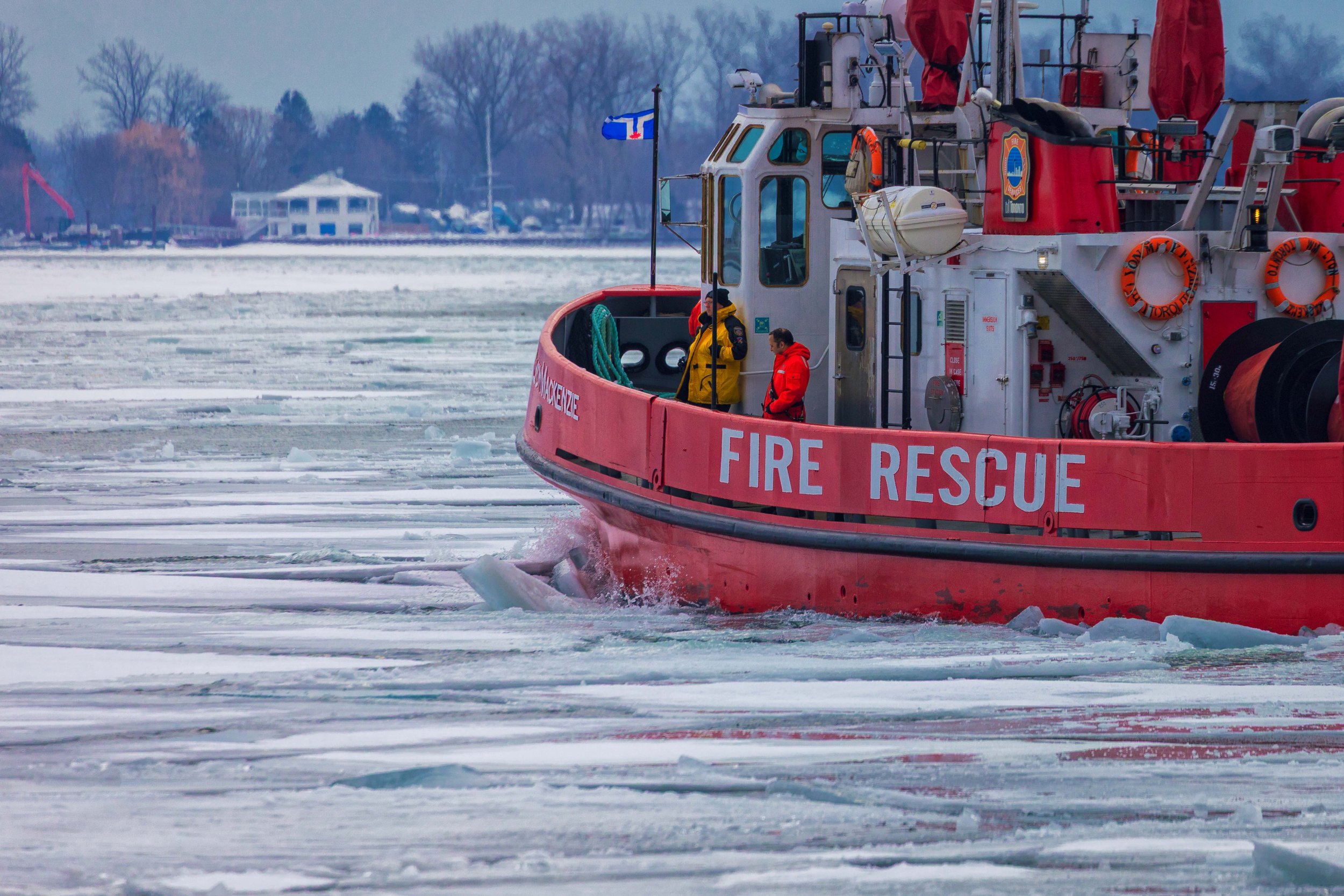
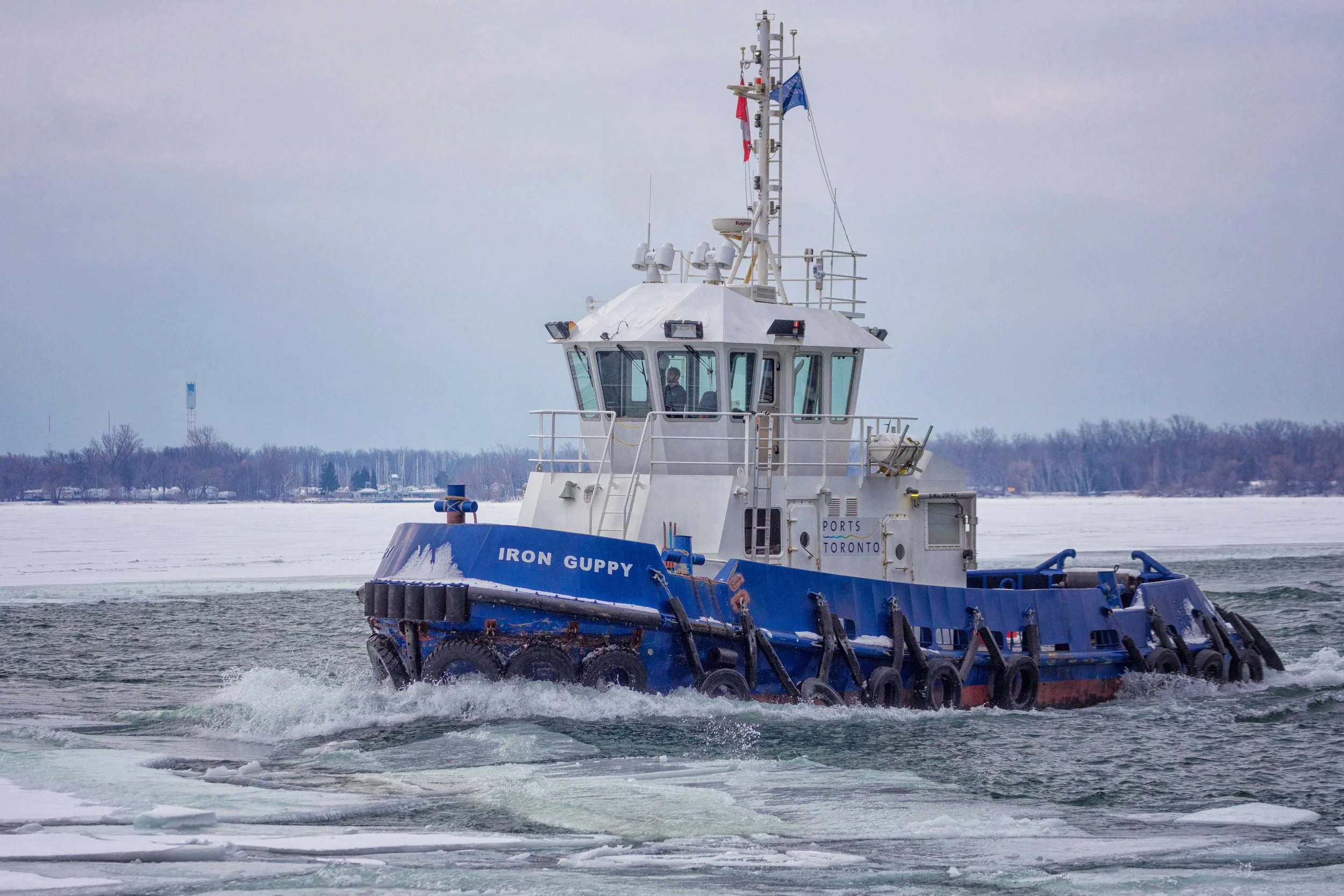
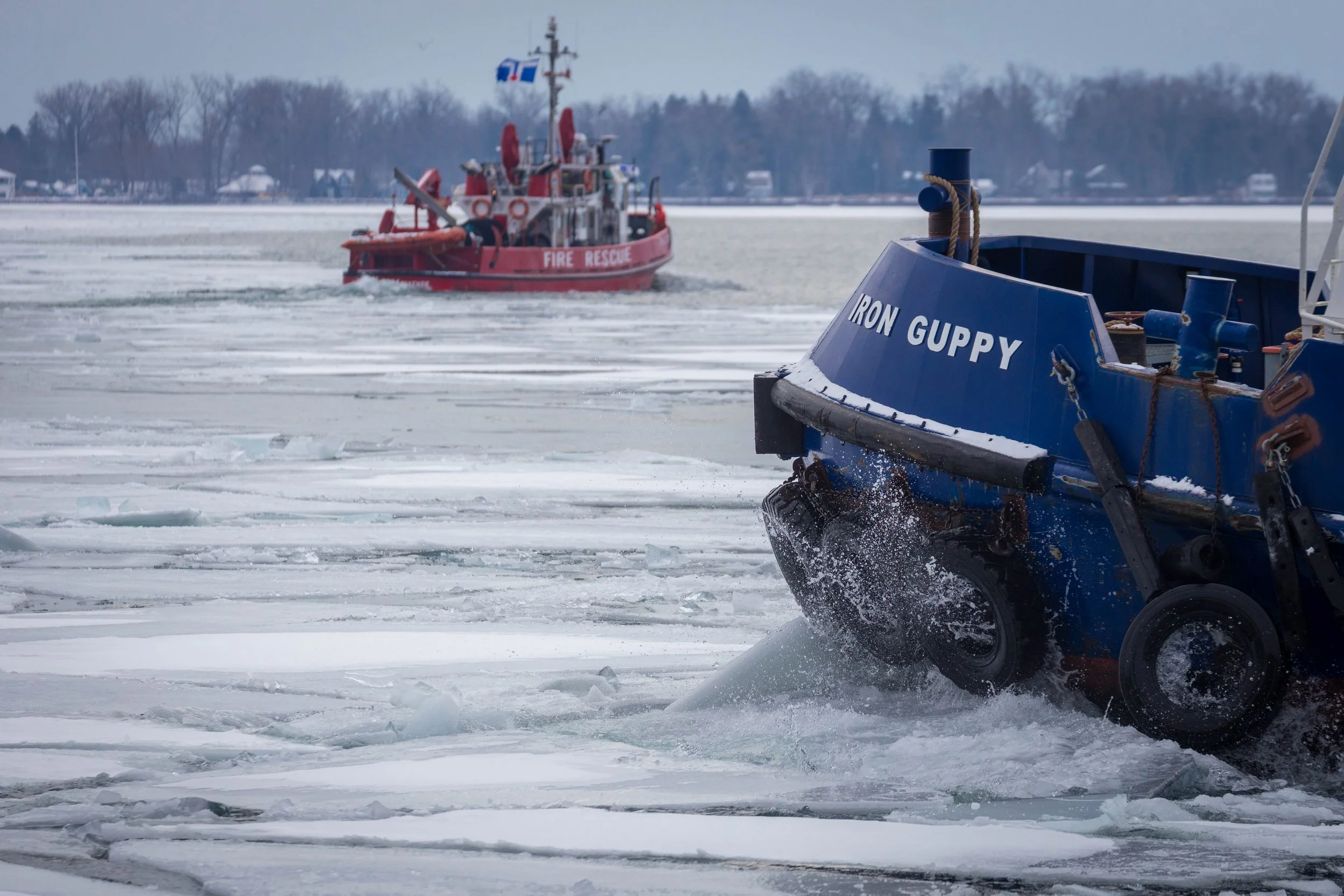
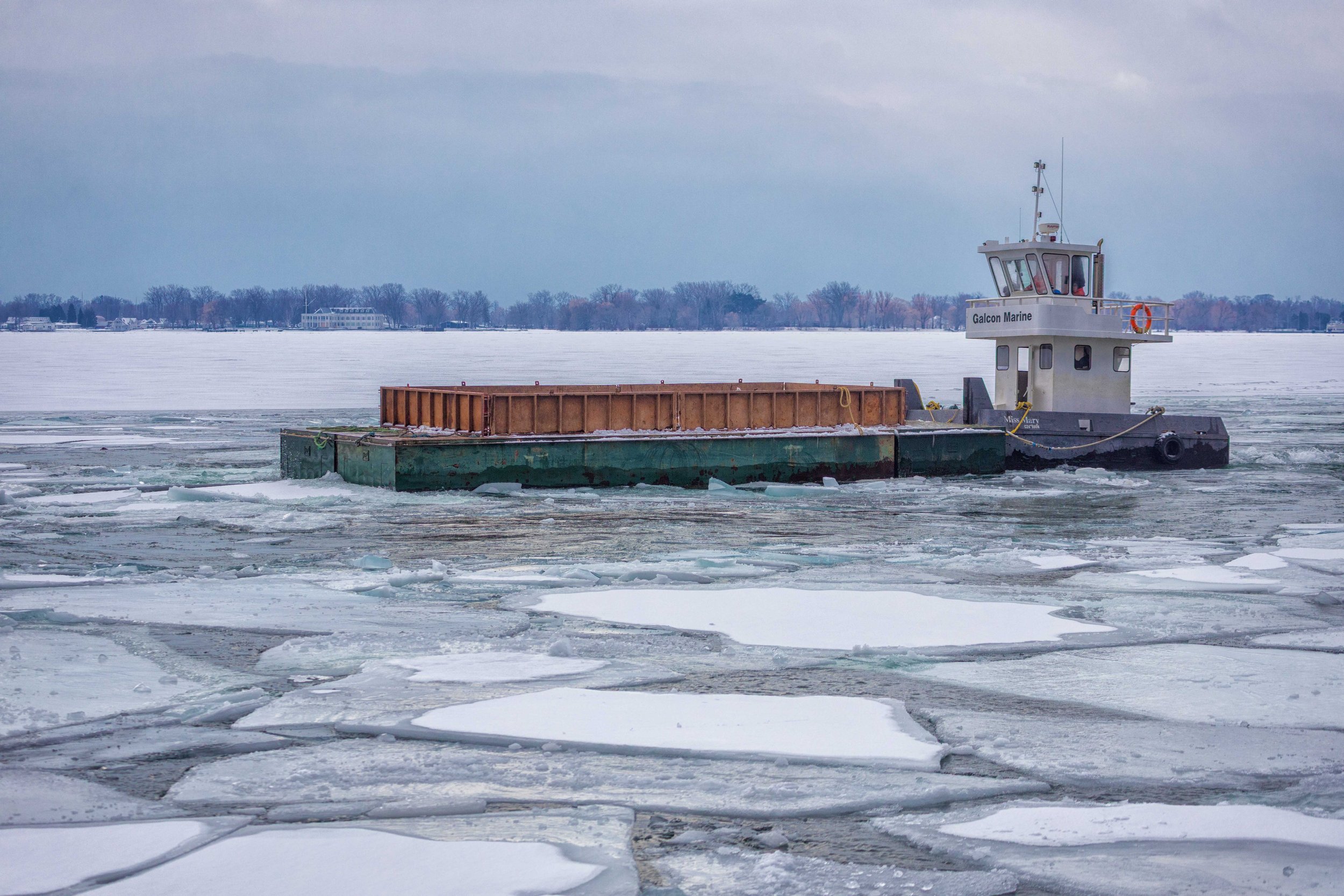
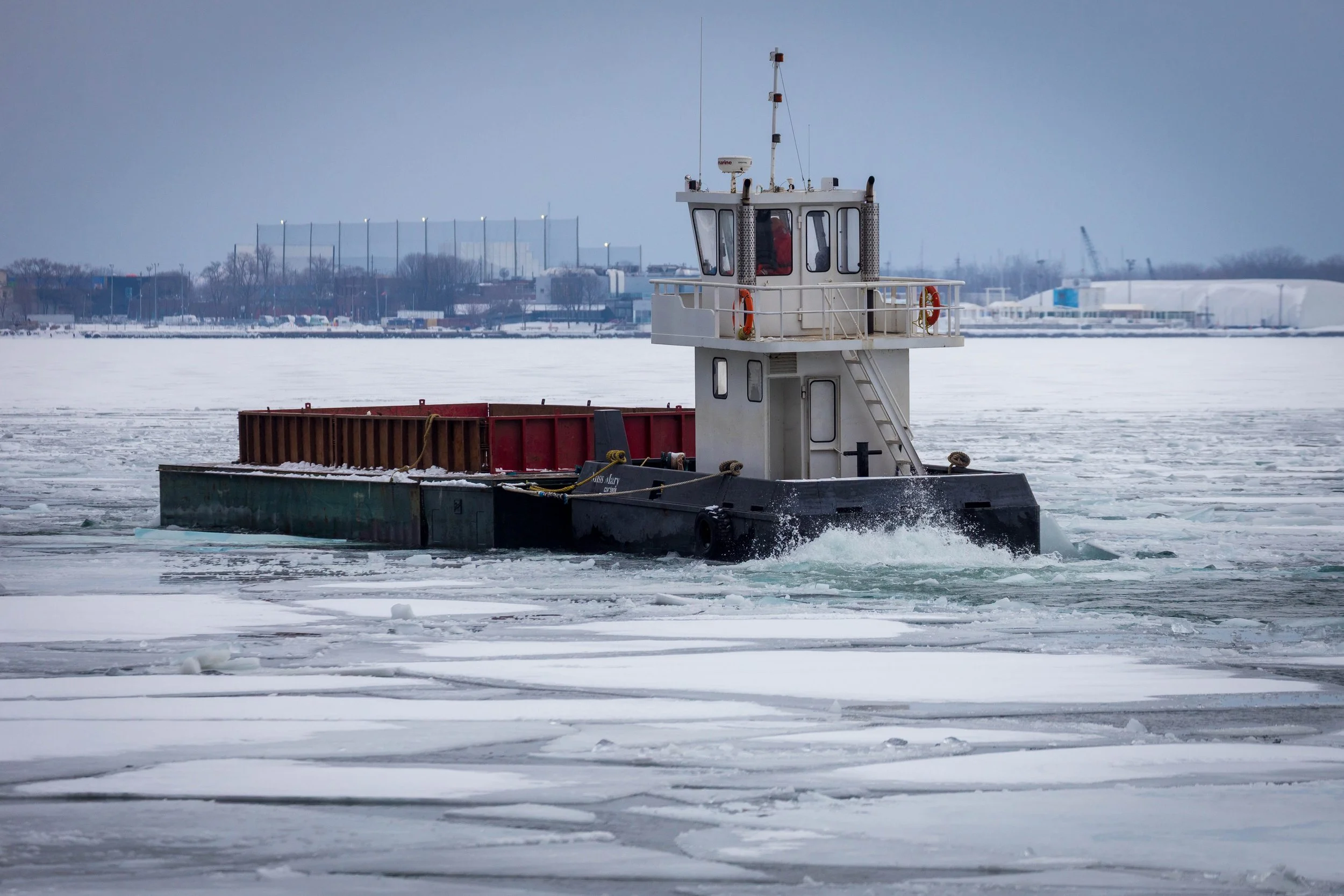
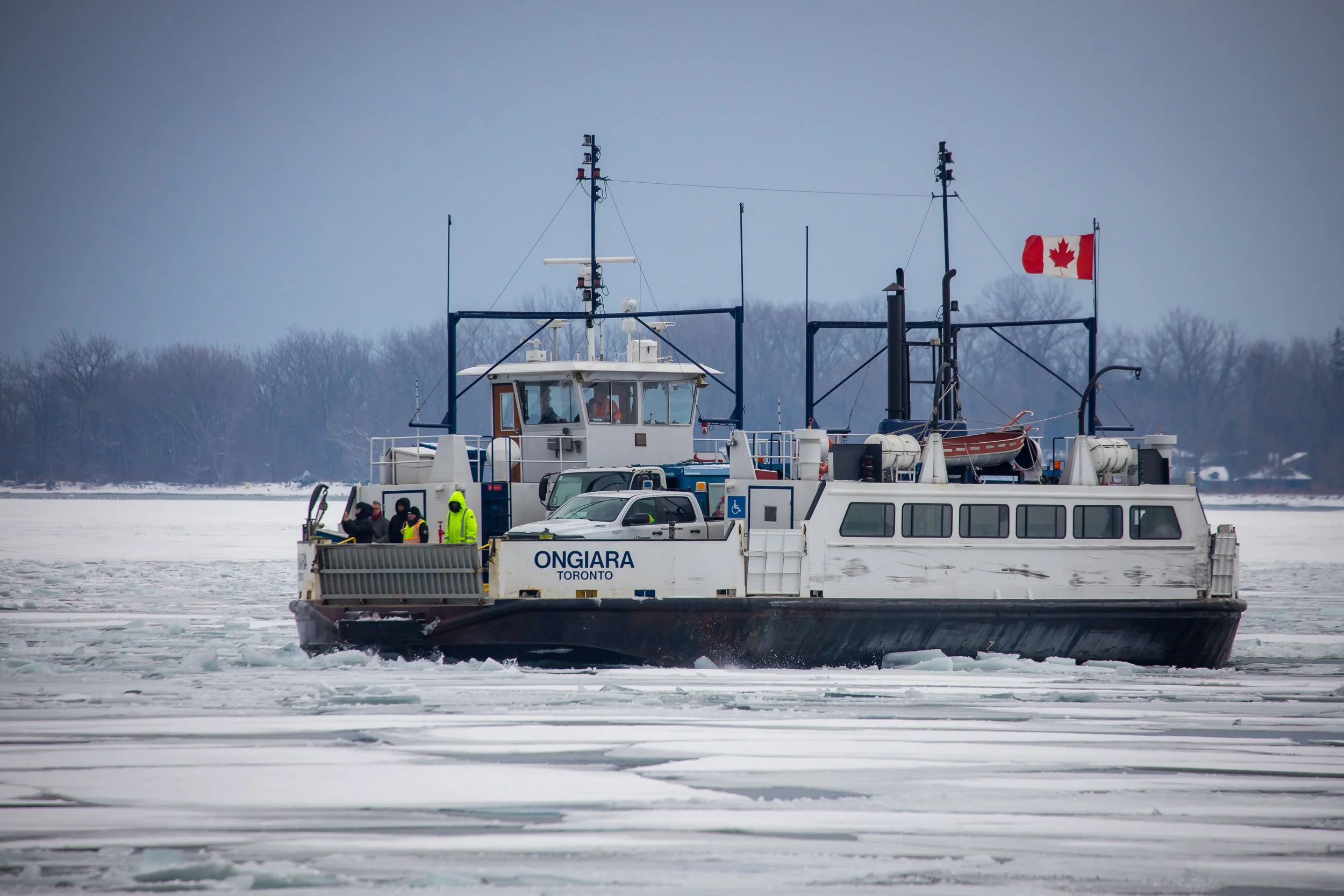
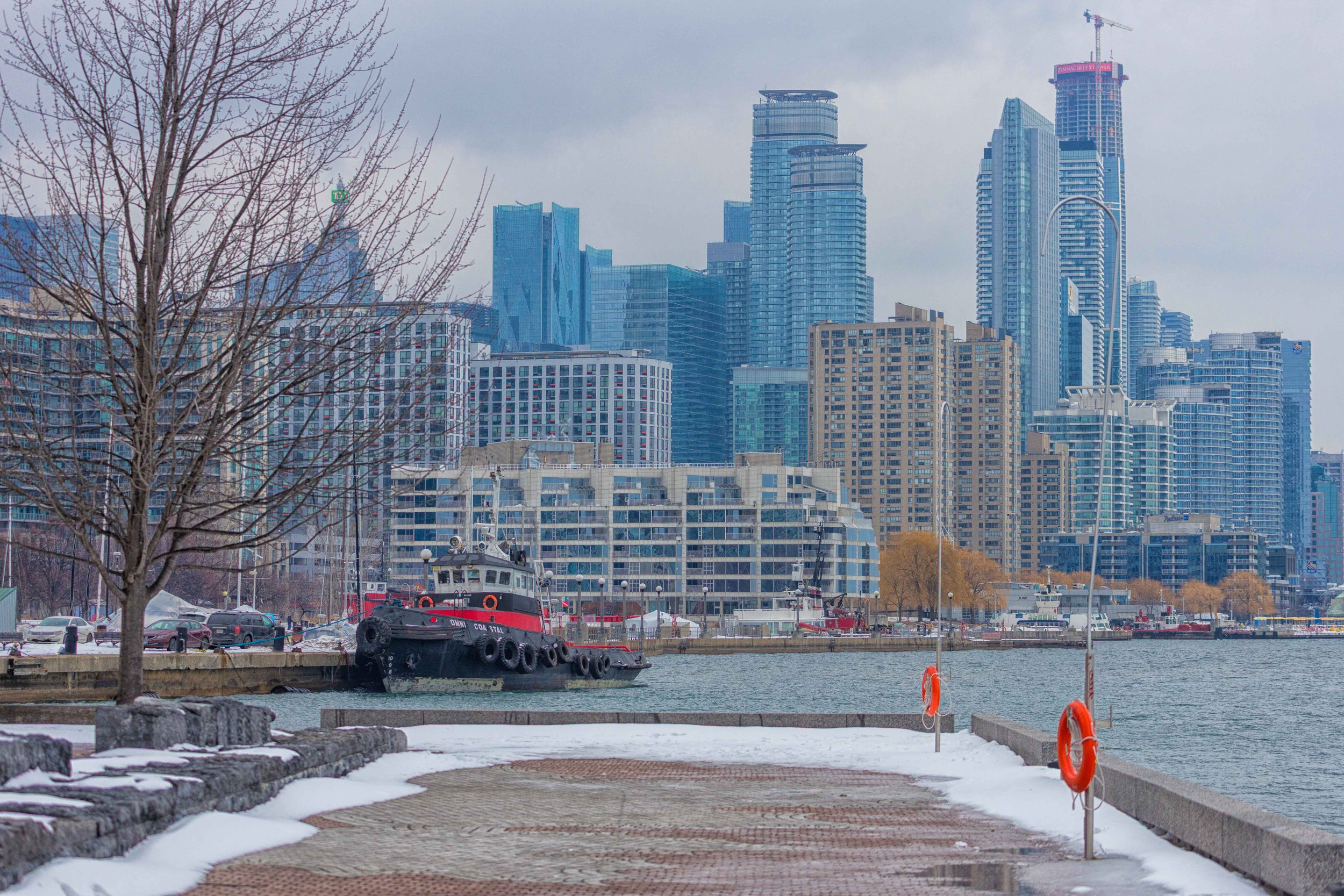
The same sense of movement carried outward — from small flocks of birds near the ice to lines of boats working farther across the harbour. Out on the lake, a line of workboats moved slowly through the ice, spaced out like snowplows, breaking and pushing floes to keep the water open. Tugboats and barges worked their way through the harbour, while ferries crossed back and forth, including the Ongiara, likely carrying city workers to and from the Islands. A Toronto Fire Rescue vessel moved along the edge of the open water as well. From the edge of the pier, I could feel the ice floes clunking against the shoreline — the lake was active even in the cold, not frozen in place but constantly rearranging itself.
Queens Quay West to Harbourfront Centre
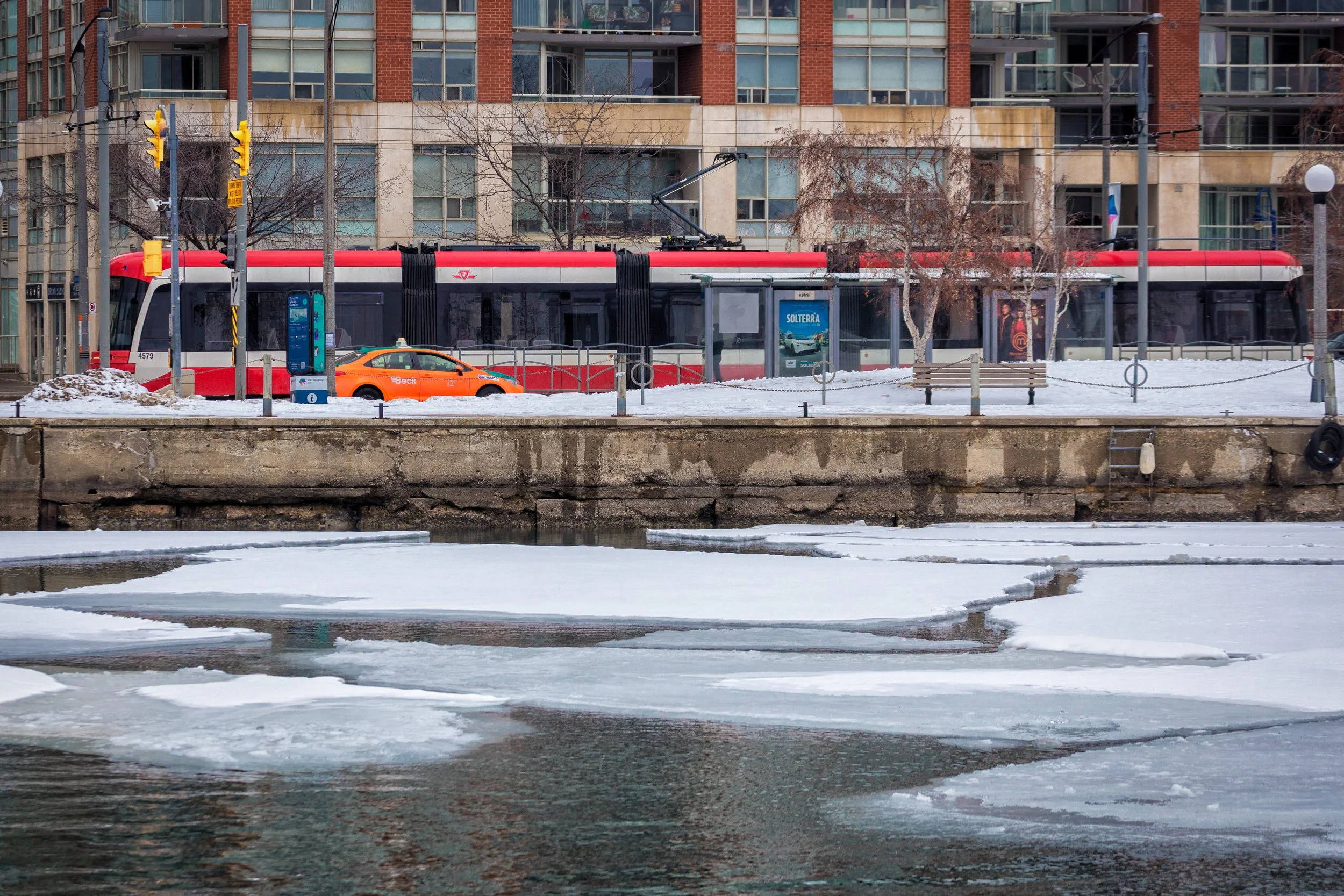
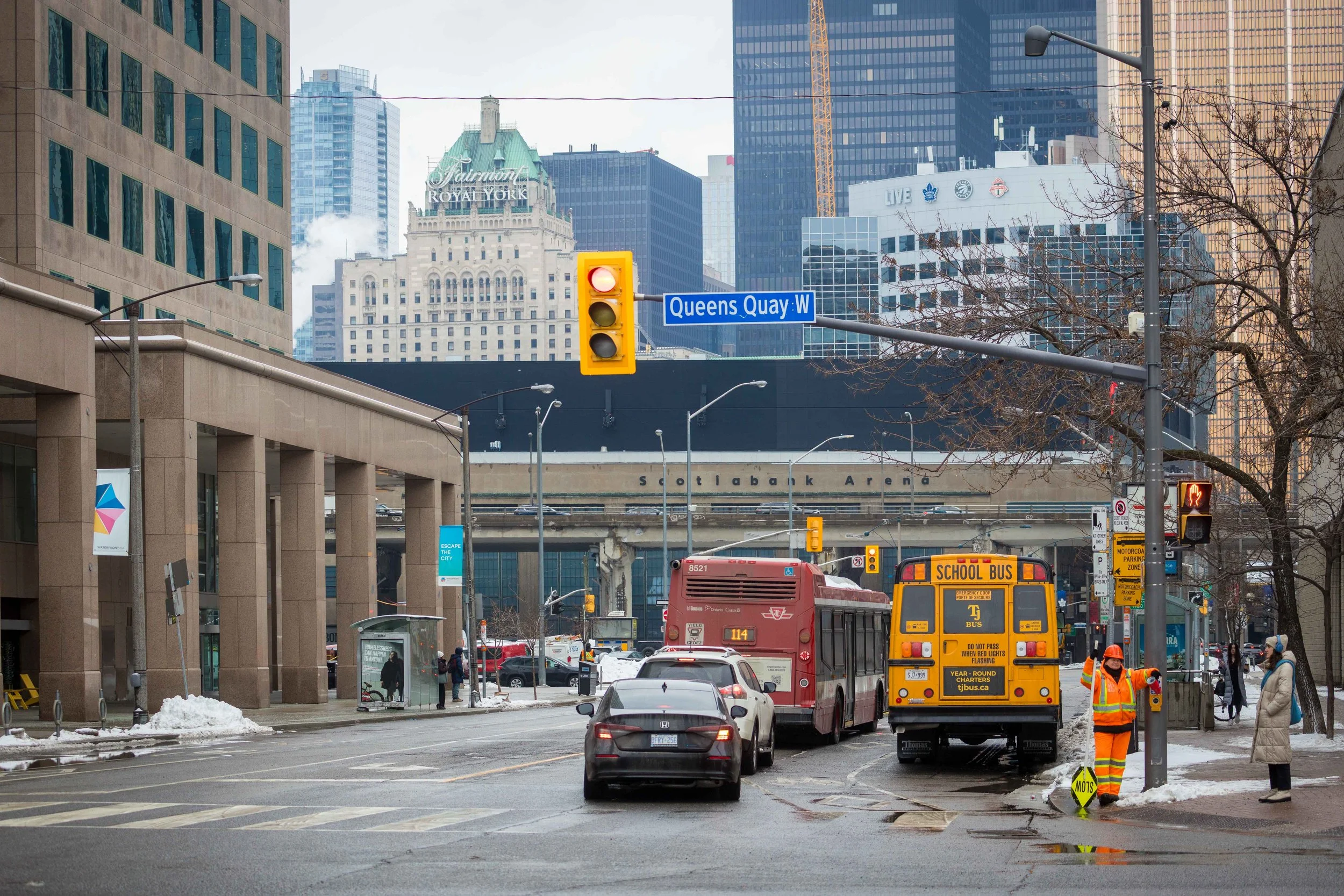
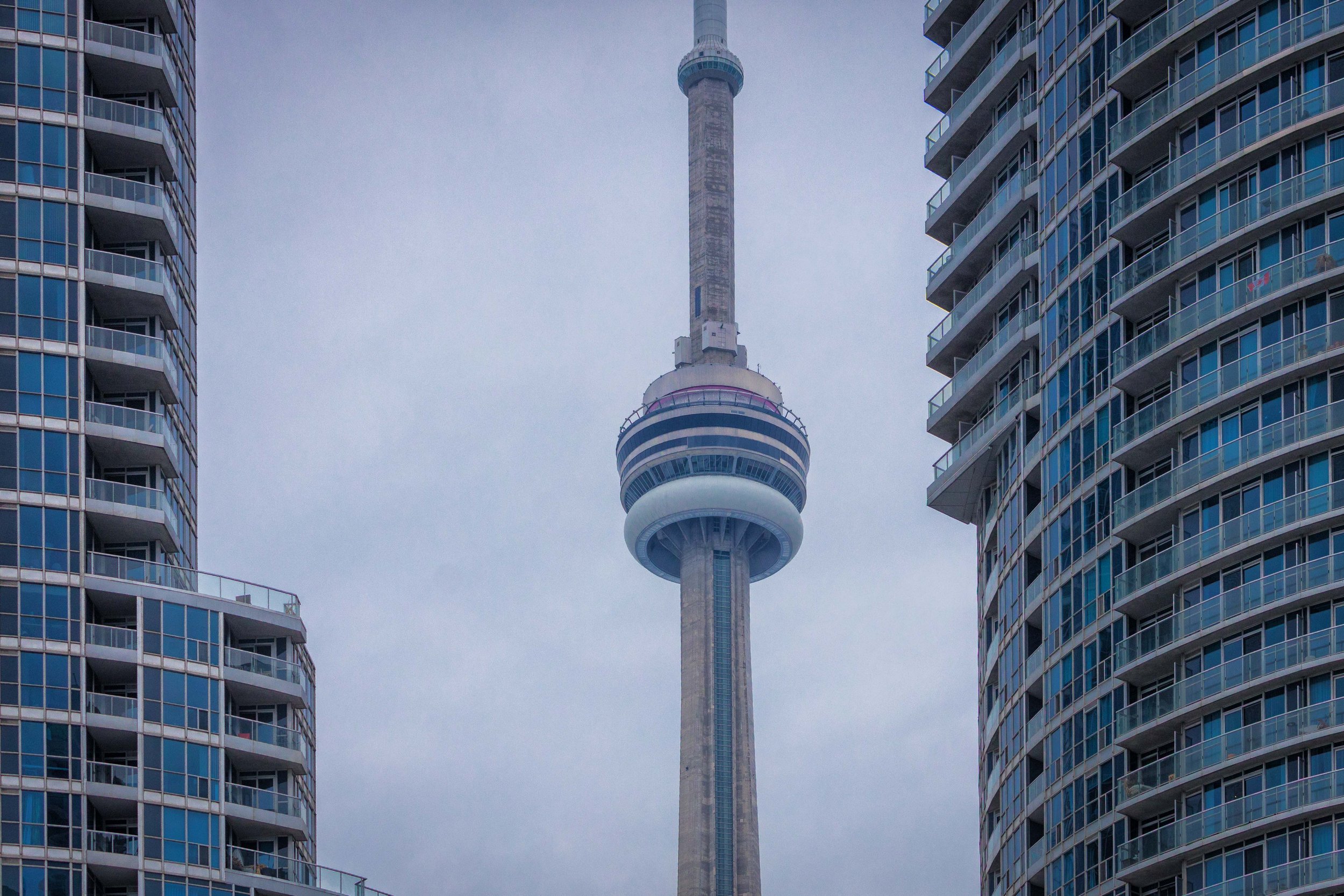
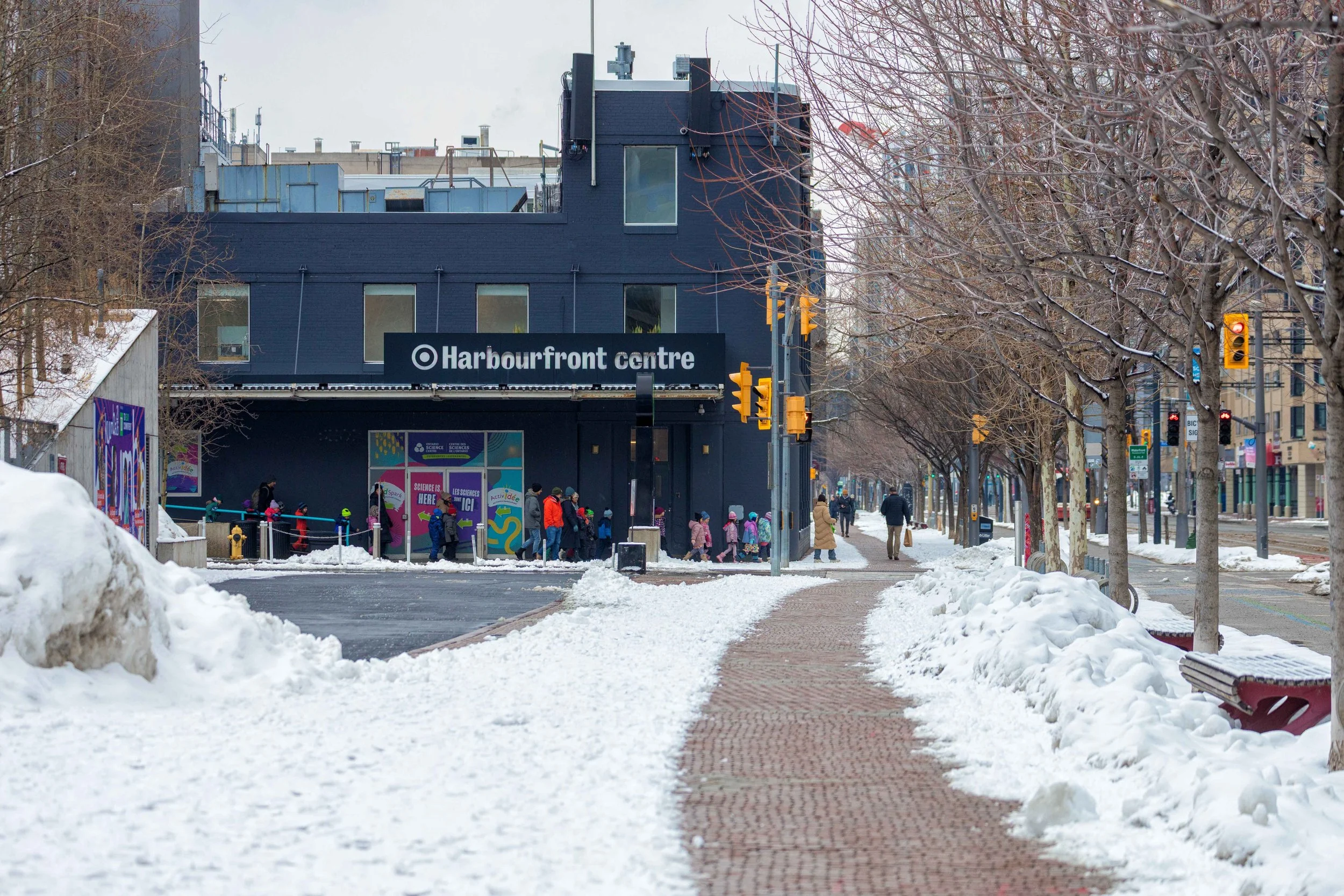
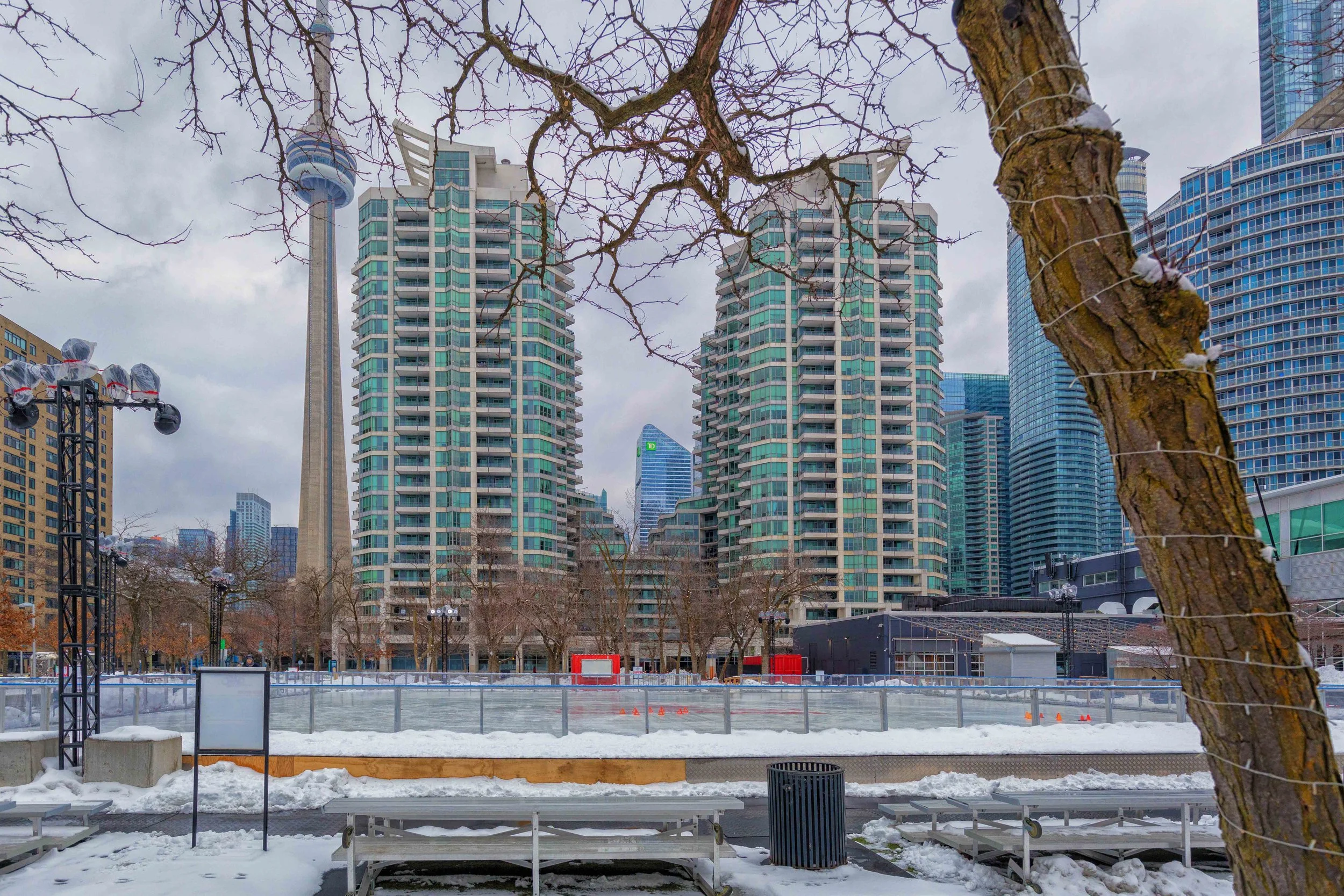
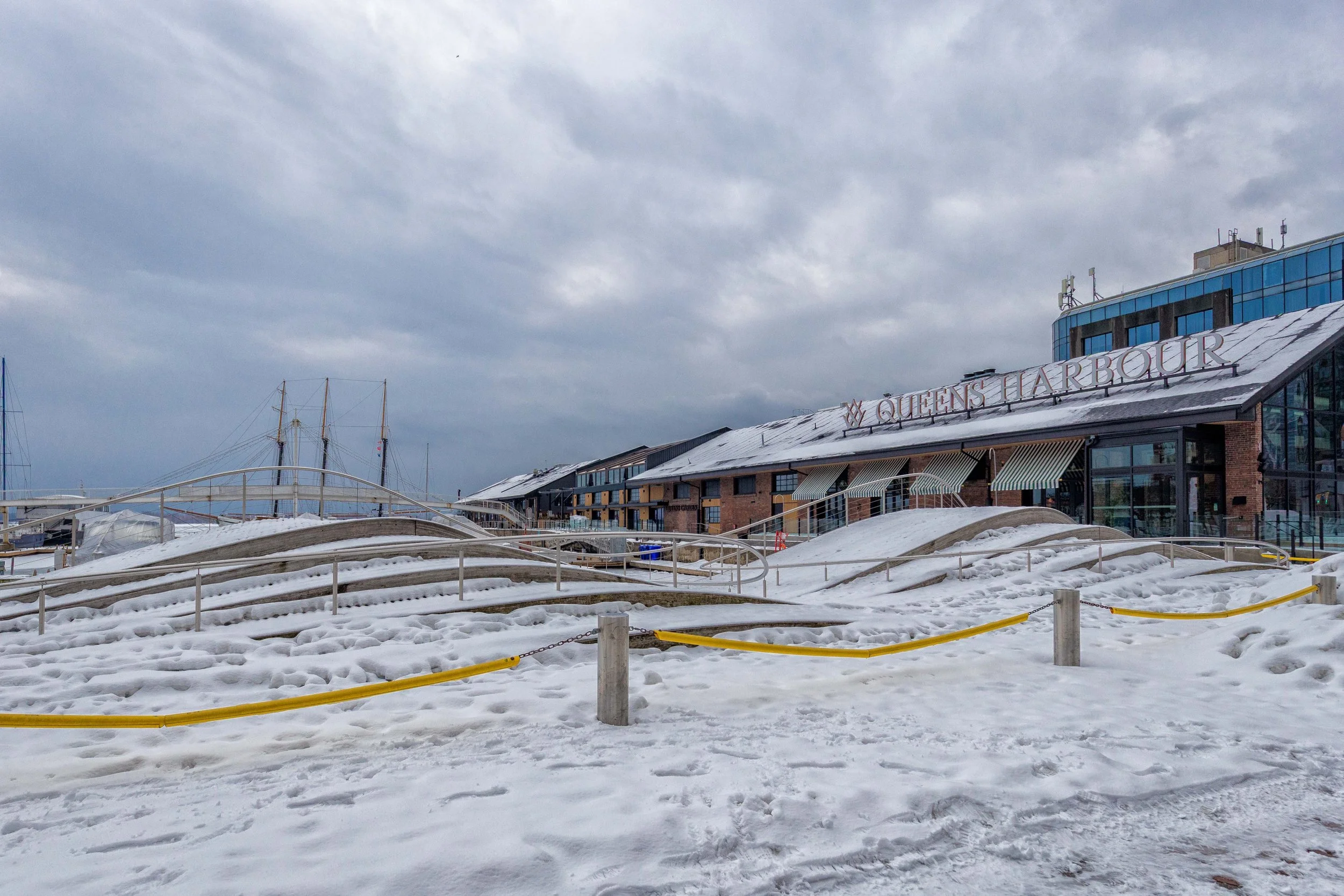
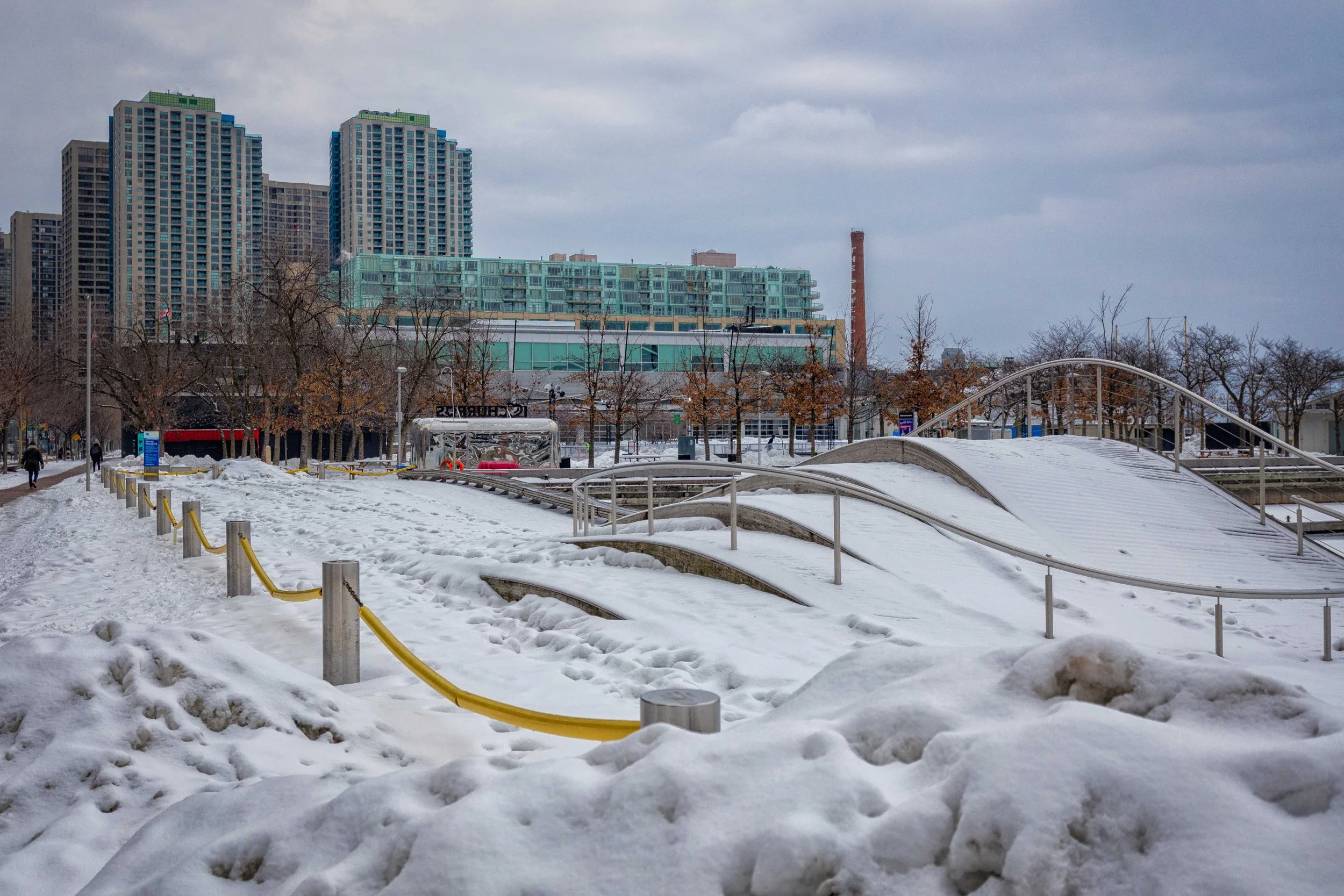
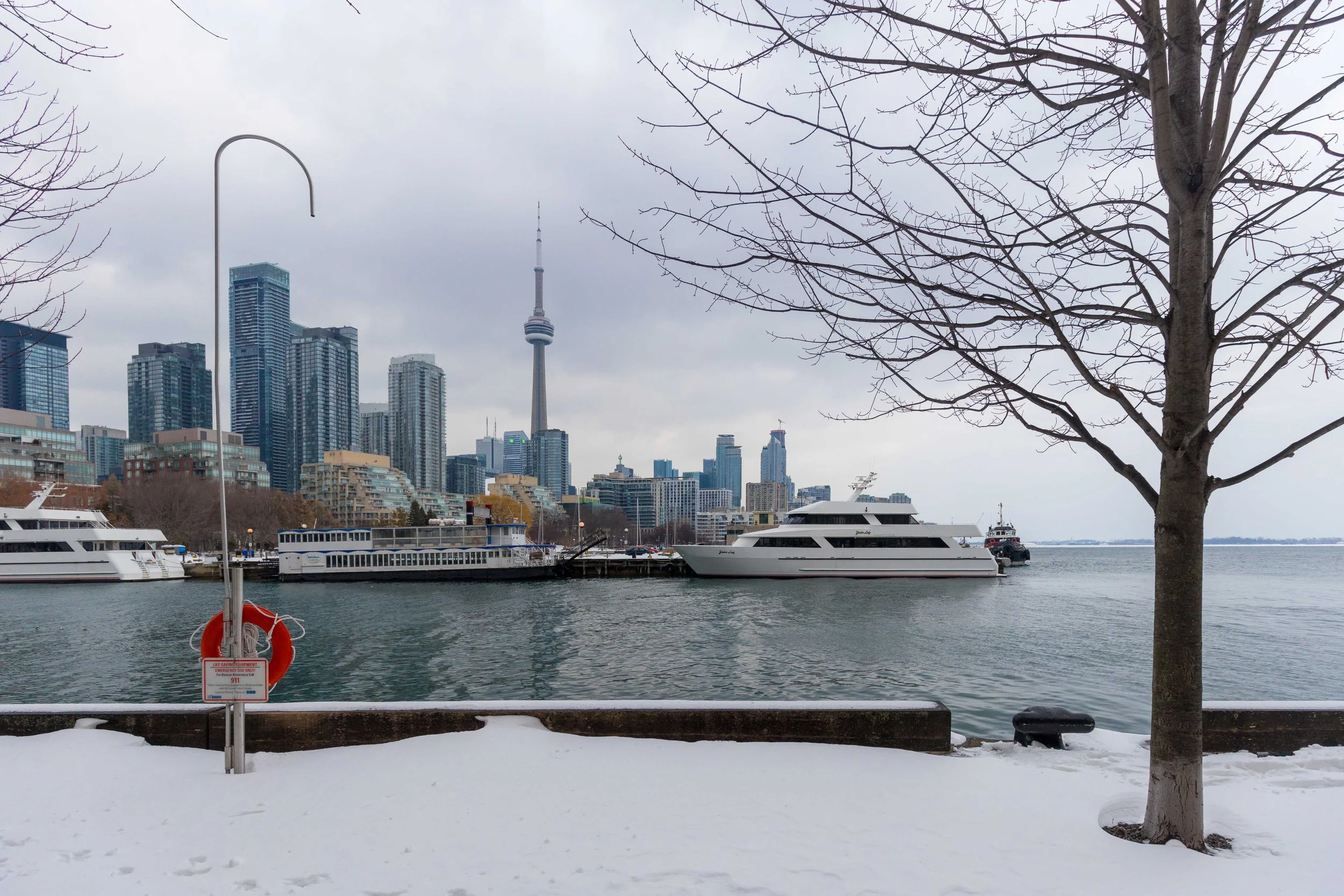
I walked back to Queens Quay West and along to Harbourfront Centre. A daycare group passed in front of KidSpark — the Ontario Science Centre’s temporary home — and there was still a bit of hustle, though noticeably fewer people around Ann Tindal Park. The CN Tower appeared between the Waterclub towers, briefly framed as I walked past. The Rees WaveDeck remained snow-covered along the water’s edge.
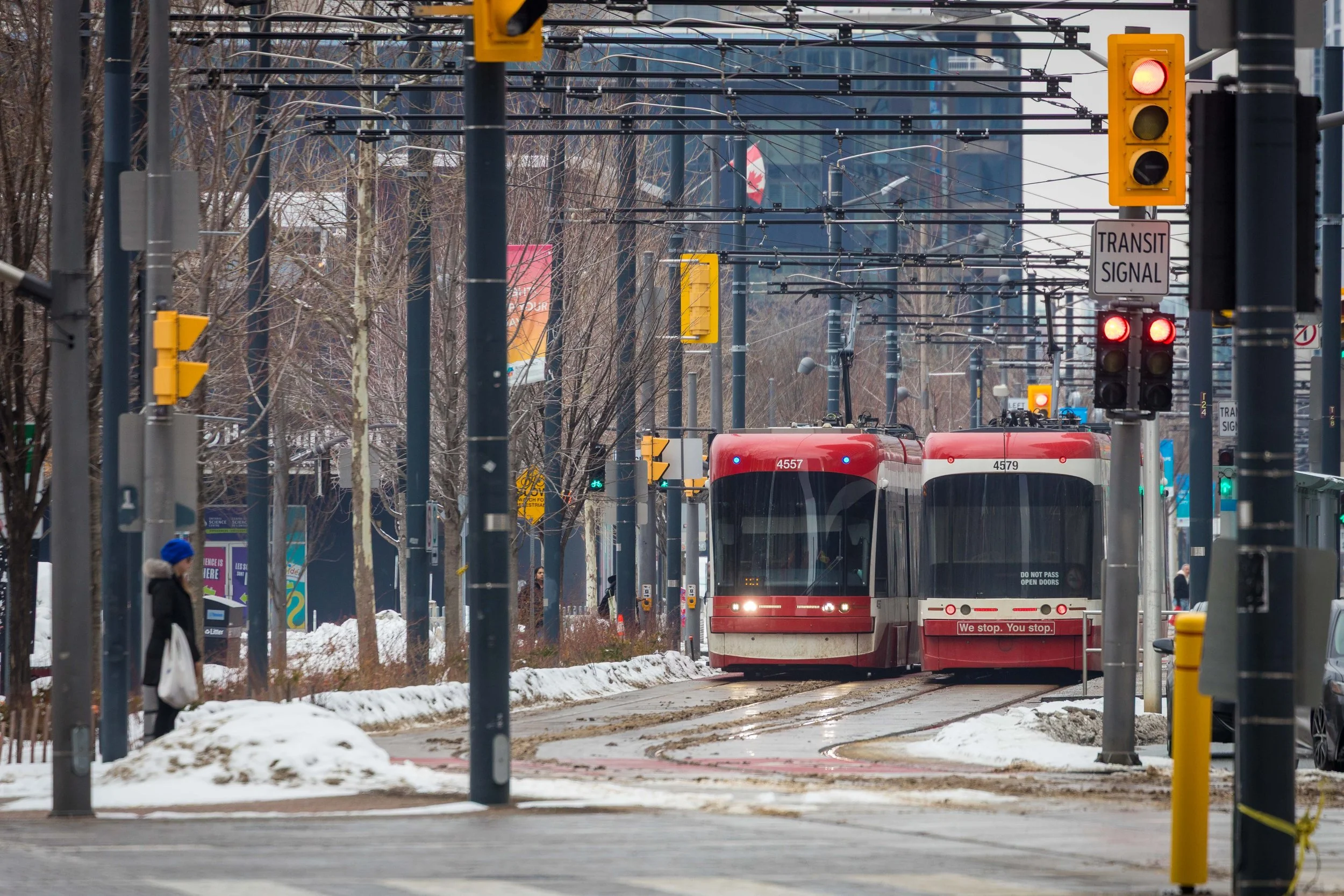
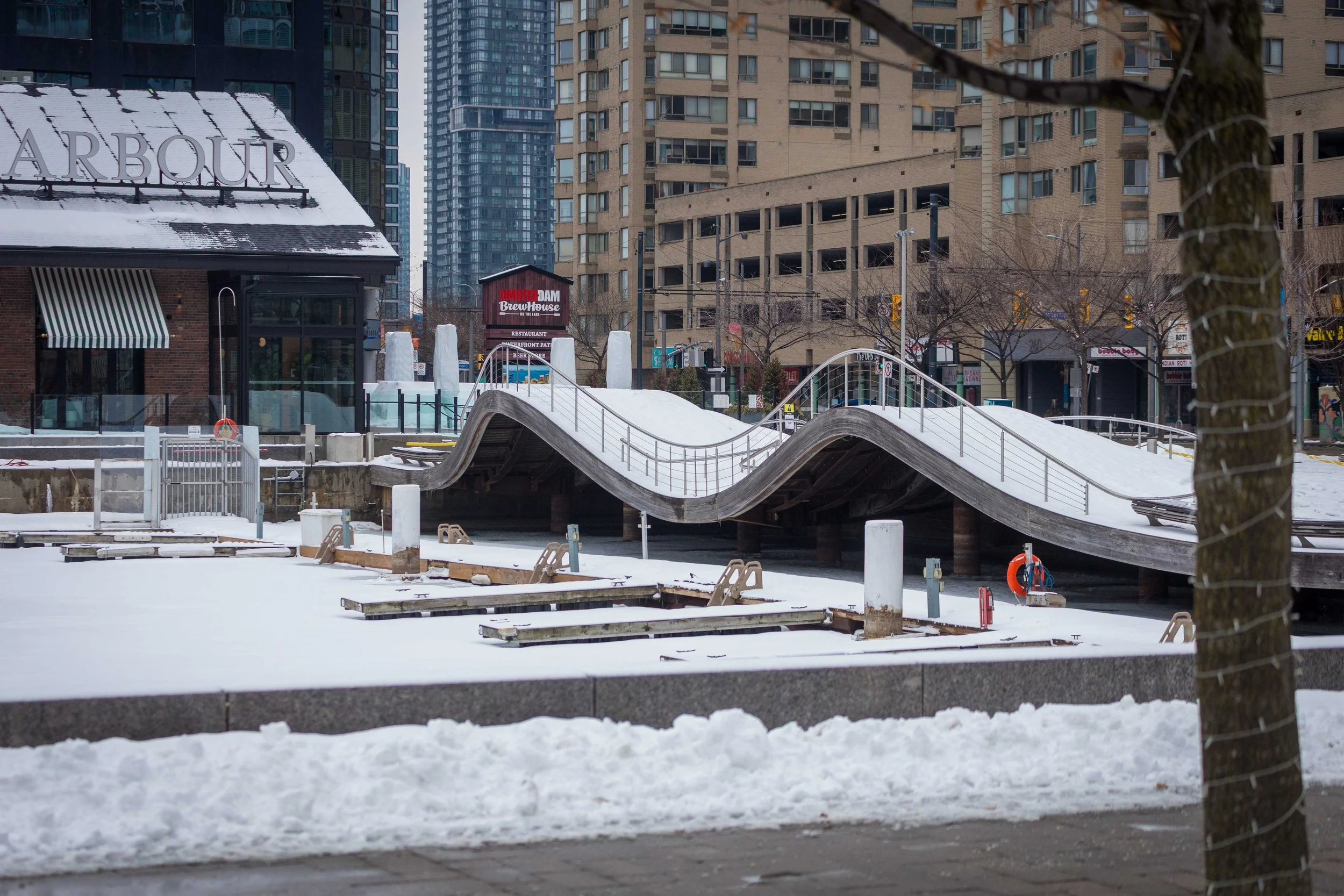
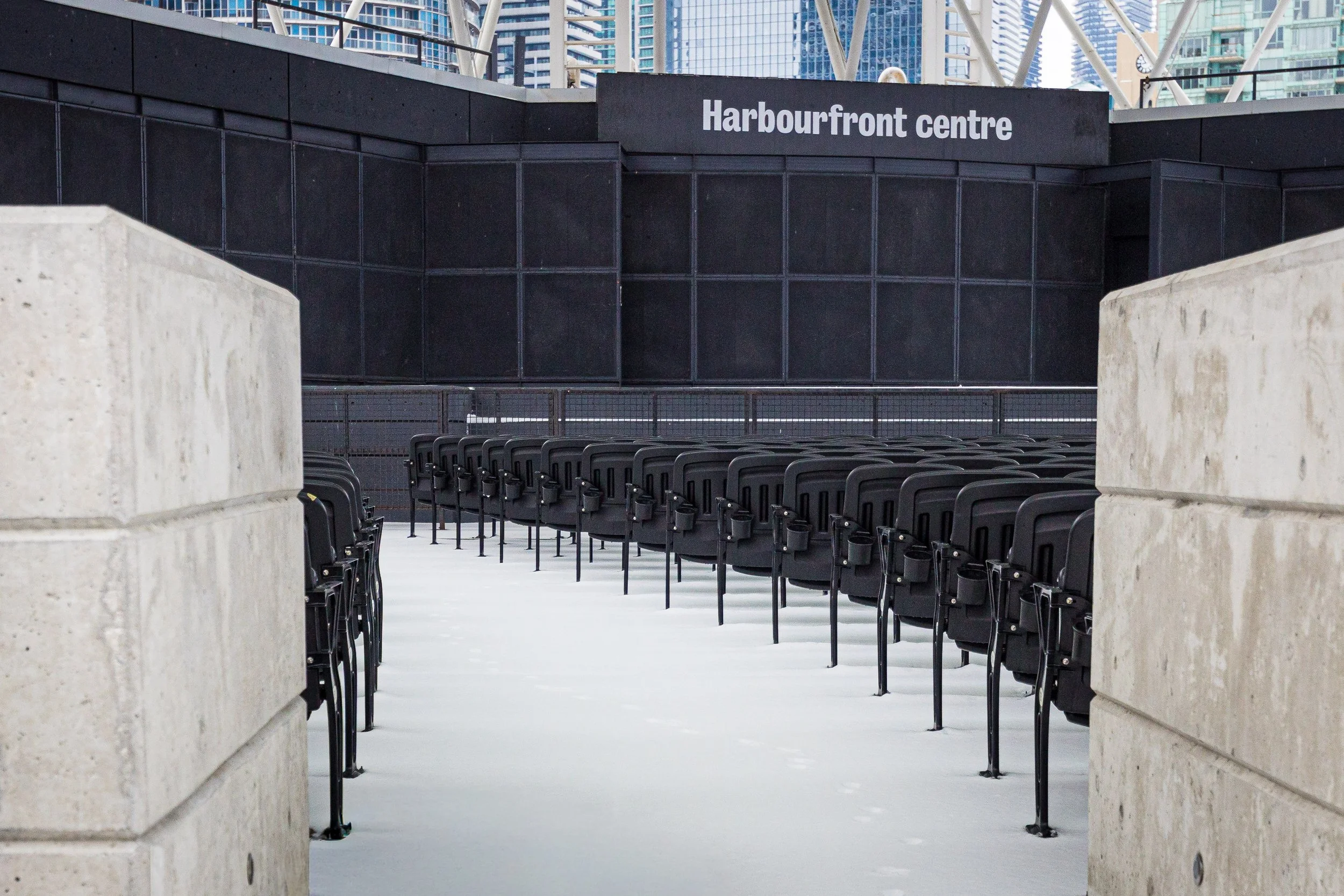
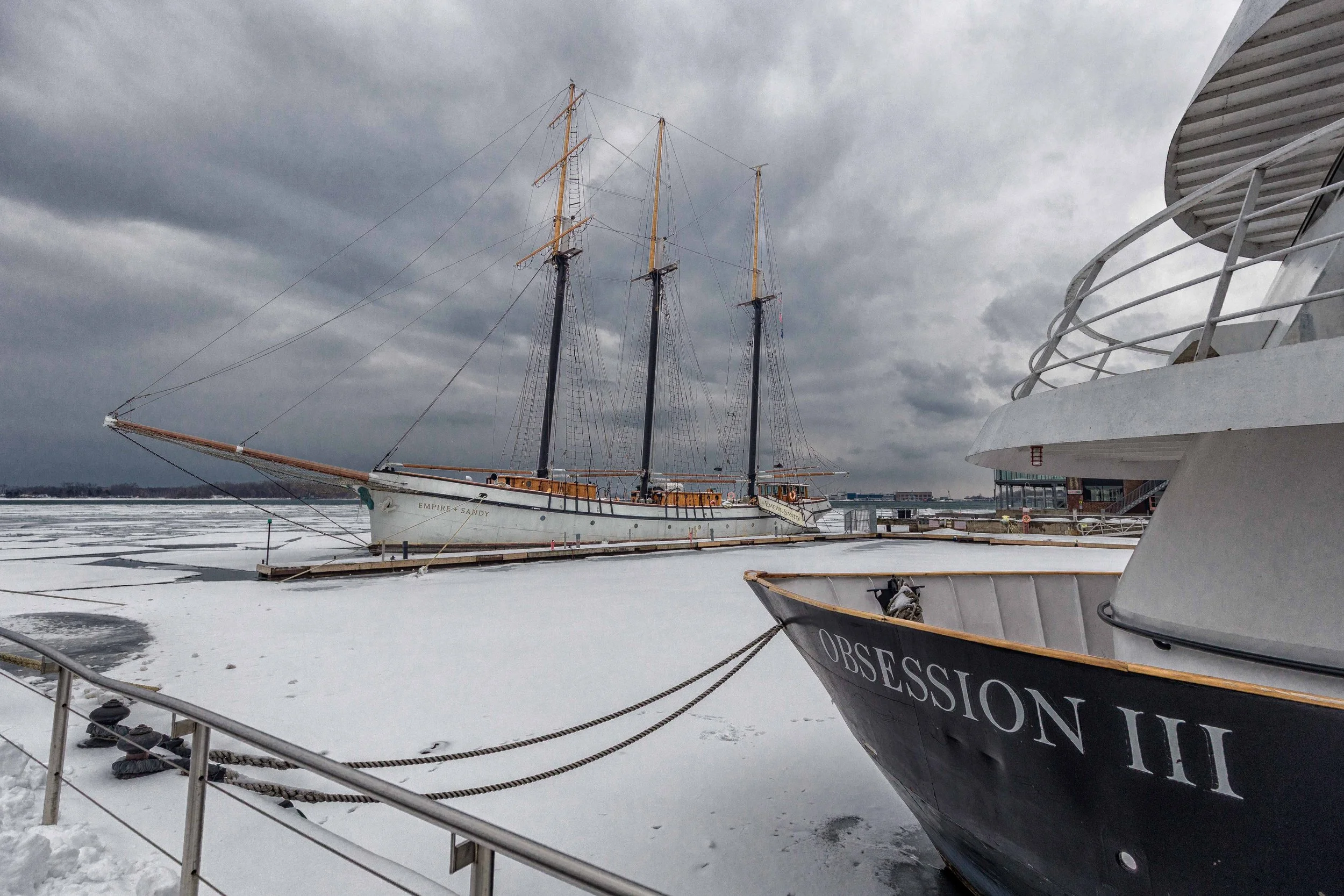
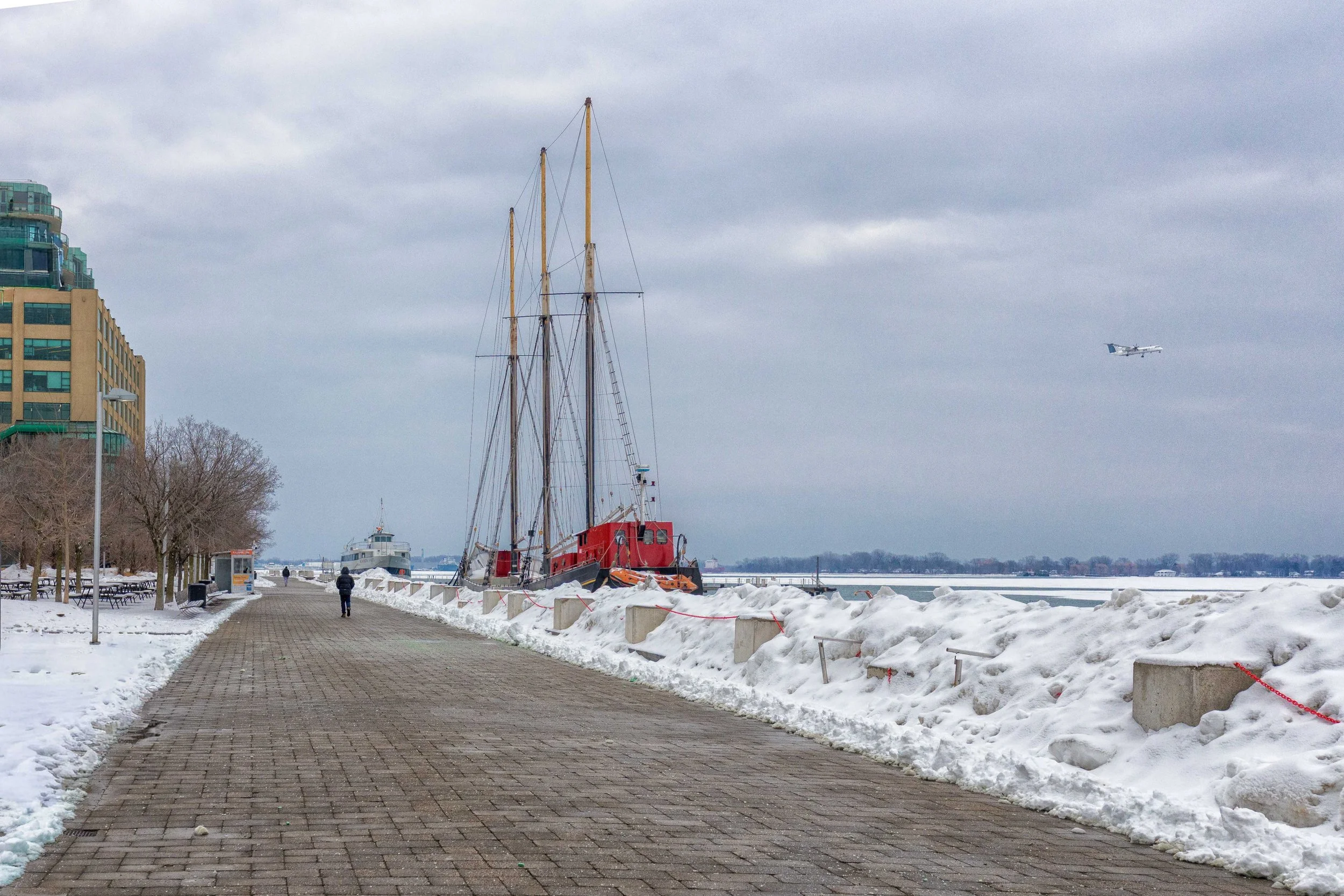
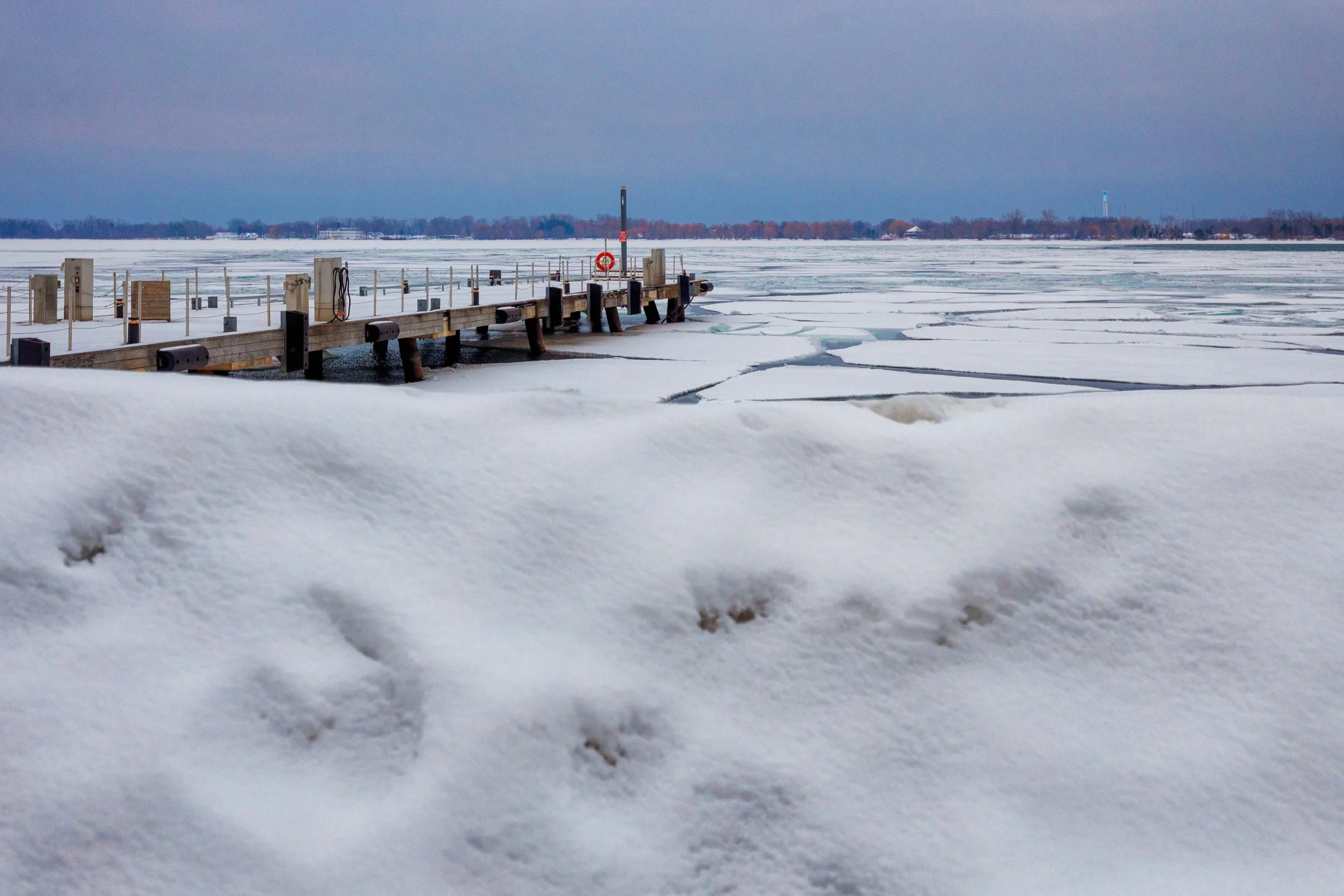
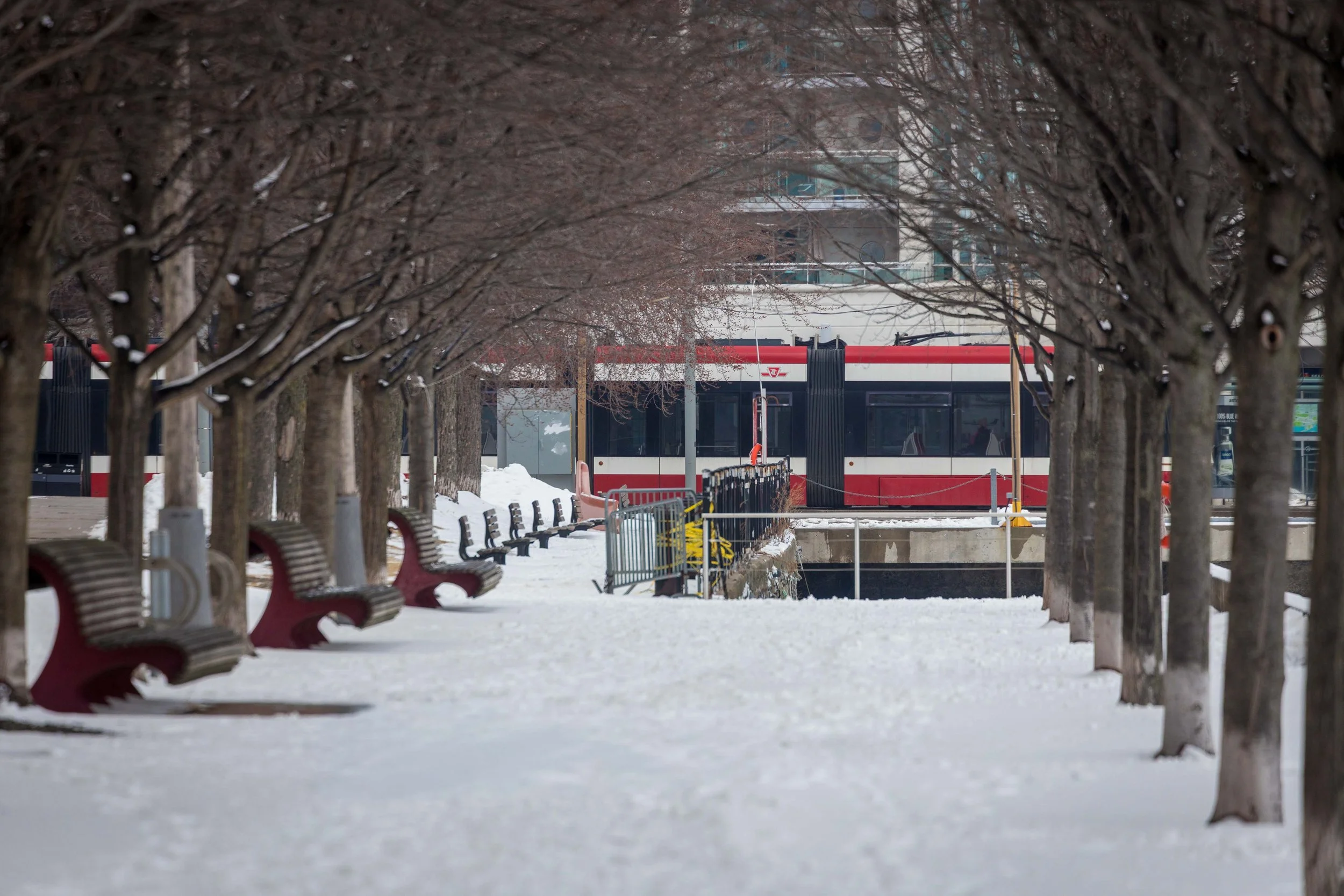
Walking back toward the lake, I passed the Harbourfront Centre concert stage. The repetitive pattern of the chairs caught my eye; the only sign of movement here was a line of animal footprints running down the centre aisle. To my right, Obsession III and the Empire Sandy sat docked for the winter. Along the southern edge of the pier, snow had been plowed into a low wall at the water’s edge, and beyond it, the lake showed a mix of open water and snow-covered ice stretching toward the Islands. Looping back towards the street, I passed Skate by the Lake, the outdoor rink made possible through a partnership with Canadian Tire Jumpstart Charities. Back on Queens Quay, I pass the WaveDeck, then take the streetcar over to Dan Leckie Way.

Bathurst Quay
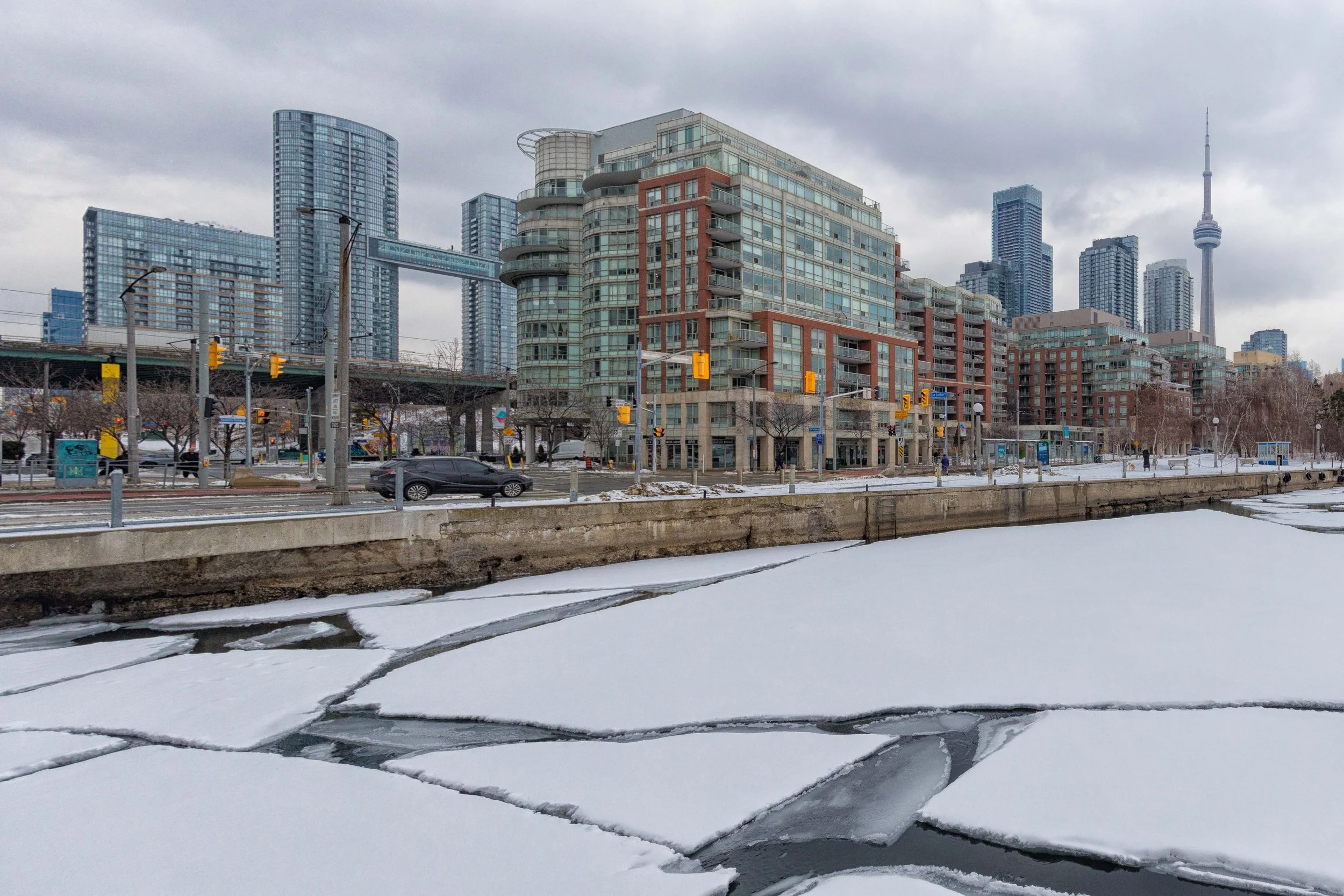
I got off the streetcar at Dan Leckie Way and walked along Bathurst Quay, with clear views of the city stretching east.
Ireland Park
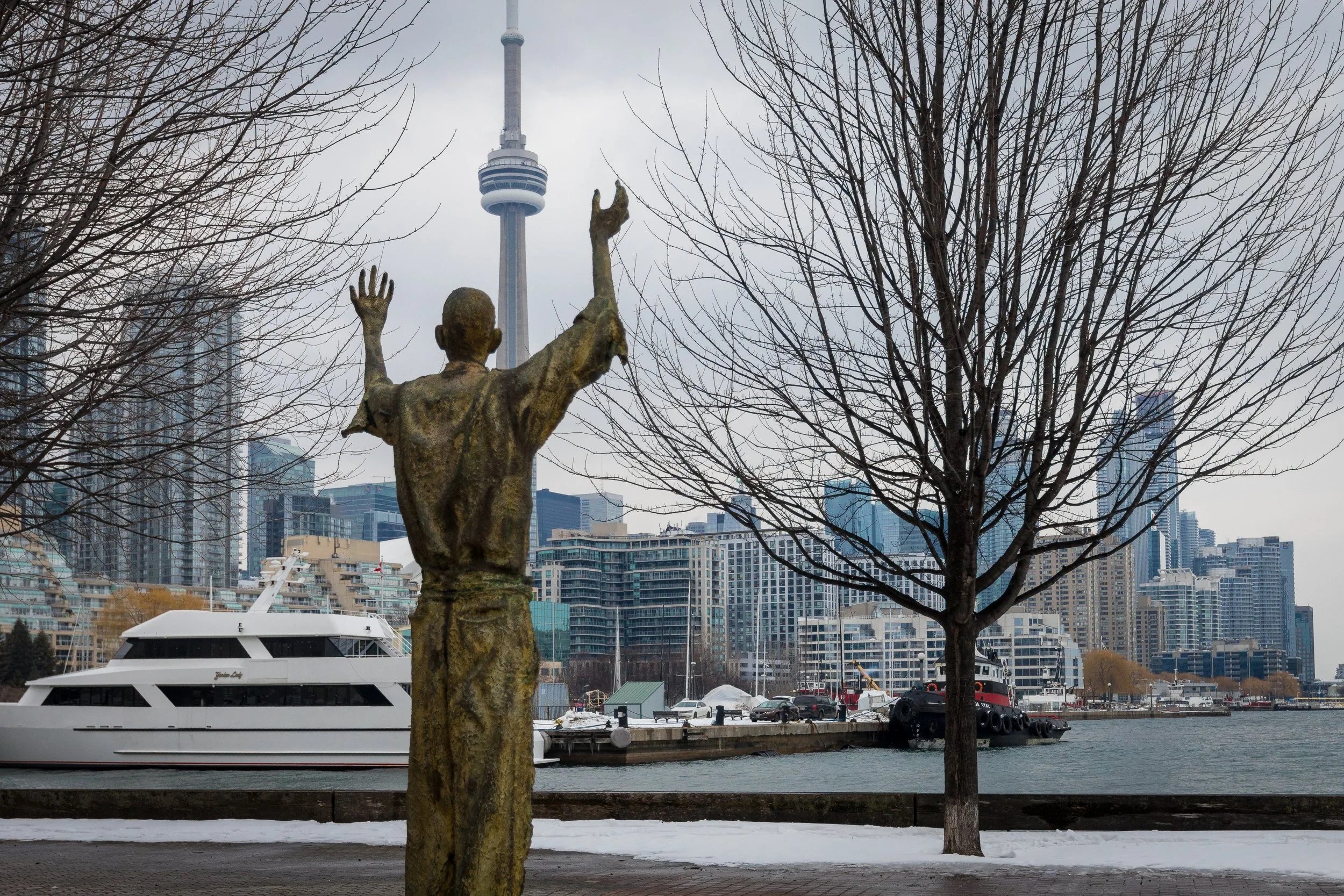
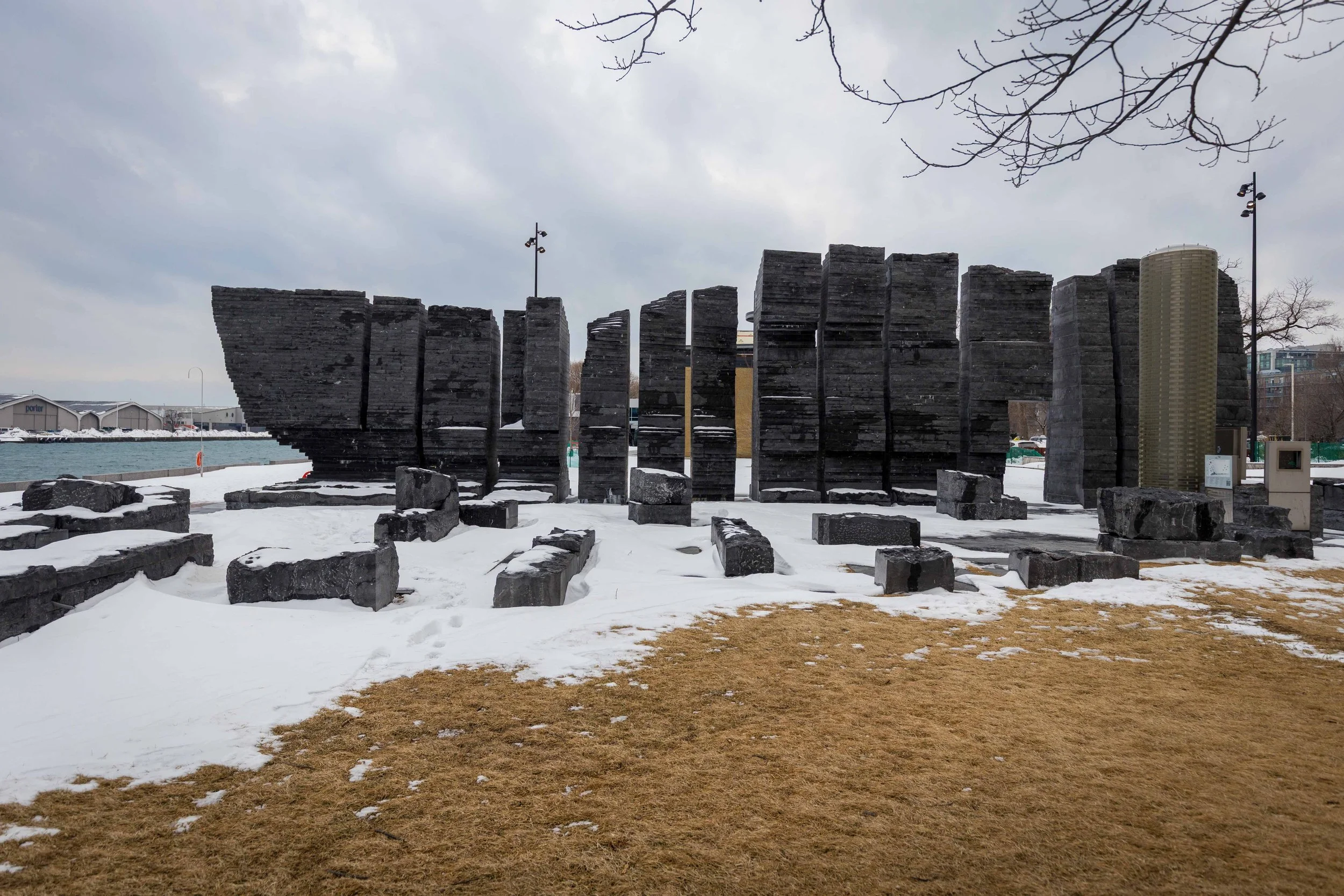
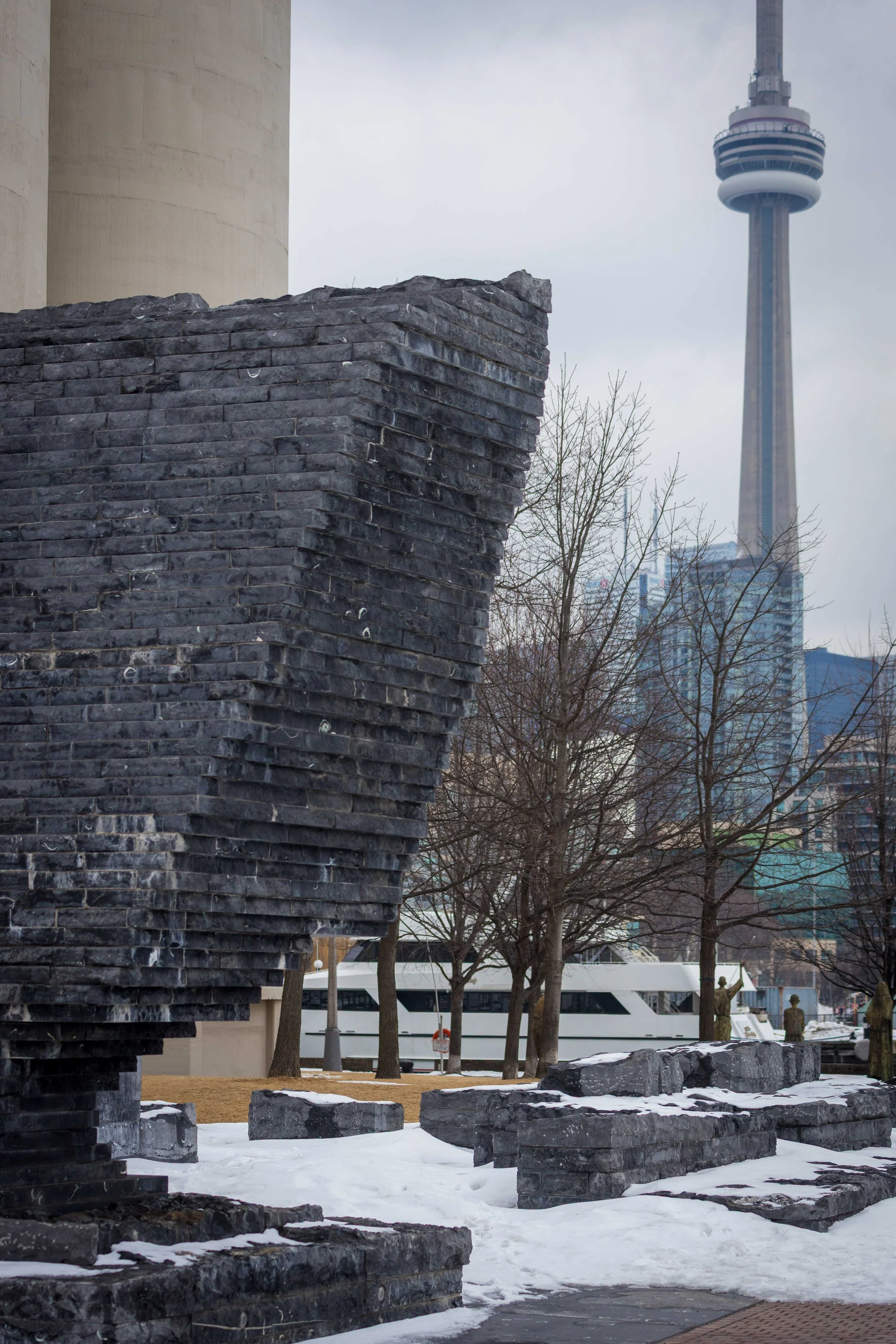
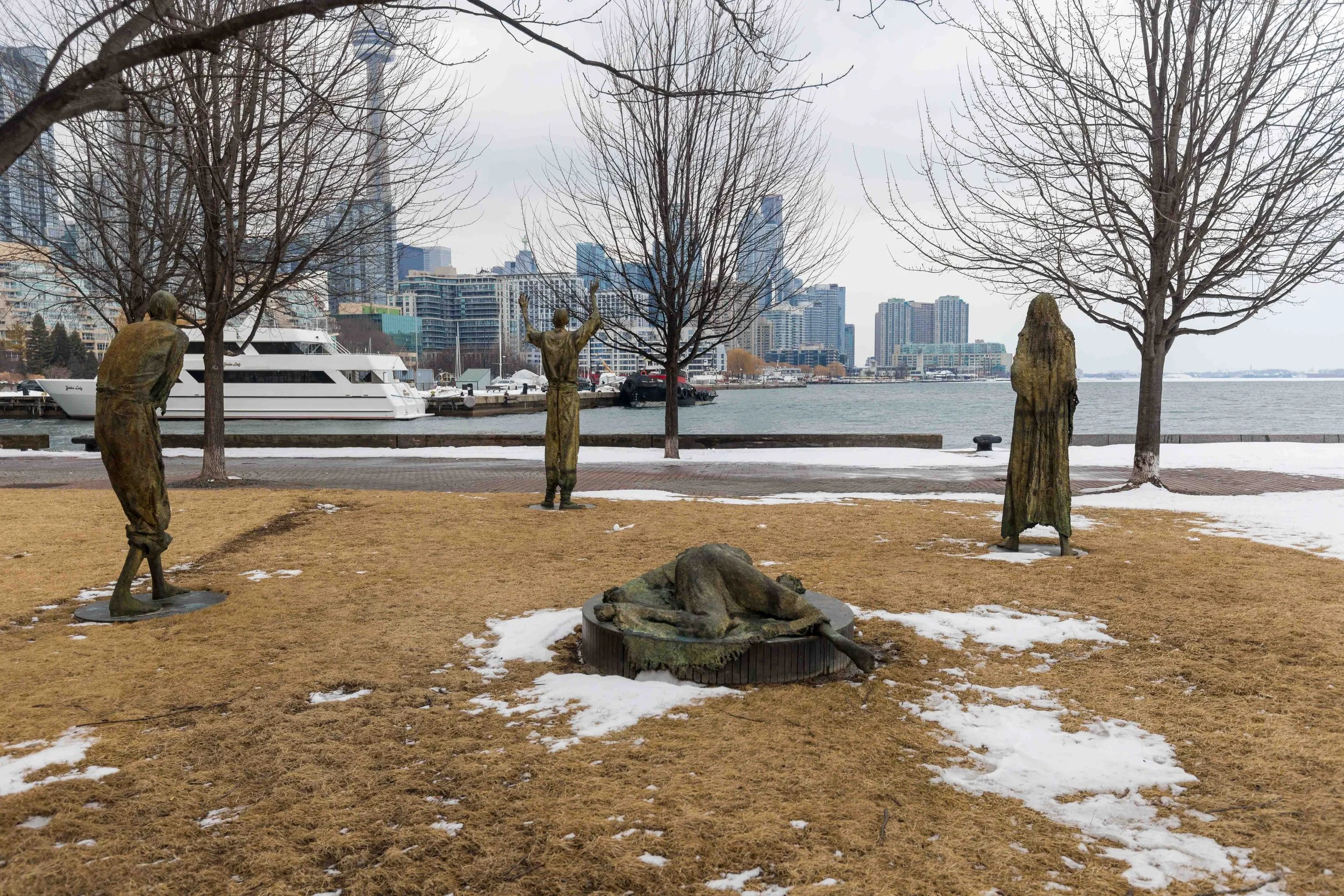
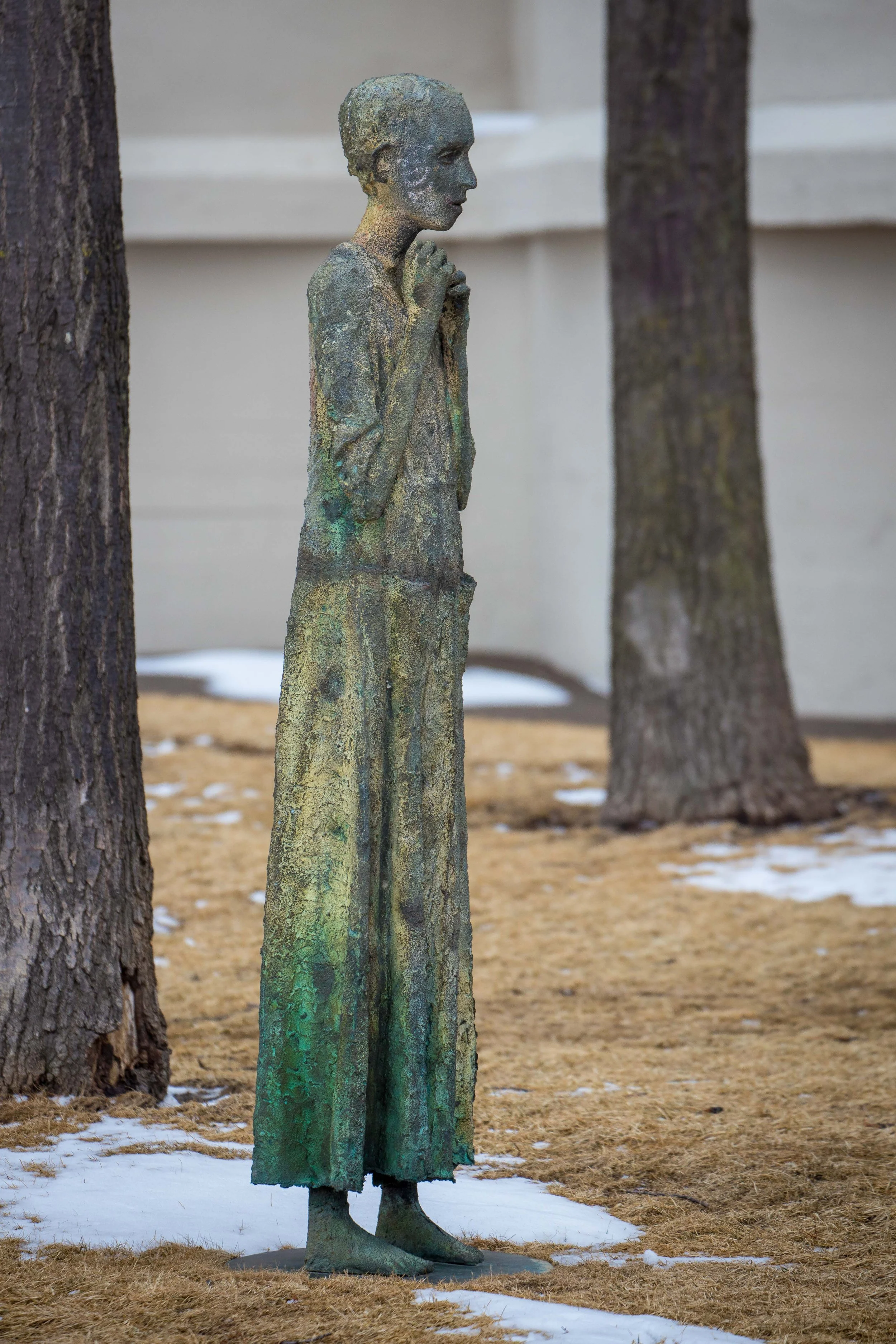
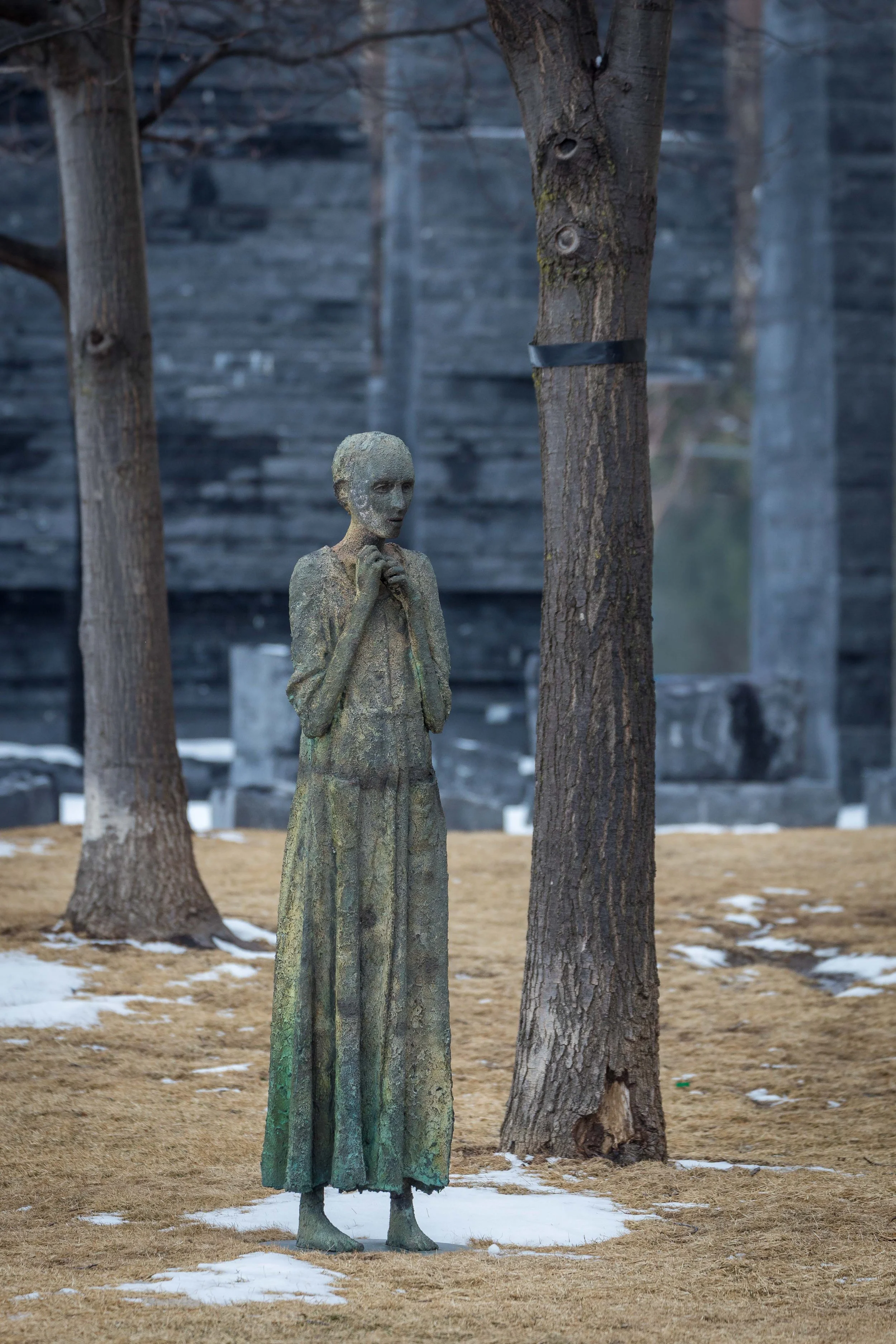
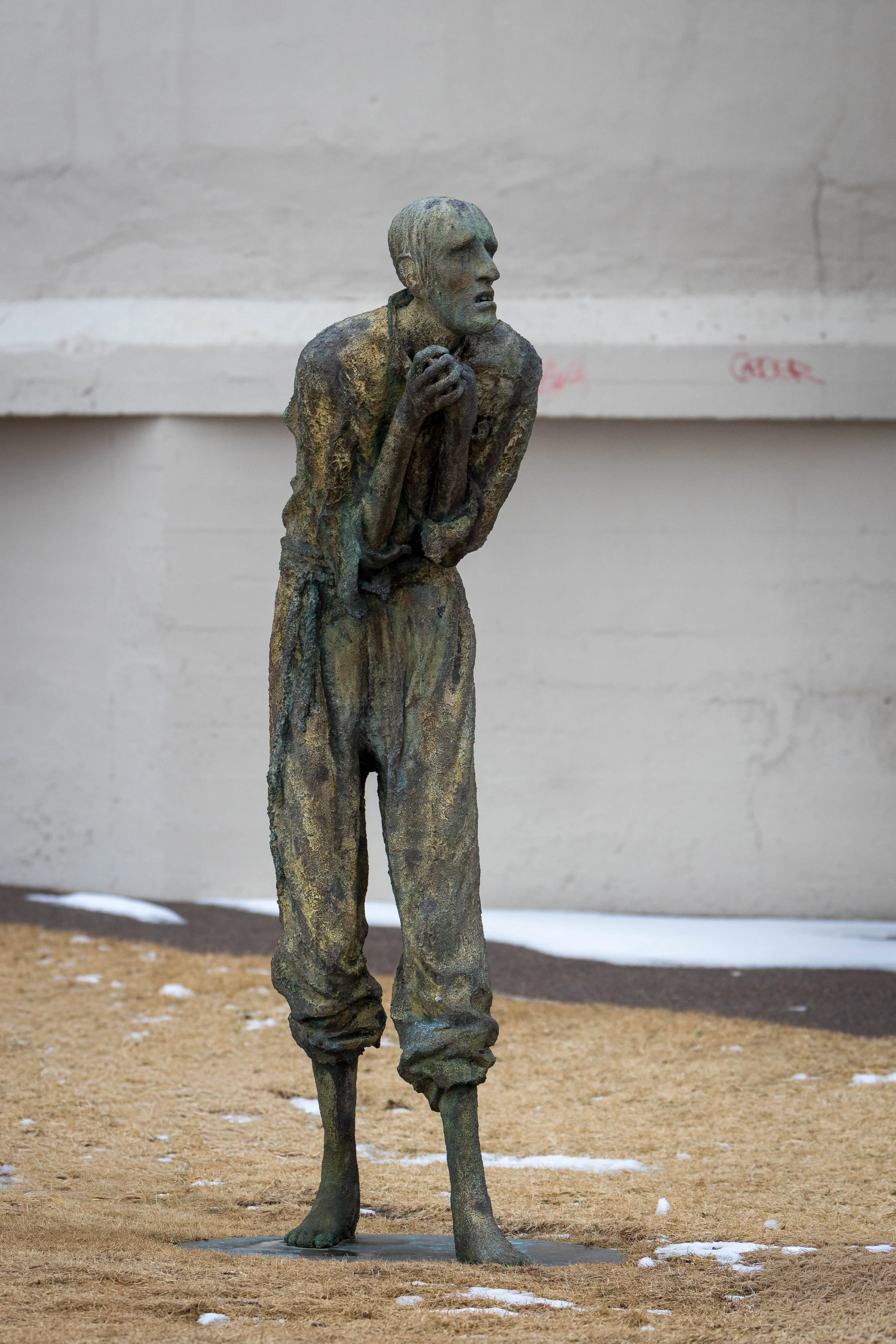
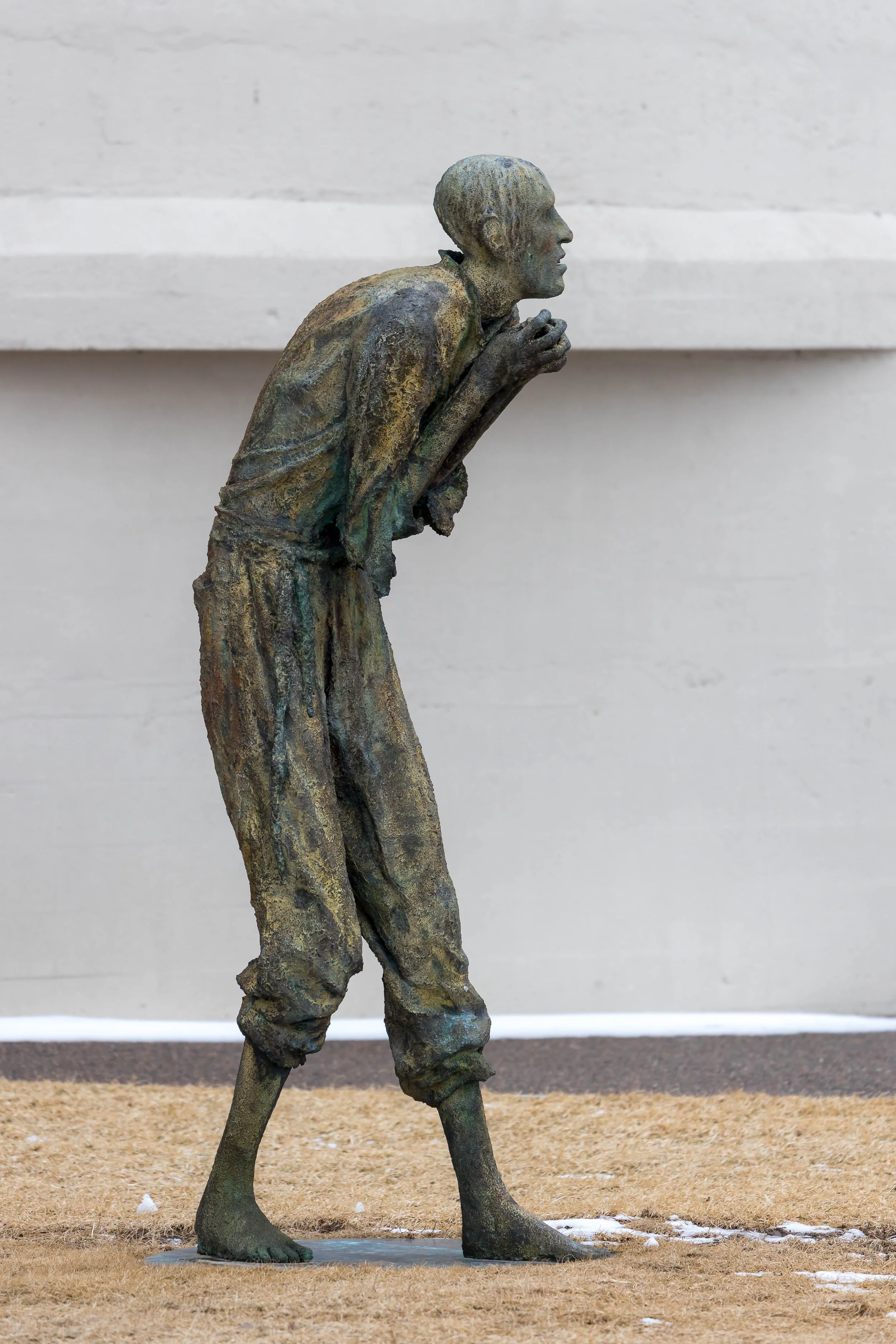
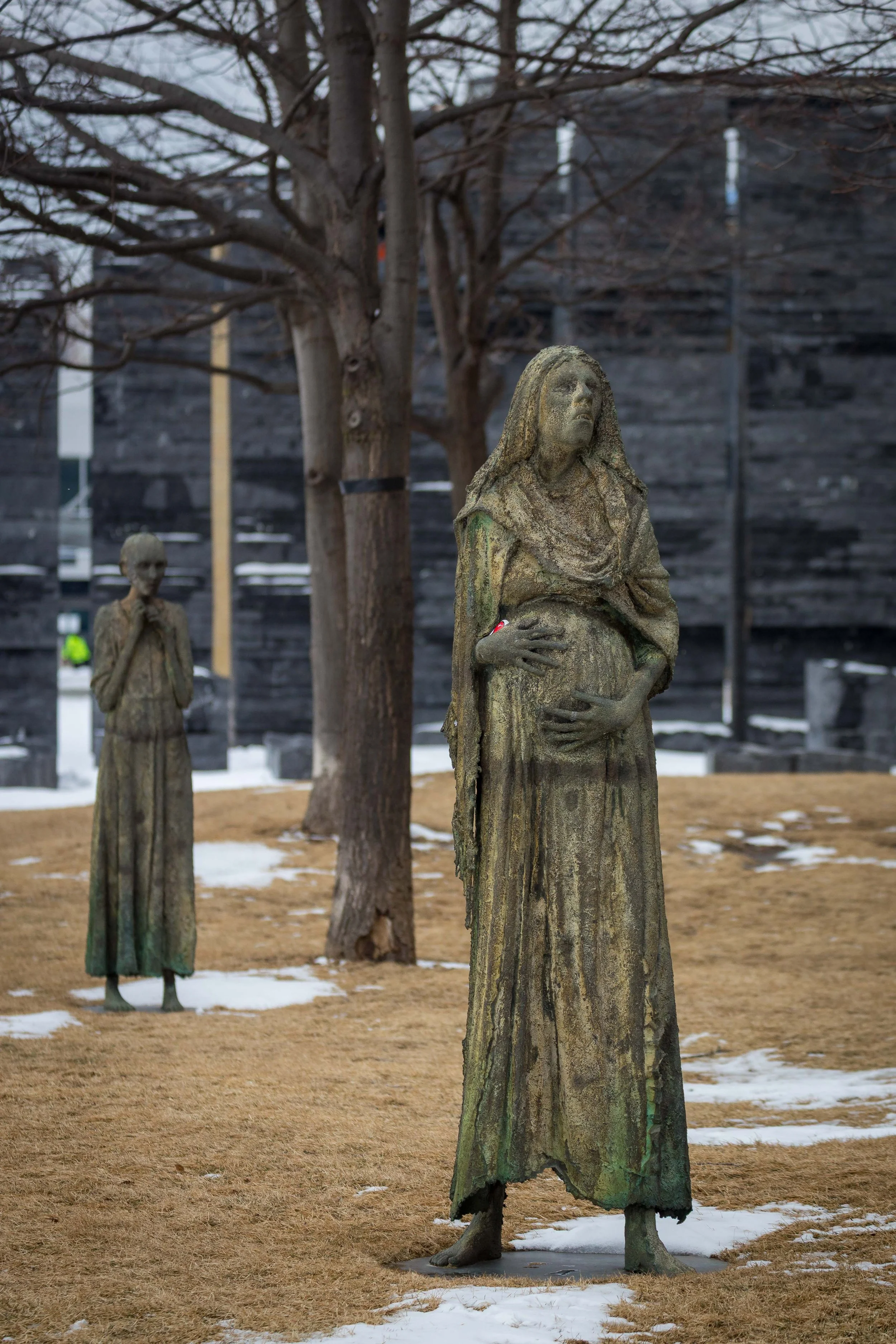
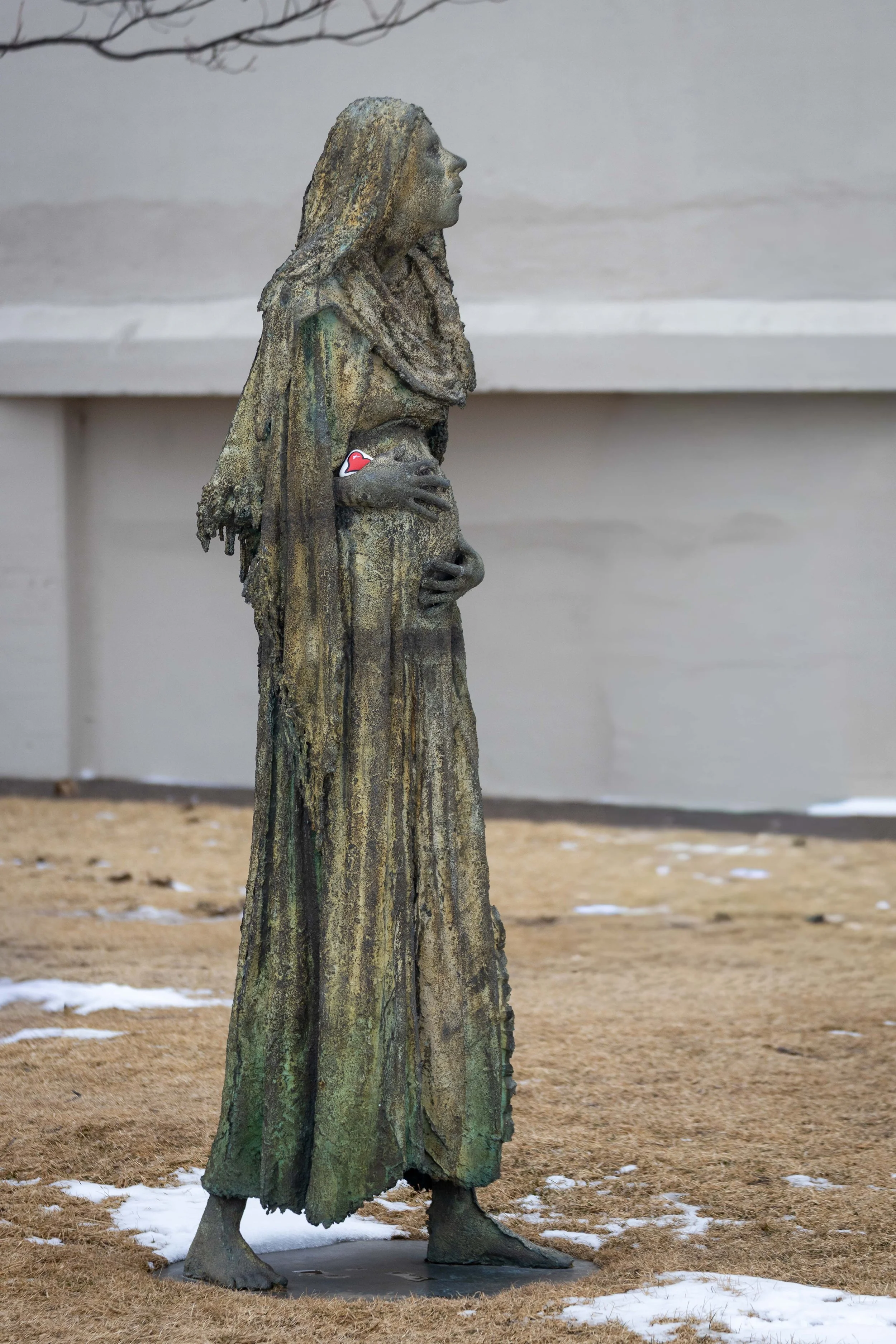
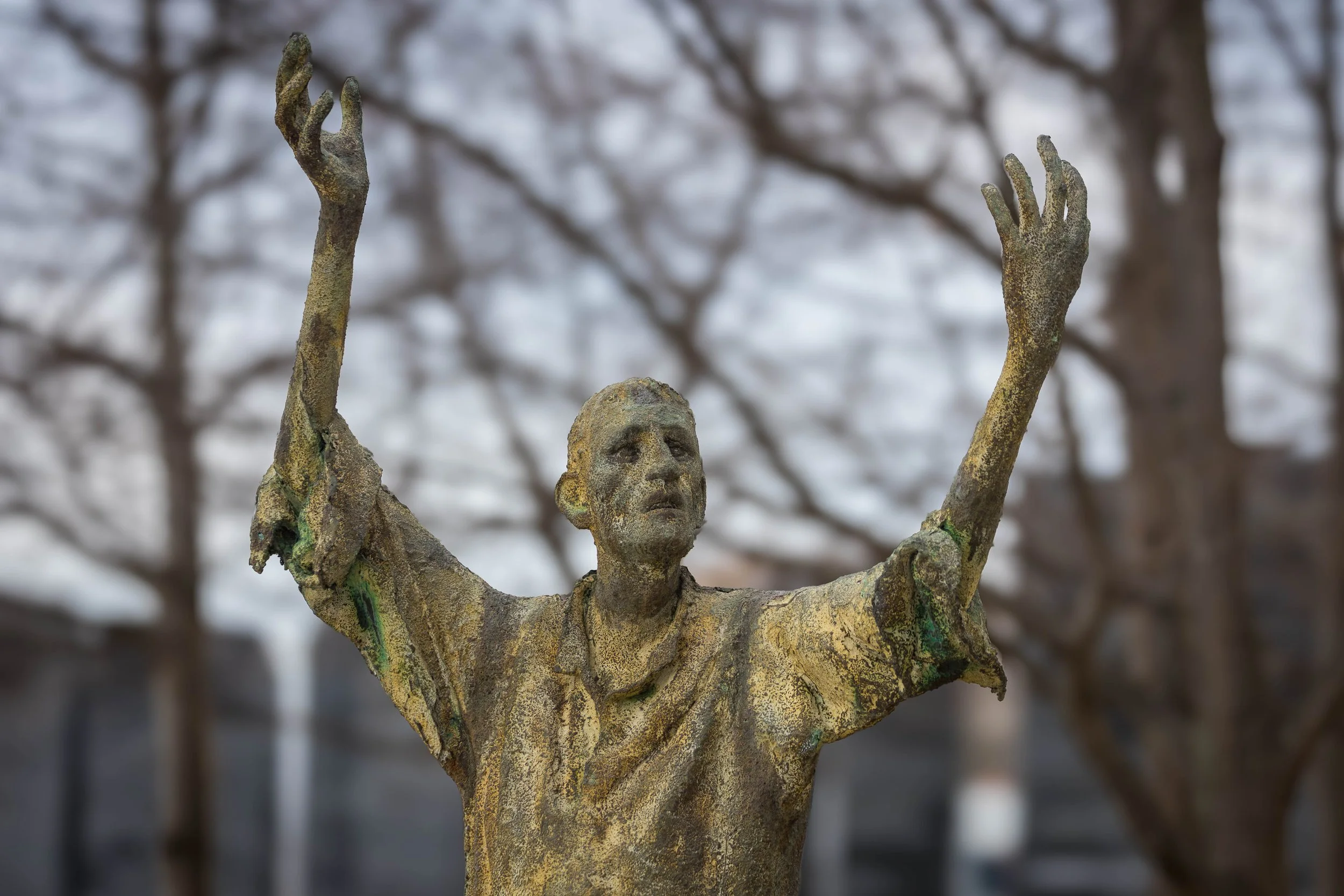
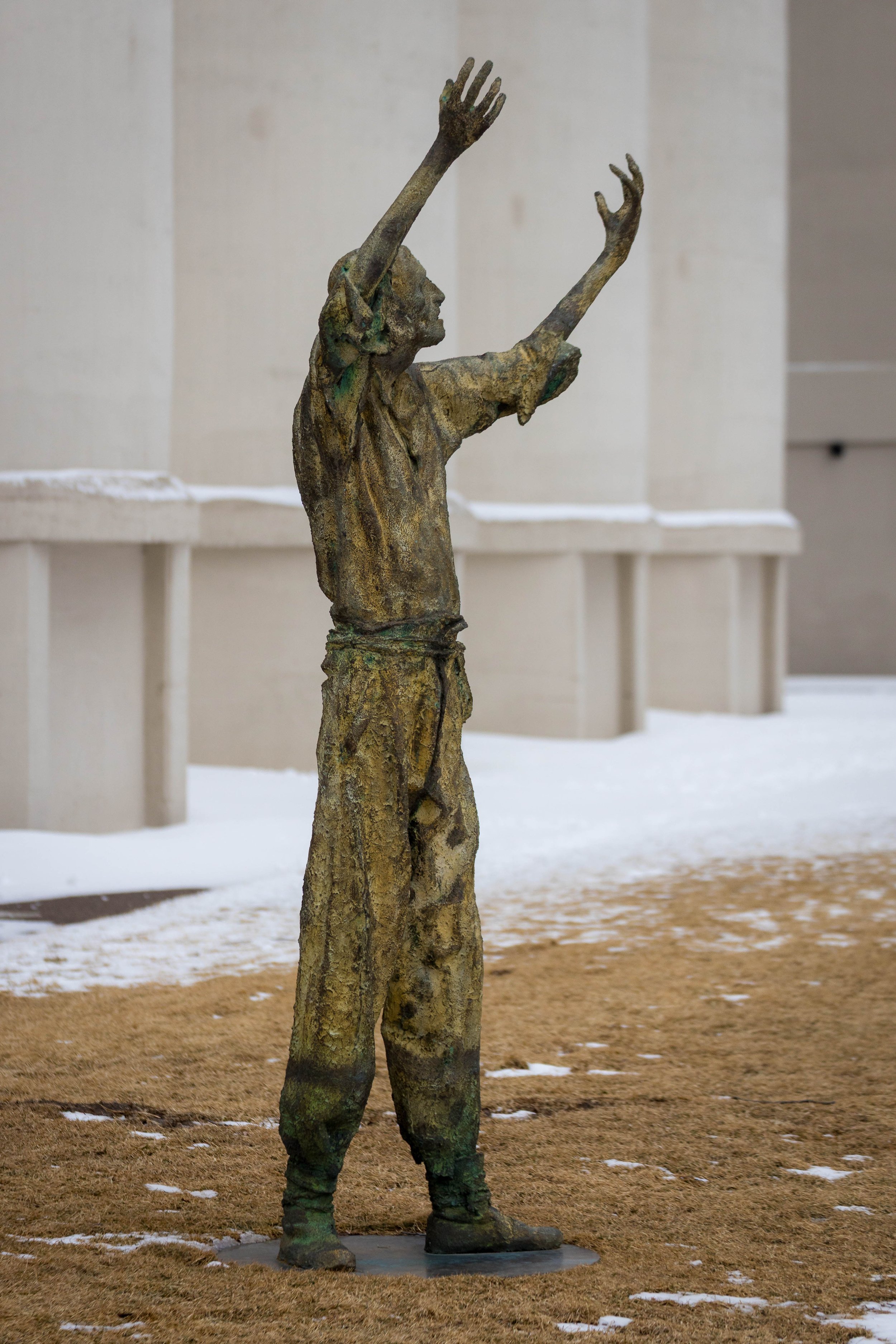
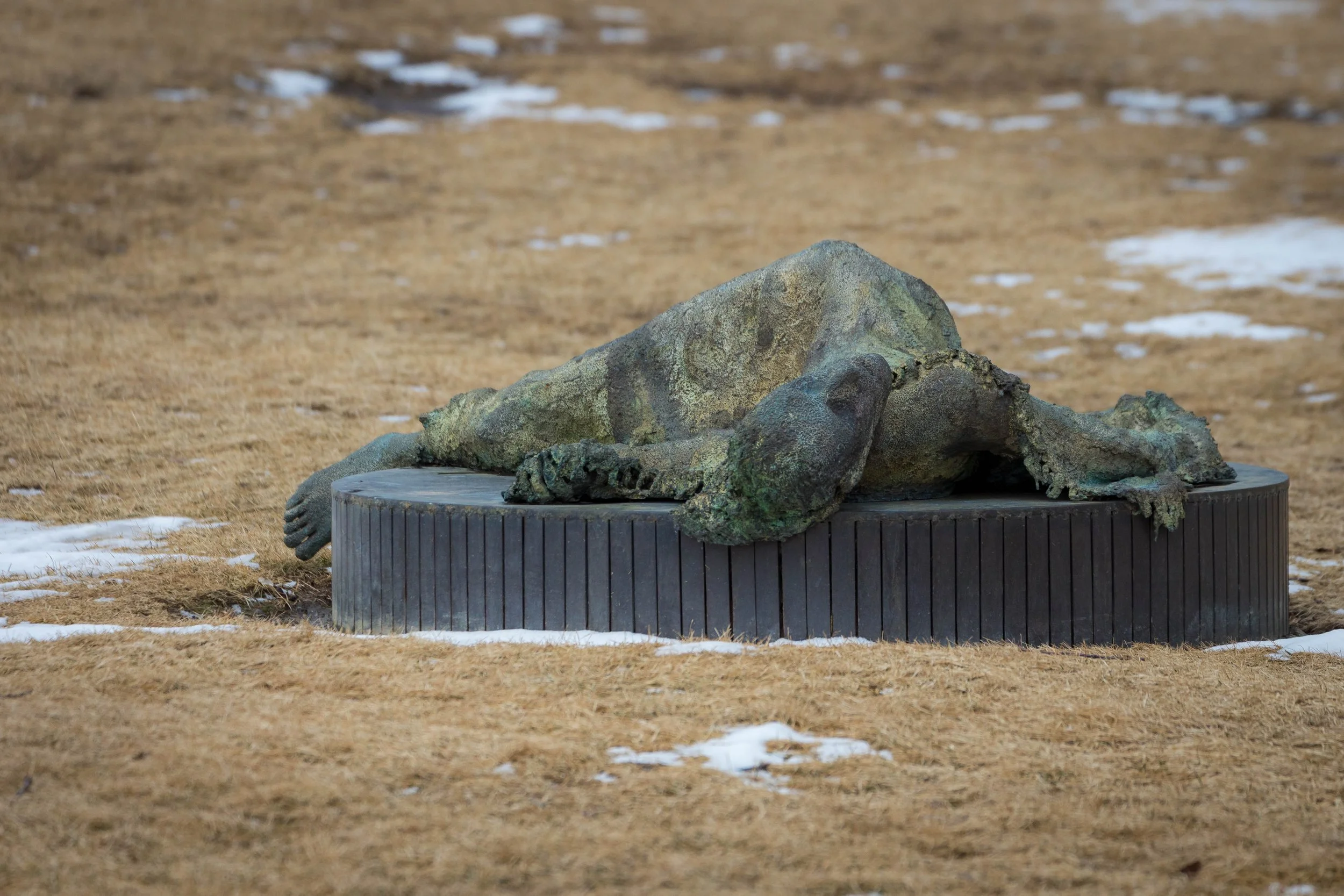
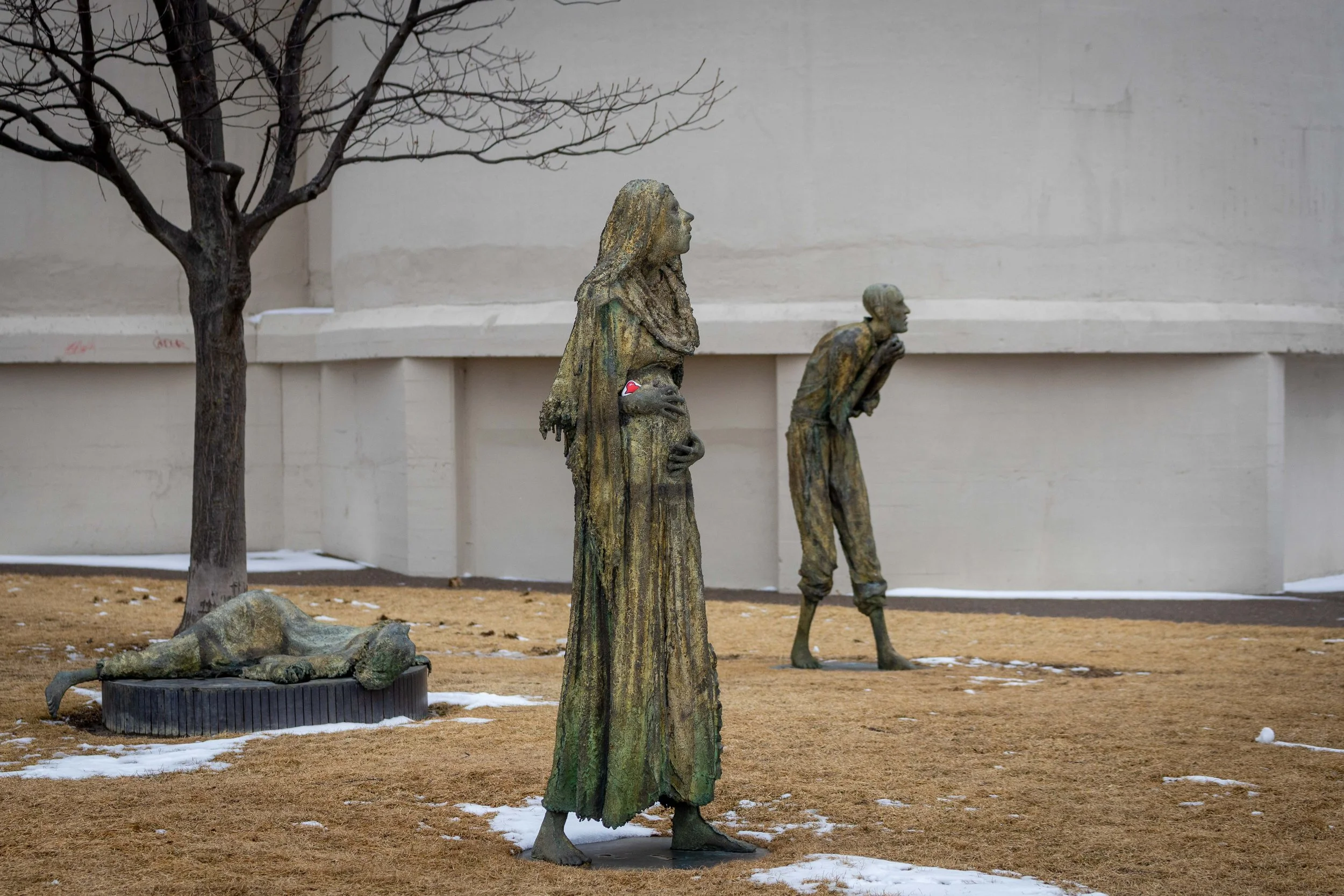
The bronze figures of Arrival, by Irish sculptor Rowan Gillespie, stand within a larger memorial landscape designed to mark this shoreline as the point where Irish Famine immigrants arrived in Toronto in 1847. The site combines sculpture with limestone, glass, and engineered stonework — including the memory wall, built to feel massive and precarious while carefully supported beneath the surface. Names of those who died after arrival are cut into the stone, meant to be discovered slowly rather than read all at once. Seeing it here, facing the lake, always makes me stop and think about my own ancestors — some from Ireland — and what it must have meant to leave everything behind and make their way to Canada.
Canada Malting Company
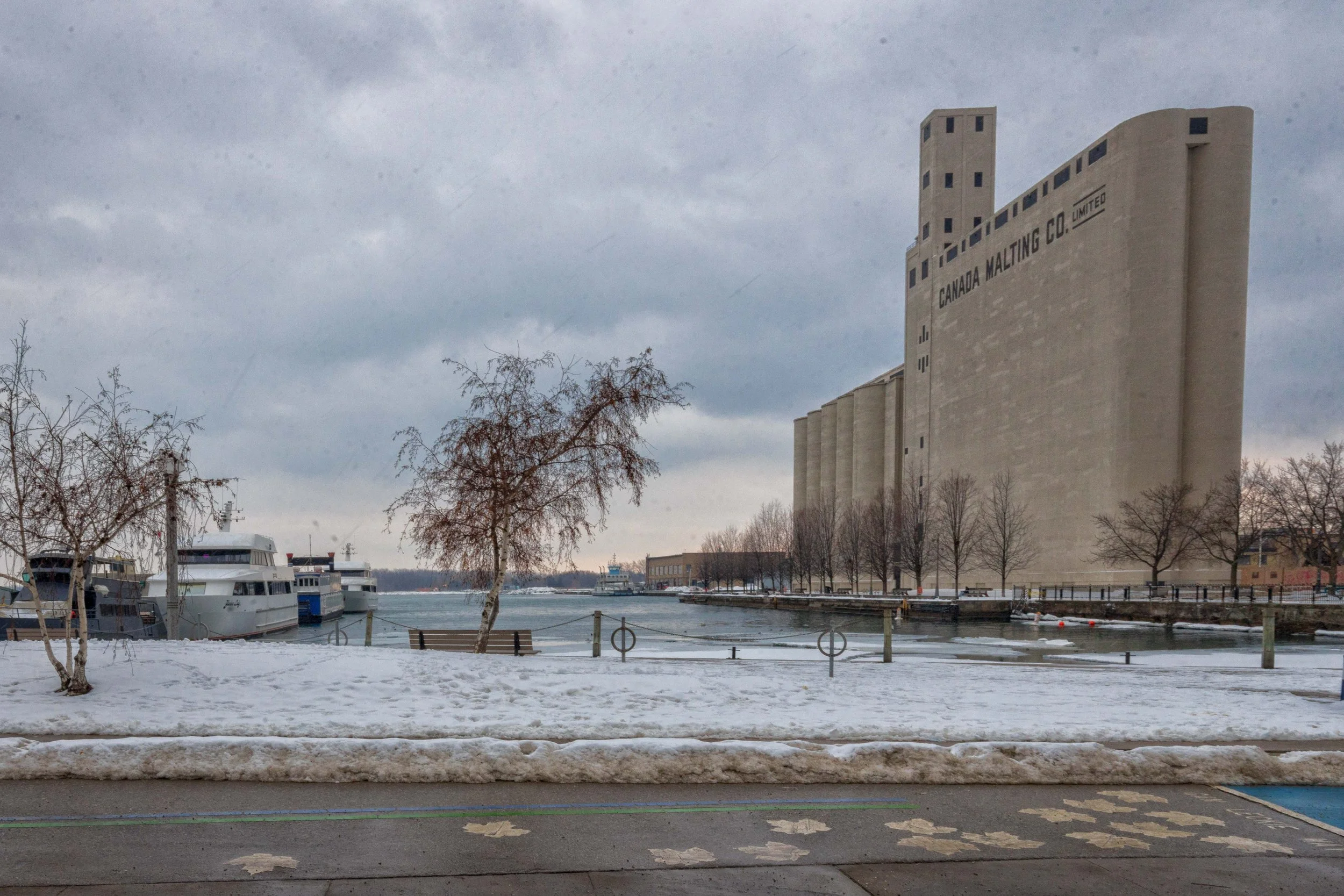
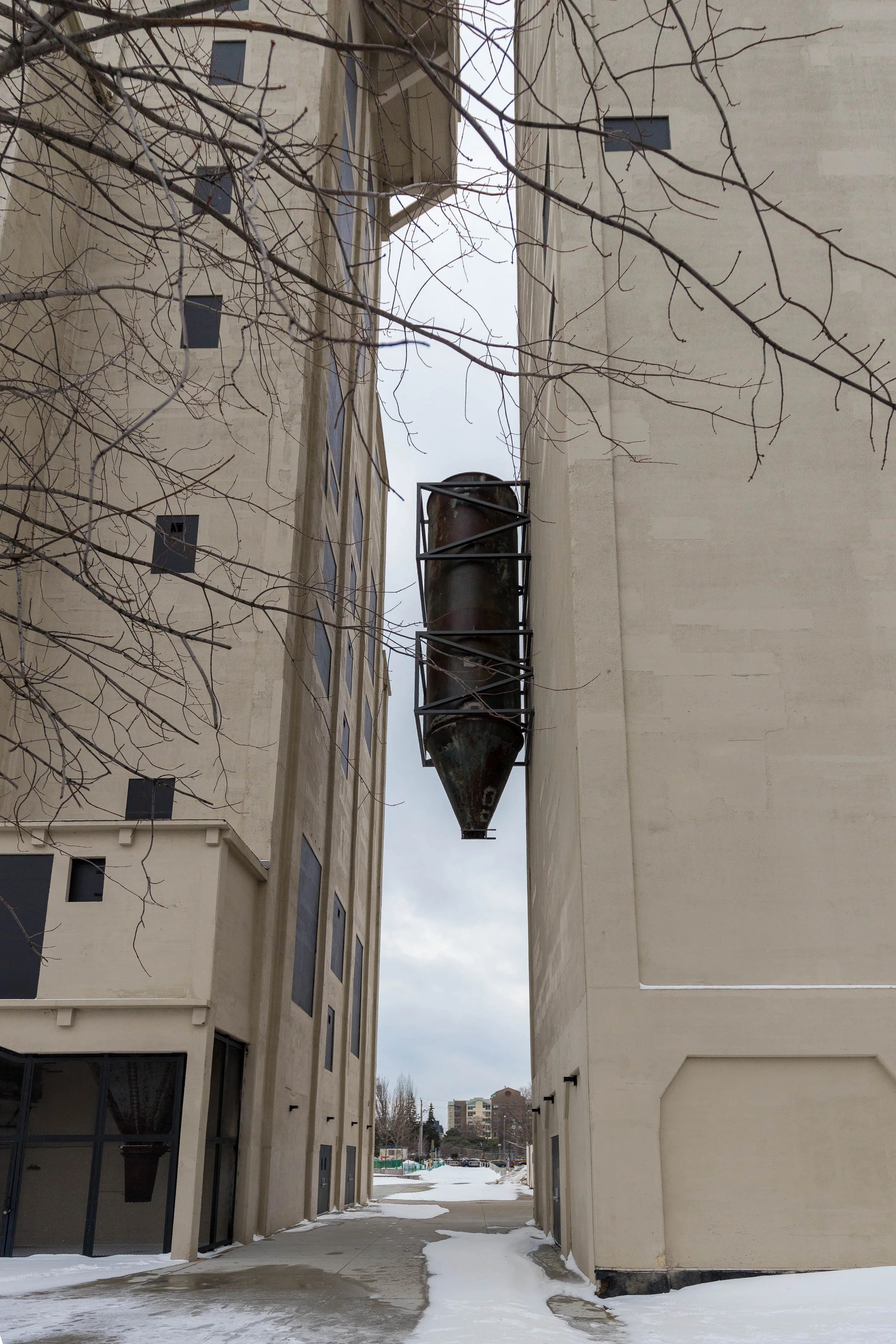
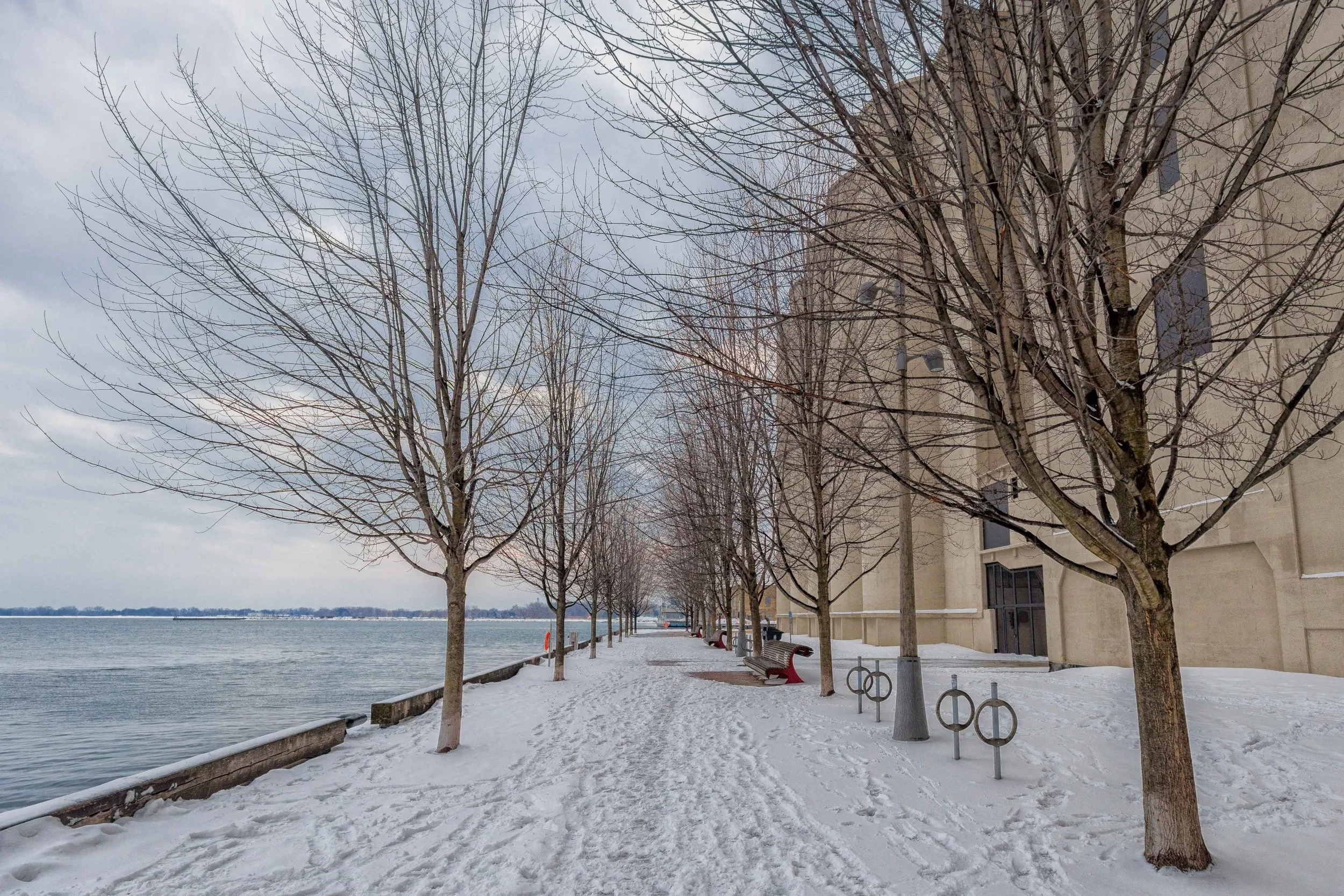
The former Canada Malting Company silos dominate this stretch of the waterfront, their scale impossible to ignore. Built in the early 20th century, they’re a reminder of Toronto’s industrial past — grain, shipping, and labour — standing quietly beside the water long after their original purpose has ended.
Once purely industrial, this stretch of the waterfront now sits in transition — former working lands gradually reshaped into public space. The silos remain as anchors of memory, while paths, parks, and viewpoints grow up around them, turning a place built for industry into one meant for walking, pausing, and looking out over the lake. At night, the silos sometimes serve as a canvas, lit by projections for public art events and festivals.
Before heading home, I lingered a little longer by the water. Waterfowl traced the edge of the ice, calm and deliberate, while the floes nudged and turned in the channel. The cracks in the frozen surface felt like small signals — not of spring quite yet, but of change underway.