Aga Khan Museum | Doors Open Toronto
May 24, 2026
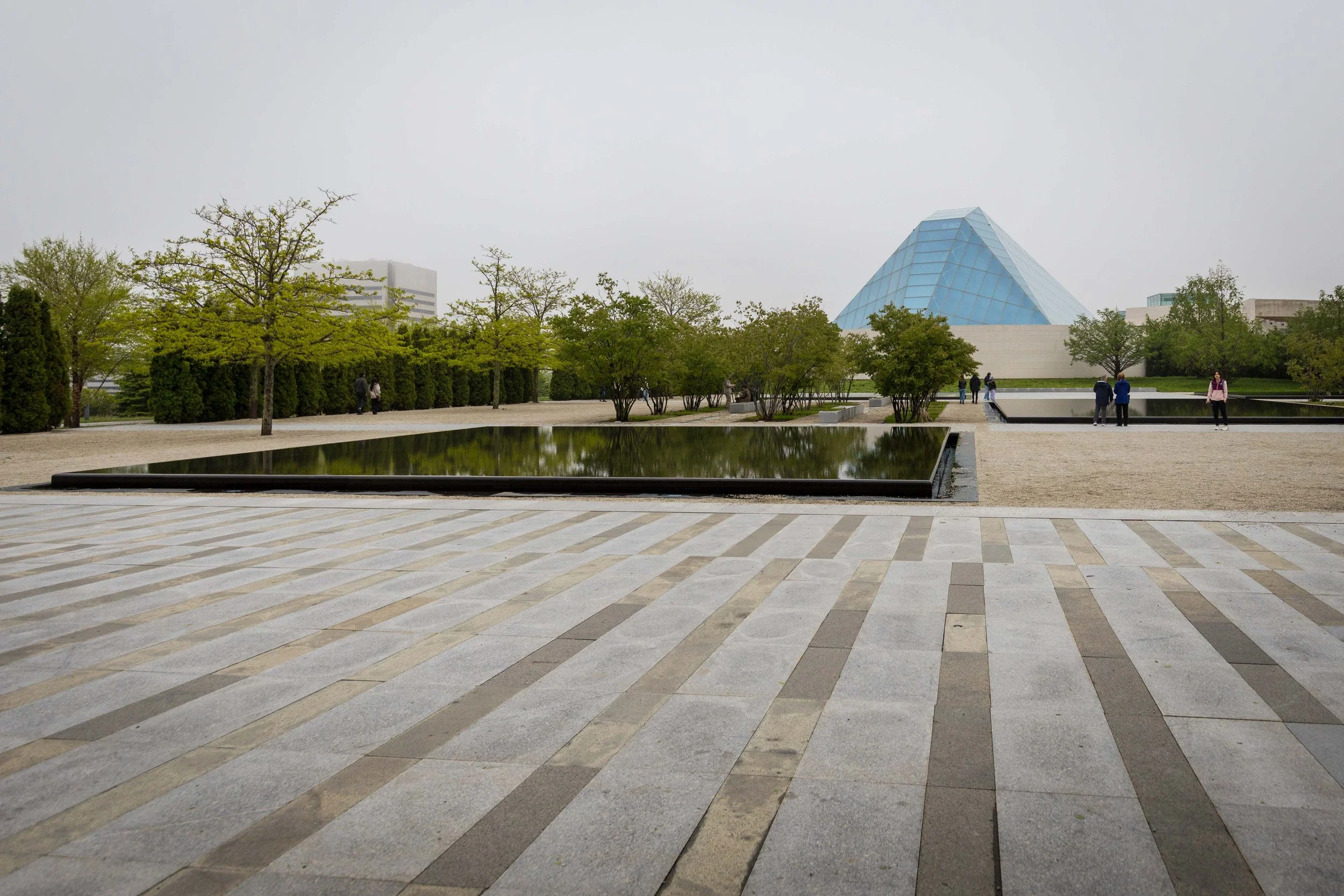
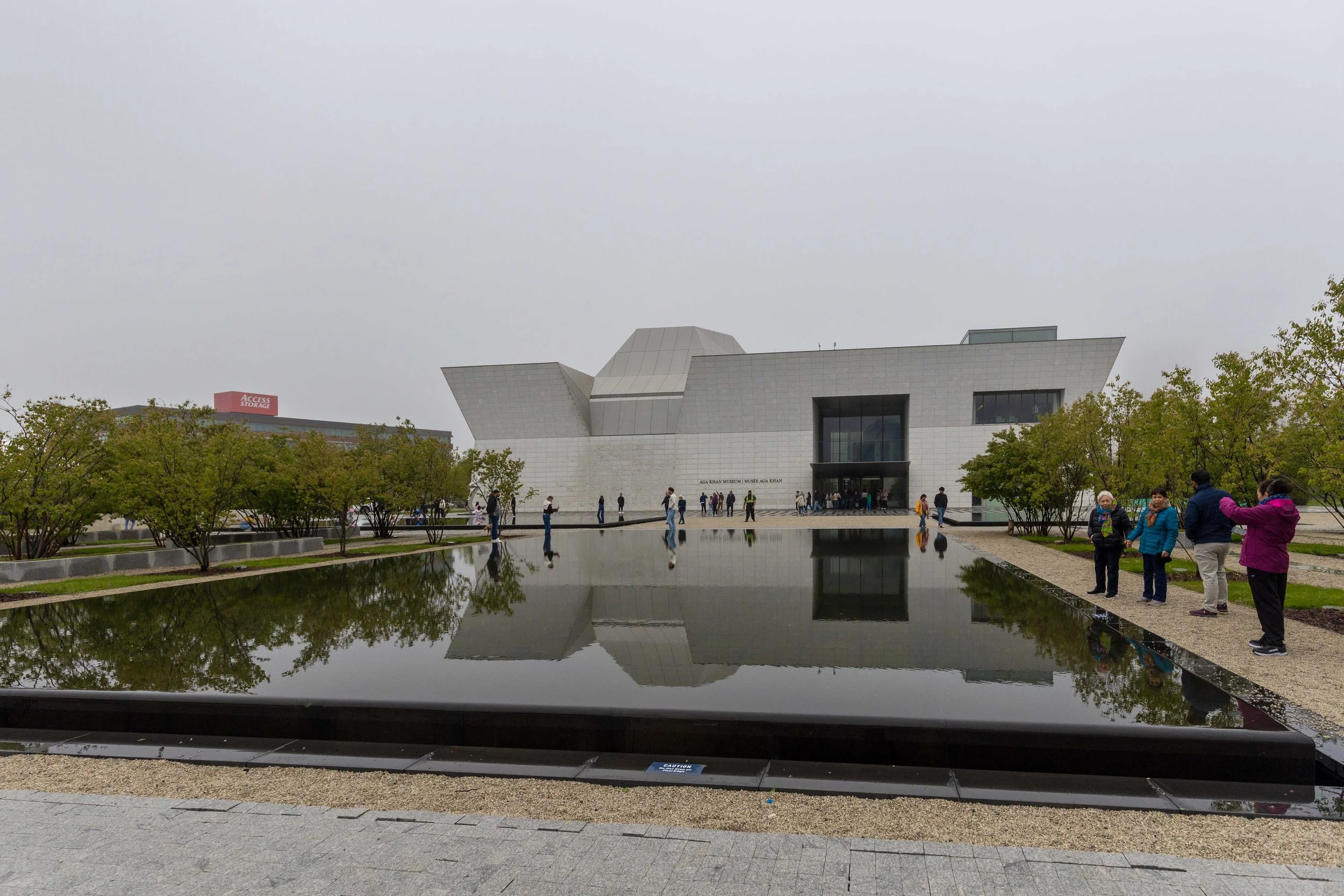
Crossing the grounds from the Ismaili Centre toward the Aga Khan Museum during Doors Open Toronto, the atmosphere shifted from quiet reflection to cultural exploration. Surrounded by geometric gardens, reflecting pools, and contemporary architecture, the museum carried forward many of the same themes found throughout the park — light, movement, craftsmanship, and the dialogue between historic and contemporary artistic traditions.
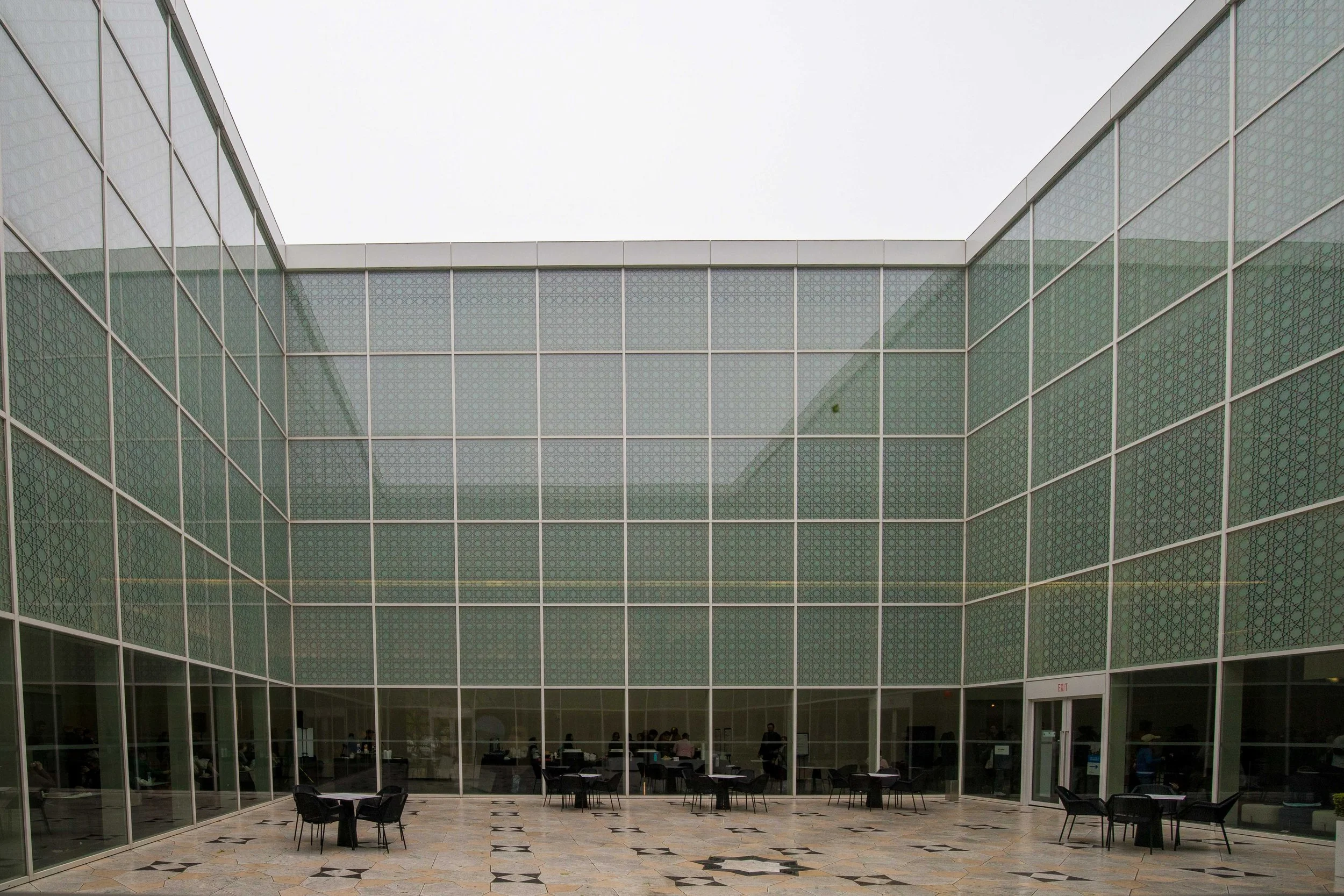
The inner courtyard reflects the clean geometry and light-filled design approach of architect Fumihiko Maki. Surrounded by patterned glass walls and overlooking Aga Khan Park, the quiet gathering space blends contemporary architecture with subtle Islamic geometric influences.
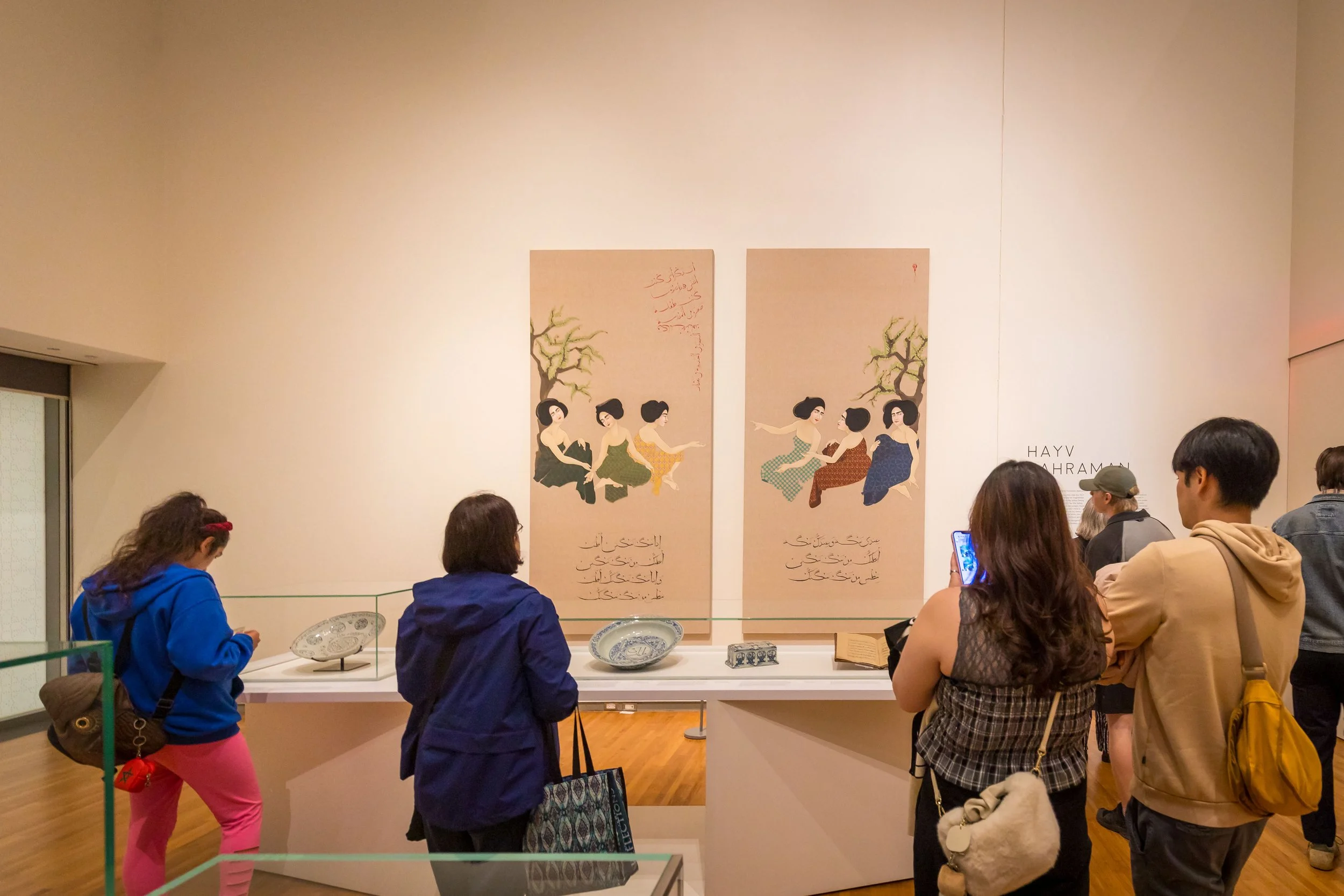
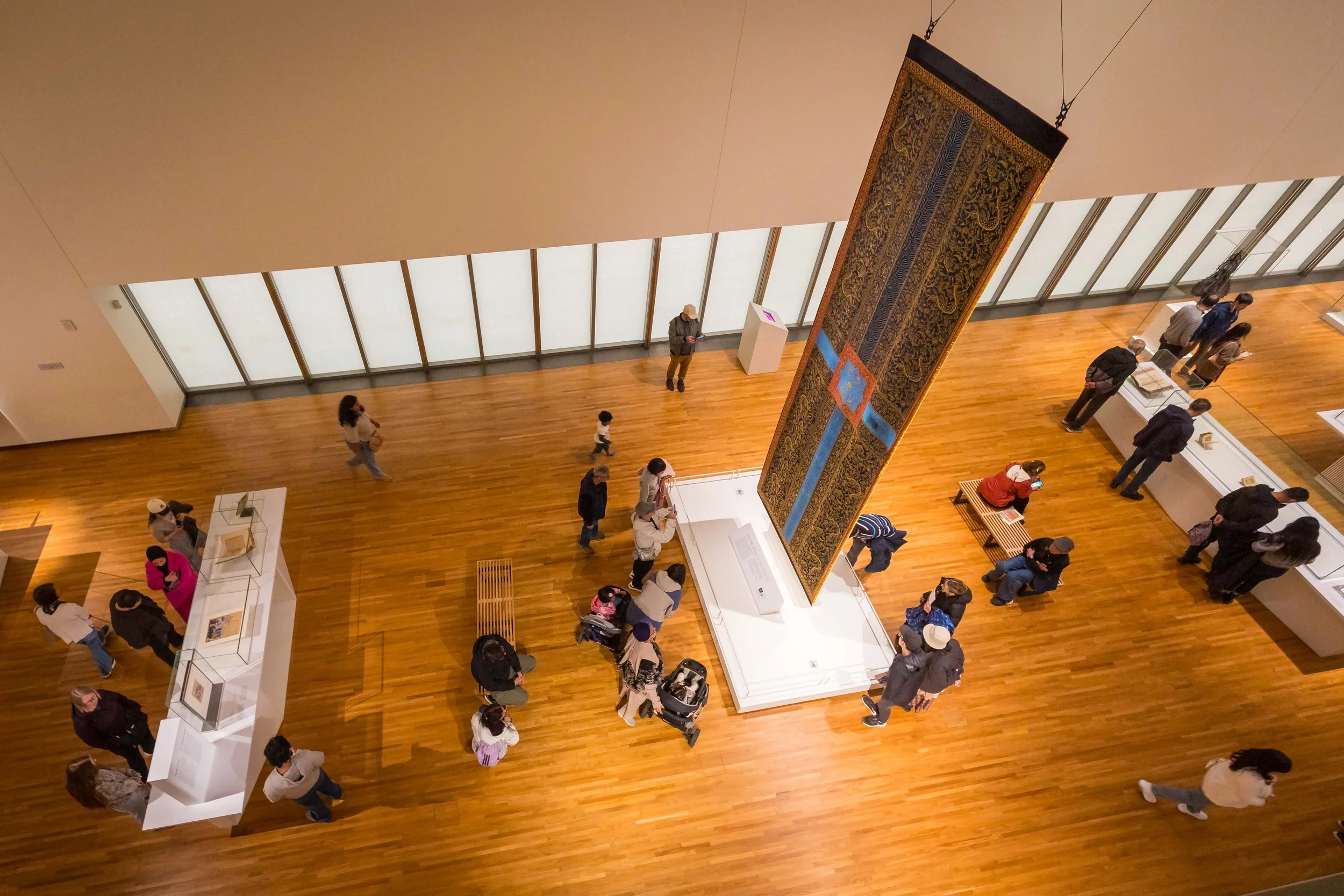
Inside the galleries, visitors explored the museum’s permanent collections during Doors Open Toronto, moving through spaces featuring textiles, ceramics, manuscripts, and contemporary installations that connected centuries of artistic expression and cultural exchange.
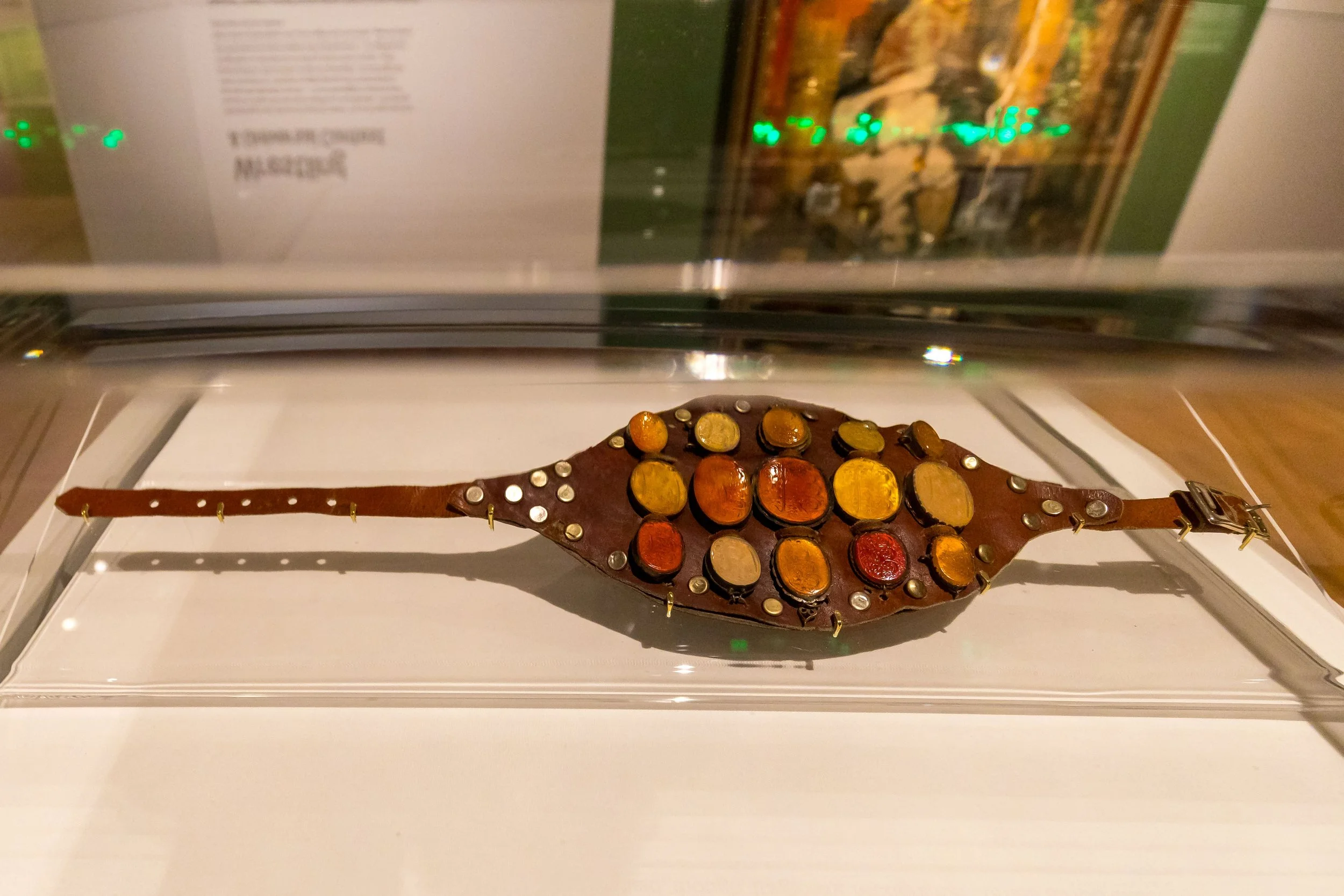
A smaller object that quietly caught my attention was this 19th-century wrestler’s bazoo-band (ceremonial armlet) from Tehran, decorated with engraved amulets and stones associated with protection and strength. Seeing it immediately made me think about the ways athletes across cultures still use symbolic objects — belts, titles, uniforms, and ceremonial pieces — to represent identity, achievement, and honour through sport.
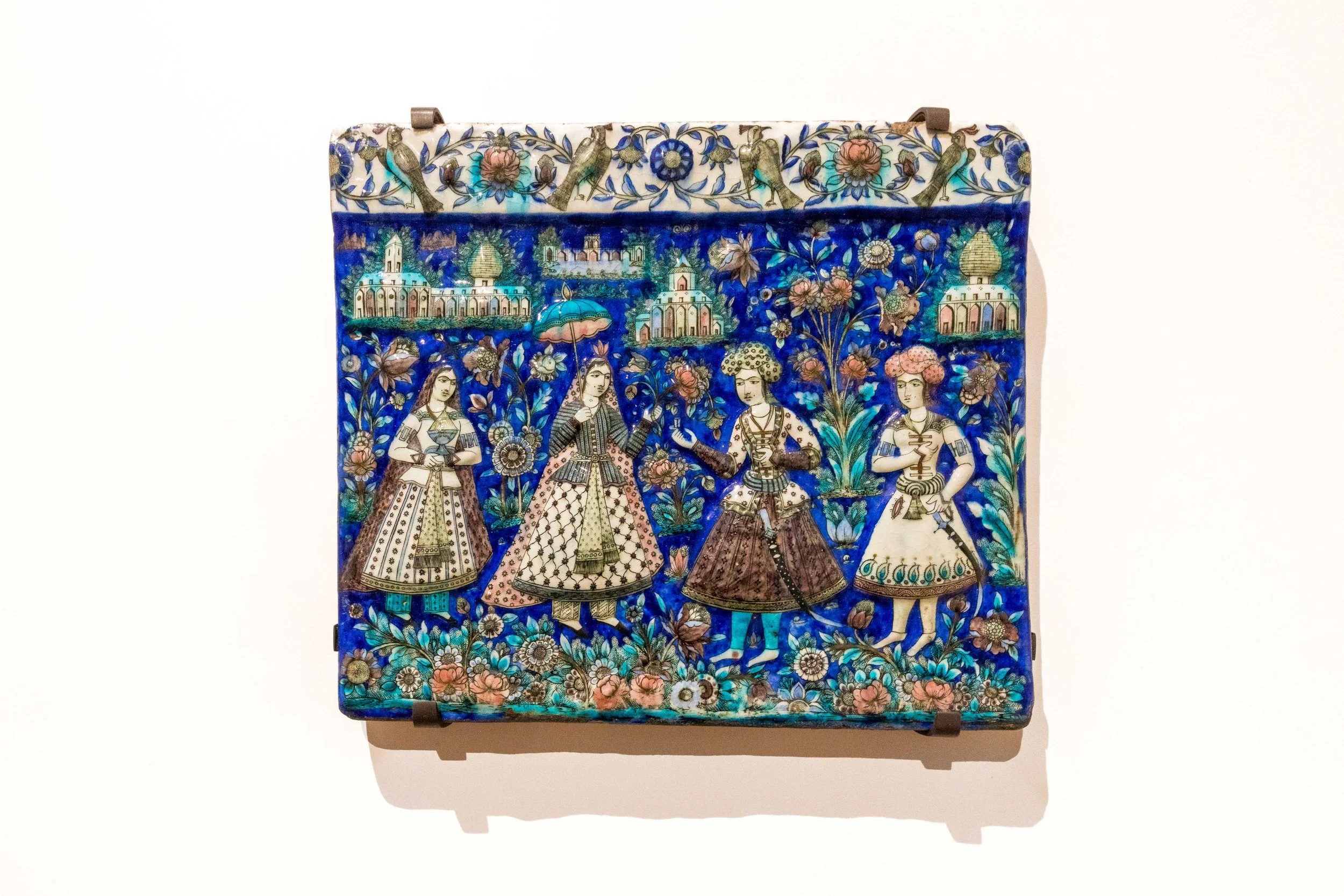
Qajar Moulded Pottery Tile
Iran
Among the historical works on display was this richly detailed Persian ceramic tile panel featuring elegantly dressed figures framed by floral and architectural motifs in vivid cobalt blue tones. The imagery and decorative style immediately drew my attention, blending storytelling, craftsmanship, and architectural ornamentation into a single composition.
While the museum’s first-floor galleries were open to all visitors during Doors Open Toronto, Game On! was included as part of the children’s programming and remained a ticketed exhibition for adults. Exploring games, sport, strategy, and competition across cultures and centuries, the exhibition combined contemporary installations, historical objects, textiles, paintings, and interactive works to examine how games connect people through movement, storytelling, ritual, and shared experience.
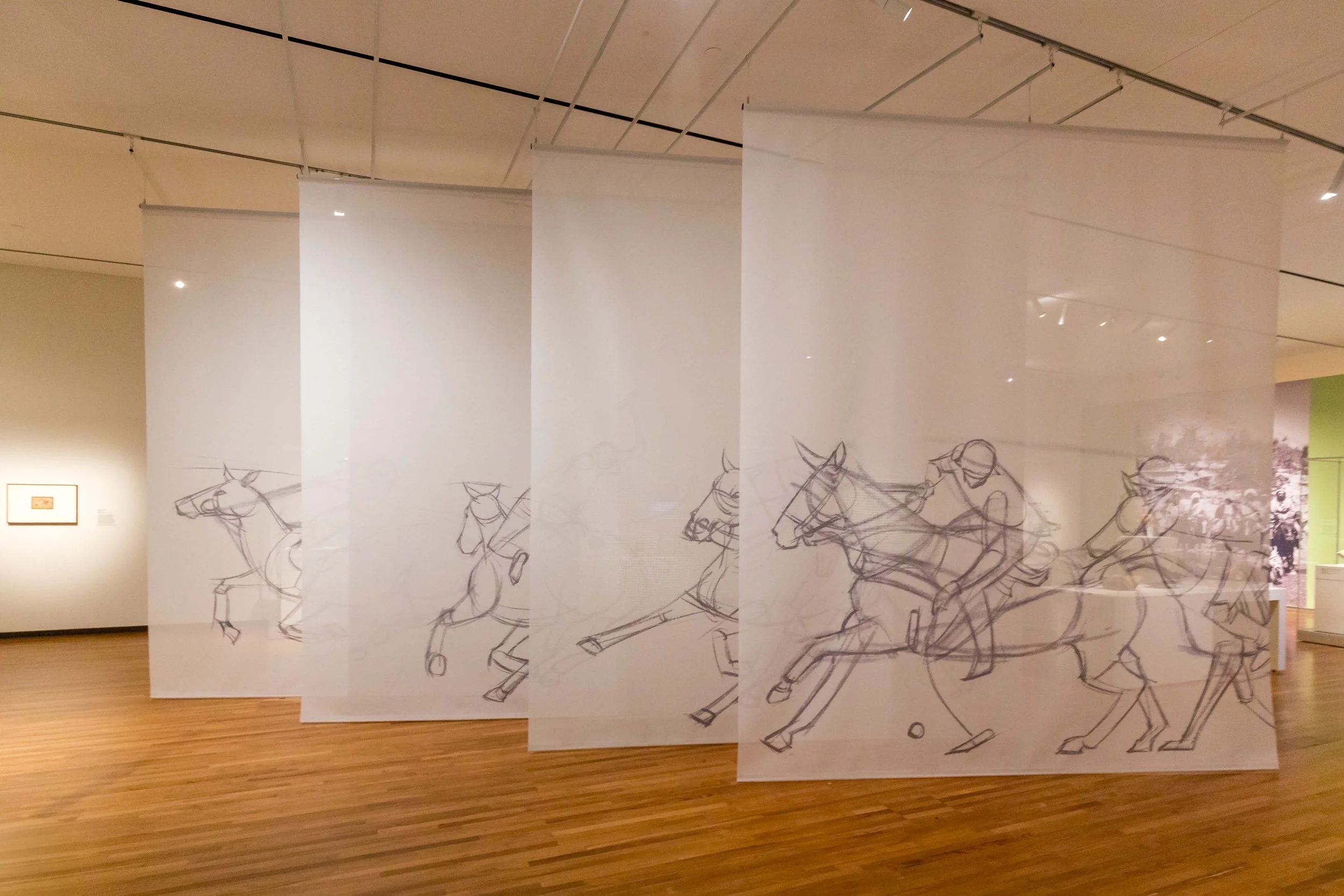
A suspended installation transformed the gallery into a sequence of horses and riders spread across translucent panels. As visitors moved through the space, the layered drawings created a flipbook-like effect, evoking the energy, rhythm, and intensity associated with games, sport, and competition across cultures.

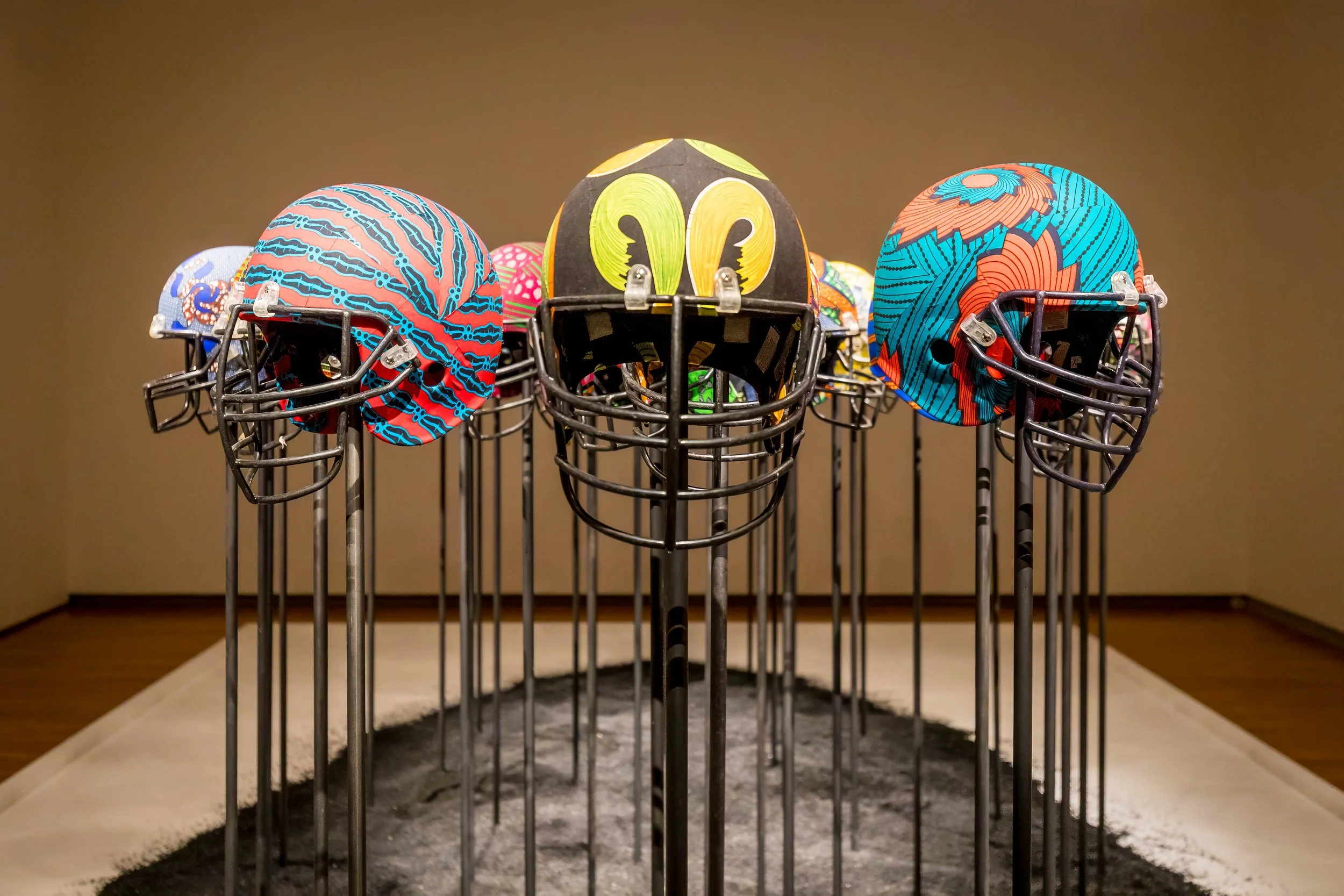
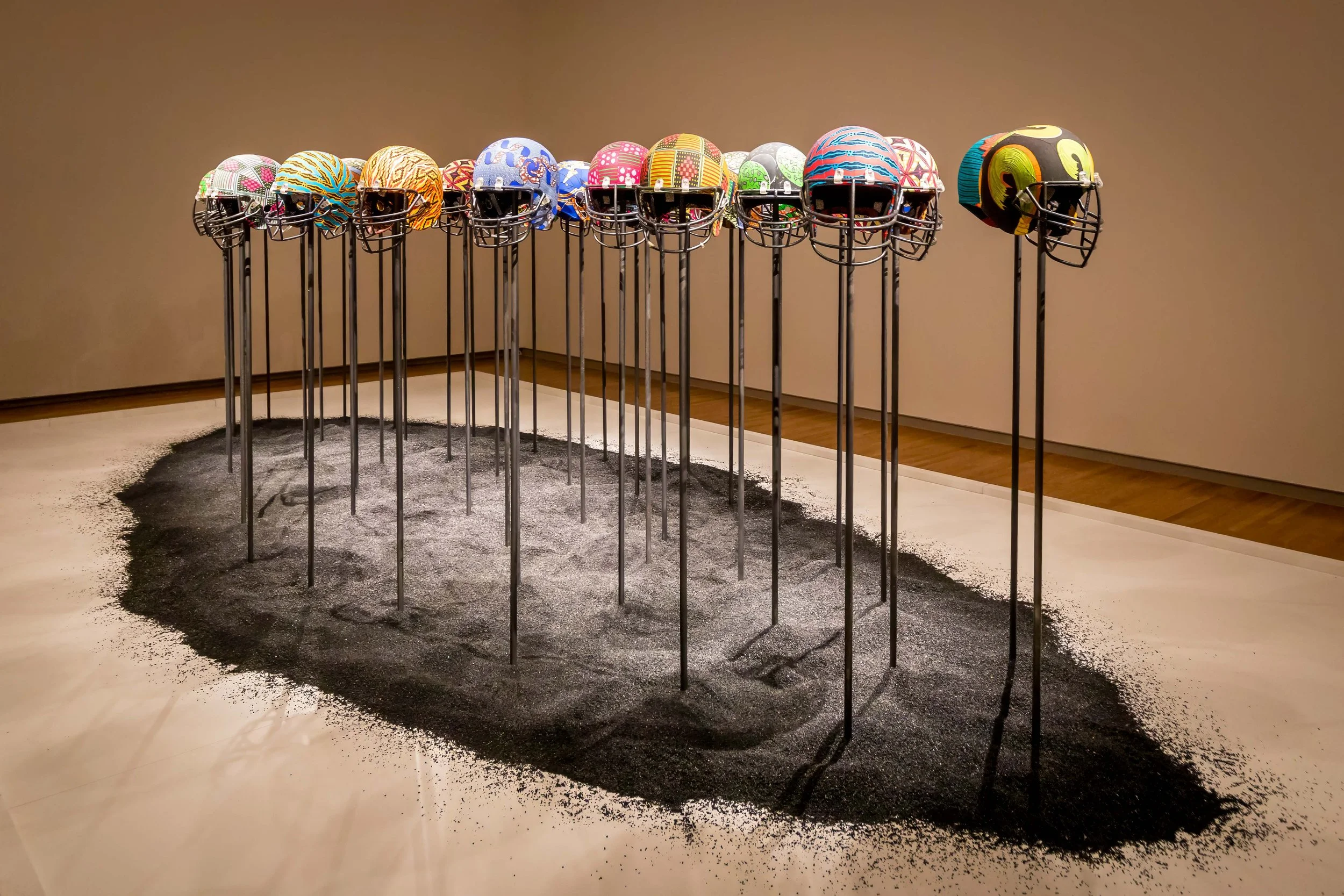
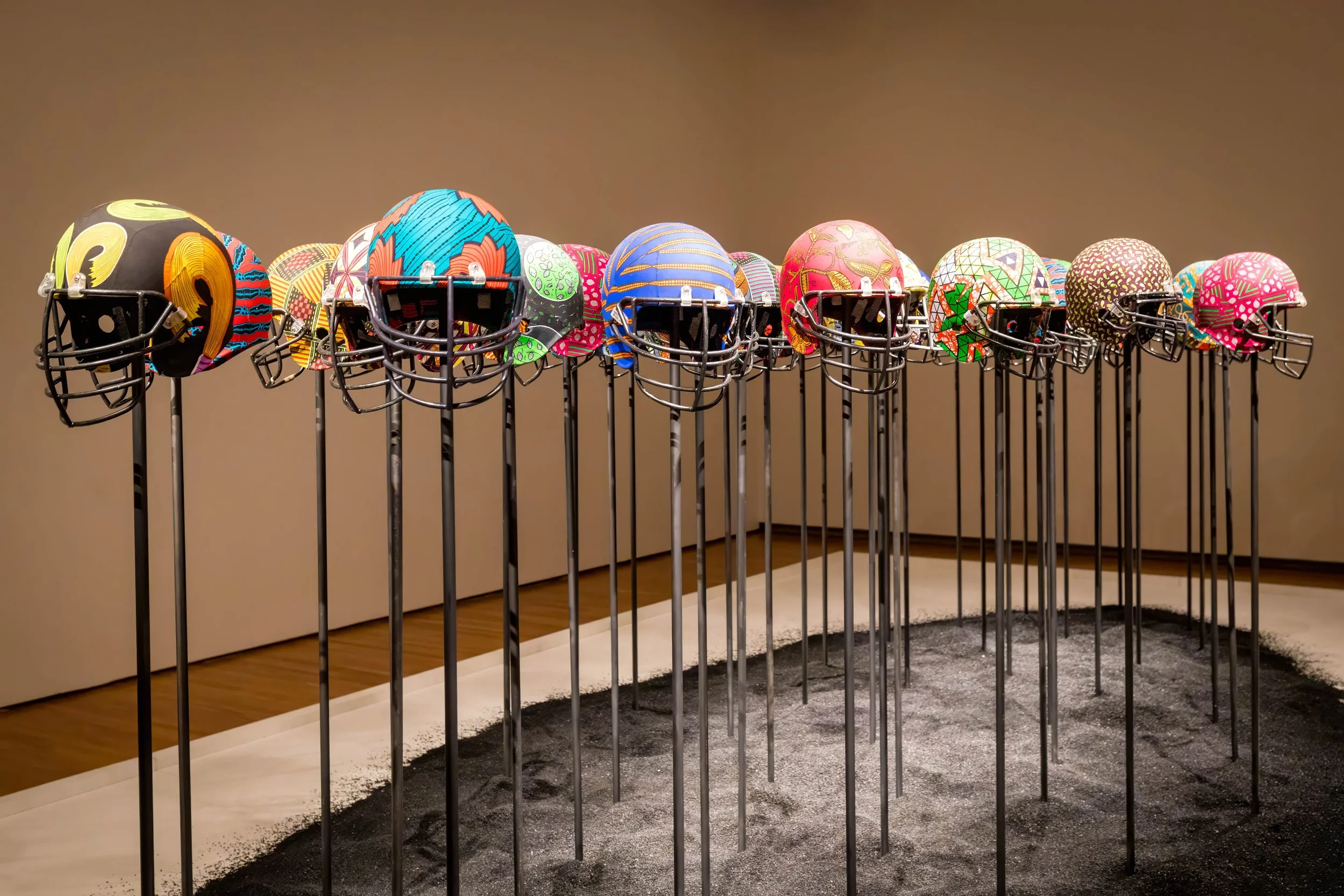
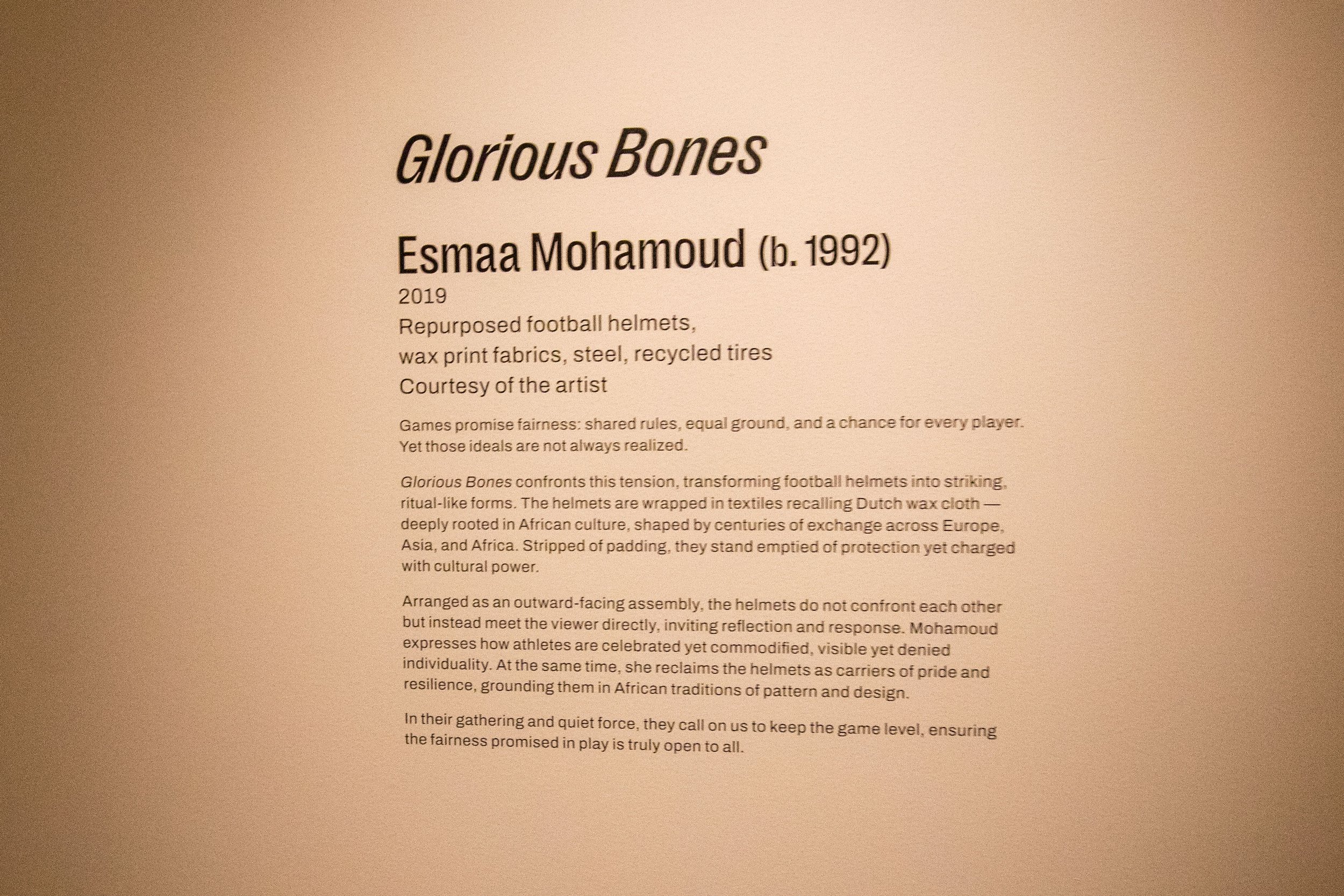
Another work that drew my attention was Glorious Bones by Canadian artist Esmaa Mohamoud, featured in the Aga Khan Museum’s Game On! exhibition. Created from repurposed football helmets wrapped in vibrant wax-print fabrics, the installation explores themes of identity, power, commodification, and resilience through the language of sport and material culture. Arranged in a quiet outward-facing circle, the helmets felt both ceremonial and confrontational — visually striking at first glance, yet layered with deeper questions about race, visibility, and representation.
I really enjoyed how Game On!, curated by Bita Pourvash, balanced historical objects with contemporary installations, creating an exhibition that felt thoughtful, playful, and surprisingly reflective at the same time. My daughter especially enjoyed the interactive elements and movement throughout the galleries, which made the exhibition feel engaging and accessible across generations.
Just outside the museum, this polished steel sculpture by renowned Iranian artist Parviz Tanavoli reflects his long-running exploration of the Persian word heech, meaning “nothingness.” Blending contemporary sculpture with Persian calligraphic forms, the work transforms language into a flowing abstract shape, balancing reflection, movement, and philosophy against the museum’s geometric stone exterior.
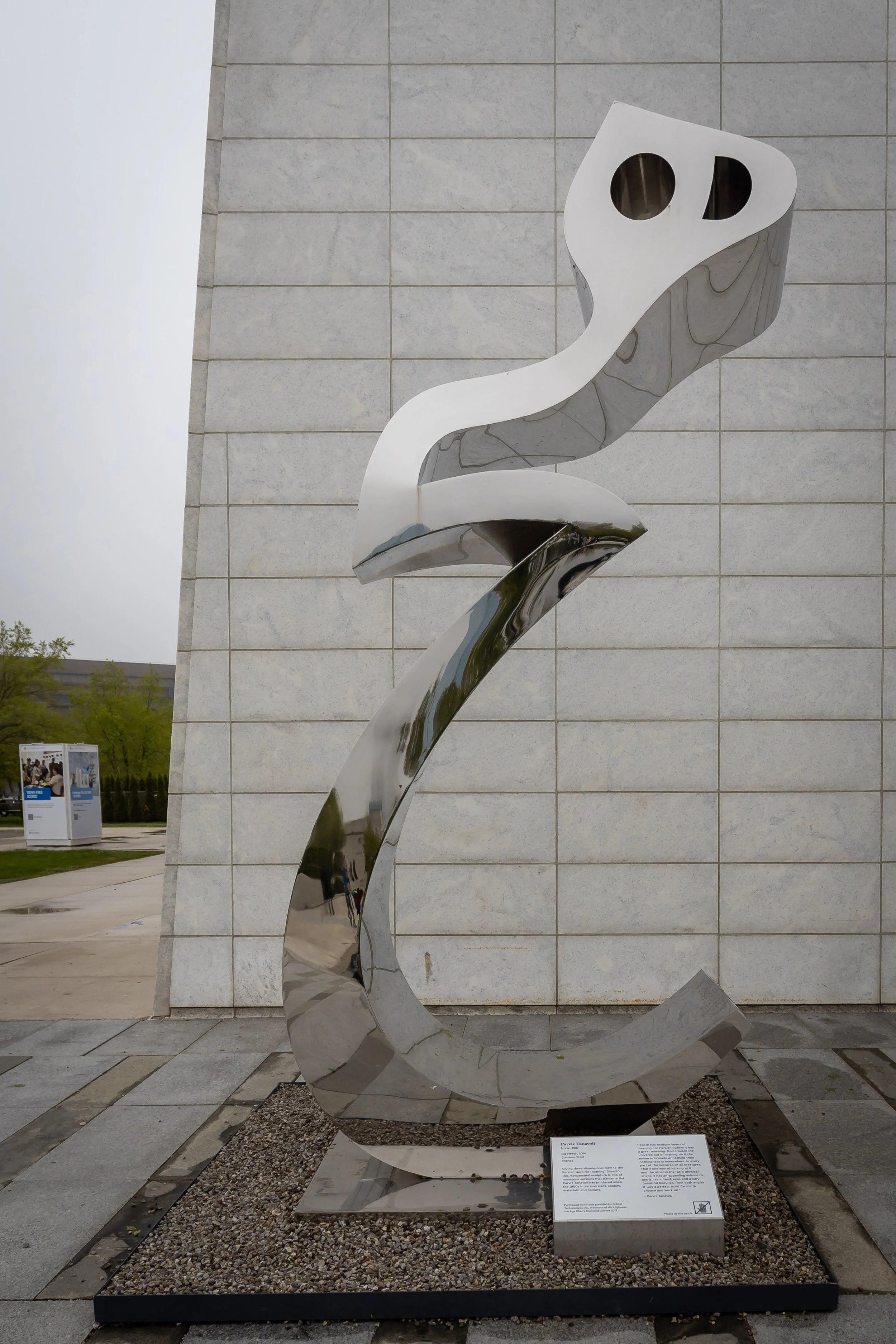
Parviz Tanavoli
Heech in a Cage
Iran, 2013
Looking back across the park toward the Ismaili Centre, it felt fitting to end where we had begun earlier in the day. What started as a visit during Doors Open Toronto became something much more immersive — a quiet exploration of architecture, art, history, and movement woven together across the museum and its surrounding grounds.
As a first visit to the Aga Khan Museum, I left feeling like I had only scratched the surface. Between the contemporary installations, historic collections, reflective spaces, and carefully designed architecture, it’s the kind of place that invites you to slow down and return again. I’ll definitely be back to spend more time exploring the galleries, gardens, and details that are easy to miss on a single short afternoon visit.